inside sources print logo
Get up-to-date news in your inbox

Privacy Activists Decry Democrats’ ‘Tech Wall’
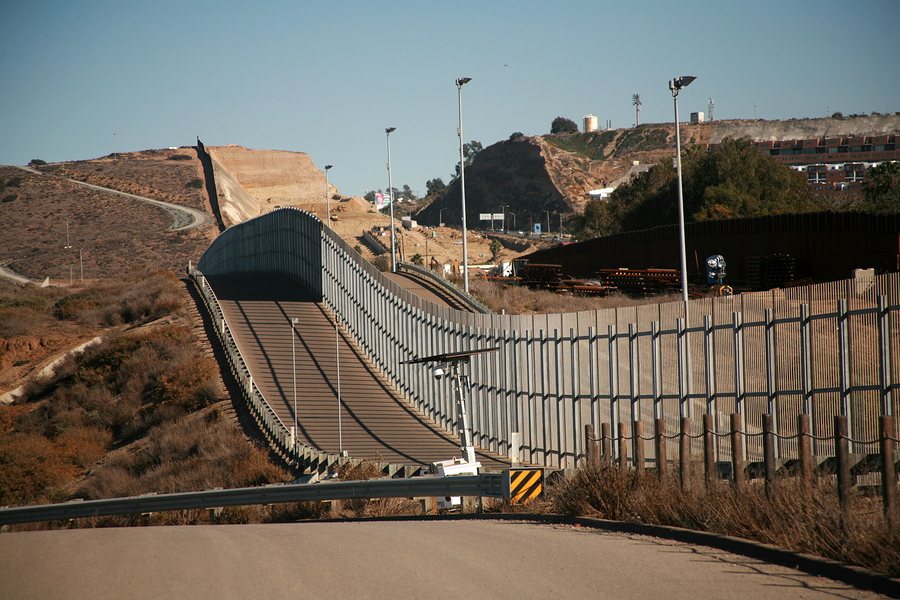
Almost 30 privacy activists and human rights groups sent a letter to Congress this week urging House members not to fund “various invasive surveillance technologies” at the U.S.-Mexico border, citing privacy and civil liberty concerns.

The letter decries the House Democratic Conferees Proposal for Smart, Effective Border Security, which suggests using surveillance cameras at the border to improve security and facilitate safe border crossing.

Not only do surveillance cameras intrude on the civil liberties of Americans crossing the border, the activists argue, but it would also violate the rights of Americans living near the border.

“The proposal calls for ‘an expansion of CBP’s air and marine operations along the border,'” the activists wrote in the letter. “We are concerned this means an increase in the deployment of aircraft with wide-area surveillance capabilities. Such aircraft, including unmanned drones, often include the power to capture the faces and license plates of vast numbers of people who live and work near the border. The government may scrutinize this personal information with machine-learning techniques susceptible to the same biases and problems listed above. Vendors already are applying artificial intelligence software to images captured by mounted cameras. Given the Department of Homeland Security’s particular history of using drones wastefully and irresponsibly, we do not believe there should be an expansion in their use.”

The activists oppose using license plate readers and biometric screening which, the argue, could violate Americans’ Fourth and Fifth Amendment rights and track citizens’ locations, and object to  “risk-based targeting” efforts that use black-box algorithms, which could exacerbate racial profiling at the border.

Following up on the letter, privacy think tank Electronic Frontier Foundation (EFF) released a statement calling on American citizens to protest the Democrats’ “tech wall,” which could violate their privacy as well as foreigners’ basic human right to privacy.

According to an EFF blog post, there is potential for grave misuse of certain technologies at the border. To best protect citizens’ privacy, Democrats should not give the federal government more surveillance powers. (The EFF documents government surveillance in the U.S. on its website.)

“The federal government already conducts face surveillance of all travelers (U.S. citizens and foreign nationals alike) on certain international flights,” EFF legislative activist Hayley Tsukayama said. “Other threats include iris scans, voiceprints, or even collection of DNA information. Given the sensitivity of biometric information, EFF is concerned about the threat that any collected data will be stolen or misused, as well as the potential for such programs to expand far beyond their original scope.”

Because President Donald Trump’s physical wall proposal would involve seizing private property from citizens along the border, it could be argued that his proposal is a threat to property rights, but the EFF argues a “tech wall” would be worse for American citizens and a pivotal infraction of constitutional rights.

“The proposal to build a physical barrier at the border has been roundly criticized. We should not deploy a variety of invasive technologies that violate everyone’s civil rights in its place,” Tsukayama said.
Follow Kate on Twitter

EXCLUSIVE POLL: N.H. Voters Say Border Gain Not Worth Shutdown Pain

The latest New Hampshire Journal poll finds that most Granite State voters believe the pain caused by the government shutdown outweighs the potential benefit of President Trump’s border wall.

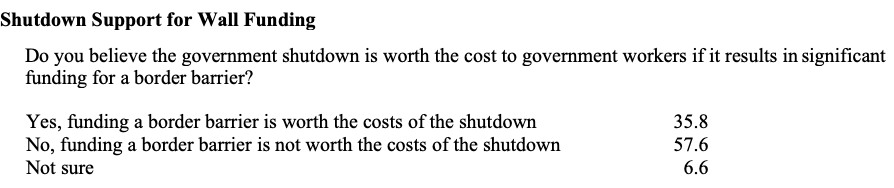
When asked, “Do you believe the government shut down is worth the cost to government workers if it results in significant funding for a border barrier?,” 57.6 percent of New Hampshire registered voters said funding a border barrier was not worth the cost of the shutdown, while 35.8 percent said it was.  Another 6.6 percent were not sure.

The partisan divide on the shutdown vs. border question is wide, with 93 percent of Democrats saying no and 83 percent of Republicans supporting President Trump’s position. Unaffiliated voters, the largest group in the state, believe the shutdown isn’t worth the cost by a 65 to 23 percent margin.

Young Granite State voters were the least supportive of the shutdown as an acceptable price for a border barrier, with just 25 percent of 18-30 year olds in favor and 69 percent opposed. This is not good news for a GOP already struggling to attract Millennial and Gen Z voters.

“New Hampshire may be a purple state, but voters here are solidly against President Trump’s government-shutdown strategy. Such a wide gap in support from a state the president nearly carried just two years ago is not good news for the president or his agenda,” said Shawn McCoy, a former GOP campaign strategist who now serves as publisher of New Hampshire Journal.

The actual question and results:

Additional results from the latest NHJournal poll, including the president’s approval rating and results of head-to-head match-ups with potential Democrats, will be released soon.

The poll was conducted for NHJournal by Praecones Analytica between January 16-21. Survey results are based on a statewide sample of 593 registered voters in New Hampshire. Responses were gathered using both interactive voice response (IVR) landline calls as well as online surveys.

The margin of error for the entire sample is +/- 4.0%.

EXCLUSIVE POLL: N.H. Voters Say Border Wall Isn’t Worth Cost of Government Shutdown

The latest New Hampshire Journal poll finds that most Granite State voters believe the pain caused by the government shutdown outweighs the potential benefit of President Trump’s border wall.

When asked, “Do you believe the government shut down is worth the cost to government workers if it results in significant funding for a border barrier?,” 57.6 percent of New Hampshire registered voters said funding a border barrier was not worth the cost of the shutdown, while 35.8 percent said it was.  Another 6.6 percent were not sure.

The partisan divide on the shutdown vs. border question is wide, with 93 percent of Democrats saying no and 83 percent of Republicans supporting President Trump’s position. Unaffiliated voters, the largest group in the state, believe the shutdown isn’t worth the cost by a 65 to 23 percent margin.

Young Granite State voters were the most likely to reject the shutdown as an acceptable price for a border barrier, with just 25 percent of 18-30 year olds supporting it and 69 percent opposed. This is not good news for a GOP already struggling to attract Millennial and Gen Z voters.

“New Hampshire may be a purple state, but voters here are solidly against President Trump’s government-shutdown strategy. Such a wide gap in support from a state the president nearly carried just two years ago is not good news for the president or his agenda,” said Shawn McCoy, a former GOP campaign strategist who now serves as publisher of New Hampshire Journal.

The actual question and results:

Additional results from the latest NHJournal poll, including the president’s approval rating and results of head-to-head match-ups with potential Democrats, will be released soon.

The poll was conducted for NHJournal by Praecones Analytica between January 16-21. Survey results are based on a statewide sample of 593 registered voters in New Hampshire. Responses were gathered using both interactive voice response (IVR) landline calls as well as online surveys.

The margin of error for the entire sample is +/- 4.0%.

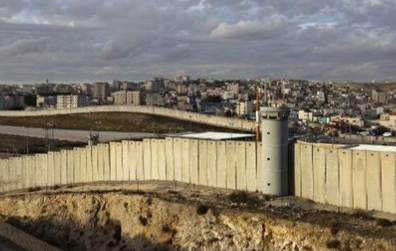
Advice From Israel: Build That Wall!

Thousands of migrants are ensconced on the Mexico-USA border, now even demanding extortion money – $50,000 for each migrant – to return to their home countries. Meanwhile, President Trump is locked in a head-to-head battle with Democrat leaders Charles Schumer and Nancy Pelosi over funding for Trump’s border wall, a conflict that may lead to a government shutdown. The Dems are insisting that upgraded patrols and technology are sufficient, while Trump is adamant in his stand that without a serious physical barrier, increased technology and patrols won’t do the trick. Despite the rancor on both sides, is it possible that a pragmatic examination of the “wall issue” could lead to a resolution?

Are Schumer and Pelosi really interested in a serious solution to the seemingly intractable problem of illegal immigration from America’s southern border or is this simply being used by the pair as a bludgeon with which to hammer the president? Assuming good will, that they are truly interested in resolving this major challenge to American sovereignty and laws, perhaps they would like to learn from Israel’s valuable experience in building a similar wall several years ago, and thereby stopping the illegal immigration in its tracks.

From 2010-2012, 55,000 illegal migrants – a huge number for a tiny country like Israel, which is barely the size of New Jersey – had entered from Eritrea and Sudan, settling mostly in the predominantly working-class southern neighborhoods of Tel Aviv and causing a sharp increase in murders and rapes in a city (and in fact a country) that had previously known only very minimal street crime. Terrorism was, and continues to be, a major challenge, but street crime in Israel is rare by American standards.

Under enormous grassroots pressure from the residents of southern Tel Aviv, as well as from residents of other depressed towns with substantial illegal immigrant populations, Israel’s government reached a decision to construct a high-tech steel wall on the Egypt–Israel border.

The barrier was completed over several years, with most of the work concluded by the beginning of 2015. By the end of 2015, 213 illegals had infiltrated Israel, a great improvement, but still not acceptable, which prompted the raising of the height to 25 feet and the installation of additional “smart-fence technology”. The results were remarkable. In 2016, just 11 illegals managed to get through, but in 2017, there was zero illegal immigrationfrom that border, prompting a fact-finding visit by US Homeland Security Secretary Kirstjen Nielsen to examine what America could learn from the Israeli experience in combatting what had become a major challenge for the United States.

In his conversations with the Mexican president and in other settings, President Trump has cited Israel’s wall as an example of what should be done at the US-Mexico border. “People want protection,” Trump said. “And a wall protects. All you have to do is ask Israel. They were having a total disaster coming across, and they built a wall. It’s 99.9 percent stoppage,” Trump said.

President Trump’s face-off with the Democrats on this issue is reaching a head, but the Israeli experience should be cited by those who truly want a solution, rather than just kicking the can down the road, in favor of throwing political hardballs back and forth.

Israel’s physical barrier has empirically worked, in halting the steadily increasing flow that had threatened to overrun its depressed neighborhoods with rampant street crime and massive social tension. Now no one is complaining, while simultaneously, legal productive immigration to Israel continues. Is any more evidence needed?