inside sources print logo
Get up-to-date news in your inbox

Budget Talks Stir Joint-Employer Debate
Congress is currently working to pass a spending bill to fund the government with some lawmakers urging provisions to roll back an Obama-era rule.

Congressional Republicans are working to pass a $1.3 trillion omnibus spending bill before a deadline Friday. The federal government will shut down again if they are unsuccessful. A handful of lawmakers have urged their colleagues to include provisions that roll back changes the last administration made to the joint-employer standard.

The Competitive Enterprise Institute (CEI) recommended that idea alongside other free-market groups in a letter to lawmakers March 13. They specifically recommended a bill that passed the House. Republican Rep. Bradley Byrne, who introduced the bill, expressed his support for including it in the budget not long after.

“I strongly support including the Save Local Business Act in any government funding bill,” Byrne said on social media. “Alabama’s [small business] owners and employees need clarity on the [joint employer] issue.”

Some other lawmakers and business groups have since announced their support for the idea as well. The updated joint-employer standard gained a lot of attention among lawmakers and business groups with critics arguing it will hurt employers and workers. The National Labor Relations Board (NLRB) brought about the changes in 2015.

Byrne introduced the bill to roll back the updates and prevent more drastic changes in the future. The legislation is intended to clearly define that the previous interpretation of the joint-employer standard is correct. The bill also addresses the patchwork of other legal interpretations from various courts and federal agencies.

“Save Local Business Act should be in the 2018 omni to provide clarity to small businesses on [joint employer],” Rep. Henry Cuellar said Tuesday. “[Small businesses] should know the rules.”

Congressional leaders have worked to formulate a spending bill that can pass before the shutdown deadline. Bloomberg Law reported Wednesday that their sources say a joint-employer fix will not be included. Congress plans to unveil its spending bill Wednesday – but will still need to rush to pass it, according to CNN.

The joint-employer standard determines whether an employer is legally responsible for the employees of a company it contracts with. Critics argued the update is overly vague and put employers at unnecessary legal risk. Employers take on a lot of legal burdens and potential costs when they become joint-employers.

The joint-employer standard was previously determined based on whether a company had direct control over the employment policies of another business. That control could be over policies like wages, the hiring process, or scheduling. The updated standard is instead determined based on what is known as indirect control.

Former President Barack Obama’s nominees had control of the board when it updated the standard. President Donald Trump entering office renewed hope that the updated joint-employer standard was going to be killed. But the fight to defeat the new standard has proven to be tough.

“Because the bill has stalled in the Senate, the best way to ensure swift action on this bipartisan solution is to include it in the omnibus appropriations bill,” Rep. Ron Estes wrote March 14 in an op-ed for The Washington Examiner. “That’s why I’m urging House and Senate leadership to provide clarity now and fix this disastrous Obama-era regulation.”

The NLRB was able to update the standard by setting a new legal precedent when ruling in a case involving Browning-Ferris Industries. The update made it a lot easier to declare a company a joint-employer – which put employers at a lot more legal risk. Supporters argue that the change was needed to prevent employers from sidestepping their responsibilities.

The new NLRB was able to change back the updated standard when ruling in a case involving Hy-Brand Industrial Contractors. But the updated joint-employer standard was able to survive. The board decided to vacate that decision Feb. 26 over a possible conflict of interest involving board member William Emanuel.

The updated joint-employer standard is potentially far-reaching with so many businesses contracting together. The franchise model was of particular concern since it relies on large brand names contracting with many smaller and independently-owned businesses.


Follow Connor on Twitter

Spending Bill Could Defeat Obama-Era Contracting Rule

Affordable Care Act, Compromise, Workplace Flexibility, taxation

Congressional leaders should use their spending bill to kill a policy from the last administration that targets businesses that contract together, argued a coalition of free-market advocates Tuesday.

The National Labor Relations Board (NLRB) sparked a heated debate when it updated a rule known as the joint-employer standard back in 2015. The business community was close to defeating the updated standard this past year, but unexpected events have kept it in place. A coalition of free-market advocates believes the spending bill could help.

The Competitive Enterprise Institute (CEI) is leading the coalition in the hope of reversing the policy change for good. The coalition issued a letter urging congressional leaders to include a legislative fix in their omnibus spending bill for this fiscal year – specifically a bill that passed the House but has yet to be taken up in the Senate.

“Congress has an opportunity now to fix the mess created by the National Labor Relations Board concerning vast new employer liability for countless American businesses and entrepreneurs,” CEI labor policy expert Trey Kovacs said in a statement provided to InsideSources. “The NLRB flip-flopping on previously longstanding joint-employer standards has caused immense uncertainty for job creators.”

The joint-employer standard determines whether an employer is legally responsible for the employees of a company it contracts with. Employers take on a lot of legal burdens and potential costs when they become joint-employers. Those opposed to the update argued it was overly vague and put employers at unnecessary legal risk.

Former President Barack Obama oversaw several significant changes to labor law during his time in office including the updated joint-employer standard. Supporters argue that the change was a needed update that prevented employers from sidestepping their responsibilities.

President Donald Trump entering office brought renewed hope that the updated joint-employer standard was going to be reined in. But it hasn’t exactly worked out that way. The new NLRB was compelled to reinstate the updated standard not long after it upended it and legislation designed to roll back the standard has stalled.

The NLRB was able to change back the updated standard when ruling in a case involving Hy-Brand Industrial Contractors. The decision looked to be a major victory for those opposed the updated standard. The board, however, decided to vacate that decision Feb. 26 over a conflict of interest involving board member William Emanuel.

Republican Rep. Bradley Byrne introduced the bill intended to roll back the updated standard. The legislation is written to clearly define what determines the joint-employer standard based on the standard before the update. The bill also addresses the patchwork of legal interpretations from various courts and federal agencies.

“Only Congress can restore certainty for businesses by passing the House’s Save Local Business Act into law,” Kovacs said. “Without a legislative fix, there is a looming risk that the vague and overly broad Obama-era joint employer standard will return.”

The joint-employer standard was previously determined based on whether a company had direct control over the employment policies of another business. That control could be over policies like wages, the hiring process, or scheduling. The updated standard is instead determined based on what is known as indirect control.

The NLRB was able to set the precedent for the updated standard when it ruled on a case involving Browning-Ferris Industries back in 2015. The update made it a lot easier to declare a company a joint-employer, which put employers at a lot more legal risk.

The coalition letter was also signed by free-market advocates like Americans for Limited Government, Americans for Tax Reform, Center for Worker Freedom, FreedomWorks, the Small Business and Entrepreneurship Council, the Taxpayers Protection Alliance, and others.

Follow Connor on Twitter

How Members-Only Unions Could Solve the Free-Rider Problem

Government Union Reform

The U.S. Supreme Court could necessitate the need for members-only unions if it decides to rule against mandatory dues in the public-sector, argued a report Wednesday.

Labor unions claim that optional dues encourage workers to free-ride on the benefits they fight for. Workers might decide not to fund their union knowing that they will get the benefits anyway. But a decision against mandatory union dues wouldn’t be a complete victory for the workers that oppose them either.

The Competitive Enterprise Institute (CEI), a free-market think tank, released a report highlighting how members-only unions can potentially solve problems for both sides in the case. Members-only unions aren’t obligated to represent nonmembers who don’t pay dues – though unions lose a huge benefit known as exclusive bargaining rights.

“Despite the potential benefits from banning forced union dues, neither workers nor unions likely will be completely satisfied with the new arrangement,” the CEI report states. “Non-members will still work under a union-negotiated agreement they may not want, and unions must represent employees who do not pay dues.”

Labor unions also have the ability to form members-only unions which aren’t obligated to represent nonmembers. The CEI report adds that very little change to state labor relations law is necessary. Union members would continue to work under a collective bargaining agreement and related state laws would remain unchanged.

“A policy of members-only unions would resolve the above issues,” the report states. “Under such a policy, a union would only represent, negotiate on behalf of, and collect dues from members of the labor organization. Non-members can exercise their newfound freedom to negotiate a contract with the public employer tailored to their needs.”

Labor unions, however, generally decide not to become members-only because exclusive representation blocks other labor groups from trying to organize an established bargaining unit. The tradeoff is the union has to represent every worker whether they pay dues or not once they organize a workplace as an exclusive representative.

The U.S. Constitution bans compelled political speech. Lead plaintiff Mark Janus and two other Illinois state workers argue in the case that mandatory dues violate their constitutional rights because public-sector union bargaining is political in nature – since it deals with the allocation of government resources.

Labor unions cannot require anyone to be a member, but in many states, they can require payments from every employee once they organize a workplace. Nonmembers must be given the option to pay a nonpolitical fee instead of full dues. The lawsuit, however, argues that public-sector collective bargaining and political lobbying are indistinguishable.

CEI also filed an amicus brief Dec. 6 in support of outlawing mandatory union dues in the public-sector. The brief details several instances in which unions have used compelled dues to engage in political advocacy – in an alleged violation of constitutional law.

The American Federation of State, County and Municipal Employees (AFSCME) is the primary union that the lawsuit targets – but the eventual aim is to end mandatory dues or fees for all public-sector workers by setting a legal precedent at the highest court.

The U.S. Supreme Court decided to accept the case Sept. 27 following a split decision for an identical case last year. The National Right to Work Legal Defense Foundation (NRTW) has been assisting in the lawsuit alongside the Liberty Justice Center (LJC).

Janus v. AFSCME could become one of the most influential labor-related lawsuits in the country’s history. It touches upon fundamental federal laws that have shaped how Americans have worked throughout modern history.

Follow Connor on Twitter

Free-Market Coalition Urges Action on Franchise Rule

A coalition of free-market advocates sent a letter to lawmakers Tuesday urging them to support a bill designed to get a critical contracting rule under control.

Congress is currently considering a bill that is designed to better clarify what joint-employment is. The rule determines whether an employer is legally responsible for the employees of a company it contracts with. Employers take on a lot of legal burdens and potential costs when they become joint-employers.

The business community expressed particular concern over changes made to the rule during the last administration.  Critics argue the changes overstepped how the rule is supposed to be interpreted. The Competitive Enterprise Institute (CEI) is leading a coalition of free-market advocates who believe the bill will help address the problem.

“The undersigned organizations write in strong support of legislation, the Save Local Business Act,” the coalition letter detailed. “This bill would restore and harmonize National Labor Relations Act and Fair Labor Standards Act standards on when two or more businesses are deemed to be joint employers.”

The House Education and the Workforce Committee is scheduled to review the bill Wednesday. The letter urges lawmakers to support the bill so that it can move forward and eventually become law. Americans for Prosperity, FreedomWorks, and Heritage Action for America were among the 29 groups that signed onto the letter.

The National Labor Relations Board (NLRB) sparked the current debate by changing how it ruled on joint-employment cases. The business community denounced the change as a dangerous overreach of federal powers. The NLRB argued it was a needed updated that better aligned with what the law intended.

“Prior to August 2015, the standard used by the NLRB made it easy to understand who is and is not a joint employer,” the letter said. “A joint employer relationship existed when one company exercised ‘direct and immediate’ control over another company’s workforce.”

The joint-employer standard was previously determined based on whether a company had direct control over the employment policies of another company. That control could be over policies like wages, the hiring process, or scheduling. The updated standard is instead determined based on what is known as indirect control.

“Joint-employer liability could be triggered by a company exercising vaguely defined indirect control or unexercised potential control,” the letter said. “Even a code of corporate social responsibility for business partners could be found to establish joint employer status.”

President Donald Trump’s last labor board nominee was confirmed Sept. 25. The new board will likely rollback the updated interpretation as related cases start coming in. Labor Secretary Alexander Acosta announced the labor department will withdraw from its earlier informal guidance upholding the new standard.

The letter adds that the bill would help to reinstate the longstanding definition that previously determined joint-employment.  The bill would essentially outlaw the recent NLRB interpretation, making it clear it went too far. The letter notes the previous interpretation is better for fostering business growth.

The NLRB decision drew considerable attention because the change was significant. But it also highlighted what critics saw as a bigger problem with the law itself being unclear. The law allowed for a patchwork of legal interpretations from courts and federal agencies.

The NLRB revisited the joint-employment standard during a handful of labor dispute cases in recent years. The Browning-Ferris Industries case set the precedent for the new standard when it was decided in 2015. The NLRB was able to change the joint-employer standard by altering how it ruled on related cases.

The letter adds that the updated standard could cause a decline in businesses contracting together because the legal risks will become too high. The franchise model is particularly at risk since it relies on corporate brand names contracting their logo and products out to smaller companies.

Follow Connor on Twitter

REPORT: Why the Federal Labor Board Should Be Dismantled

The federal agency that oversees collective bargaining agreements and unfair labor practice complaints should be dismantled, argues a new report out Wednesday from a free-market think tank.

The National Labor Relations Board (NLRB) is an independent federal agency with responsibilities for enforcing national labor law. The agency has both been hailed as a guardian or worker freedom and condemned as dangerously biased. The Competitive Enterprise Institute (CEI) says it’s time to end the agency.

The CEI report highlights several reasons why the board should be dismantled. The Department of Labor and federal court system would then split the duties for which the board is currently responsible. The report argues the board is biased, flip-flops on its own case law, and is ineffective at ruling in labor dispute cases.

“The Board is composed of two Republican and two Democratic members, with a chairman from the president’s party,” the report argues. “This has caused case precedent to flip-flop depending on which party holds the White House.”

The report adds ending the agency could help stop the trend of activists using the board to change the law. A federal court system would presumably be more consistent with rulings since it’s less partisan. Businesses would then also have a clearer and more consistent legal framework to ensure they are following the law.

The report also argues that the agency is ineffective at ruling on labor dispute cases. It highlights an overall decline in decisions and an ever increasing budget. The report notes that the agency’s annual budget appropriations increased from $112 million to $274 million between 1980 to 2016.

“The NLRB has proven ineffective in its labor dispute resolution role, doing less work at greater cost to the taxpayer,” the report states. “From 1980 to 2016, the Board’s annual caseload fell by 58 percent, from more than 57,000 cases to 24,200, and its output of published decisions fell by 78 percent from 1,343 to 298.”

The NLRB was established in 1935 as part of a series of economic related reforms known as the New Deal. Former President Franklin D. Roosevelt pursued the economic changes in response to the Great Depression. The reforms included worker rights laws and support for the economically disadvantaged.

“The agency’s rulemaking authority and election duties should be transferred to the Department of Labor, which already has expertise in these areas,” the report states. “The Board’s adjudicatory authority should be transferred to federal district courts.”

The CEI report is part of an ongoing series of policy memos focused on ways to reduce the size of the federal bureaucracy. In congressional testimony and policy papers, the think tank has previously been highly critical of the NLRB for allegedly biased behavior.

Critics argue the board became overly activist during the Obama administration. The NLRB was able to implement changes to labor law by altering how it ruled on cases. The administration argued the changes were designed to better protect workers. The NLRB focused on how union elections are held, how companies can contract together, and how contract workers are classified. Critics of the changes argue they benefited unions at the expense of both employers and their workers.

House Republicans have introduced a bill to clarify a law that has been interrupted by the board multiple times. The joint-employer standard determines whether an employer is responsible for the employees of a company it contracts with. The law has allowed for multiple interpretations from courts and federal agencies.

The joint-employment standard is determined based on how much control one employer exerts over the employees of another company. Critics contest the patchwork of various interpretations makes it difficult to reasonably determine whether an employer is exerting too much control. The NLRB update was denounced for being overly vague, which created more uncertainty.

Marvin Kaplan was confirmed to fill one of two vacant seats August 2. William Emanuel was also nominated to fill the other vacant seat on the board. Philip Miscimarra has been serving as the new chairman. He was previously a member and served as the acting chairman when President Donald Trump started his term.

Follow Connor on Twitter

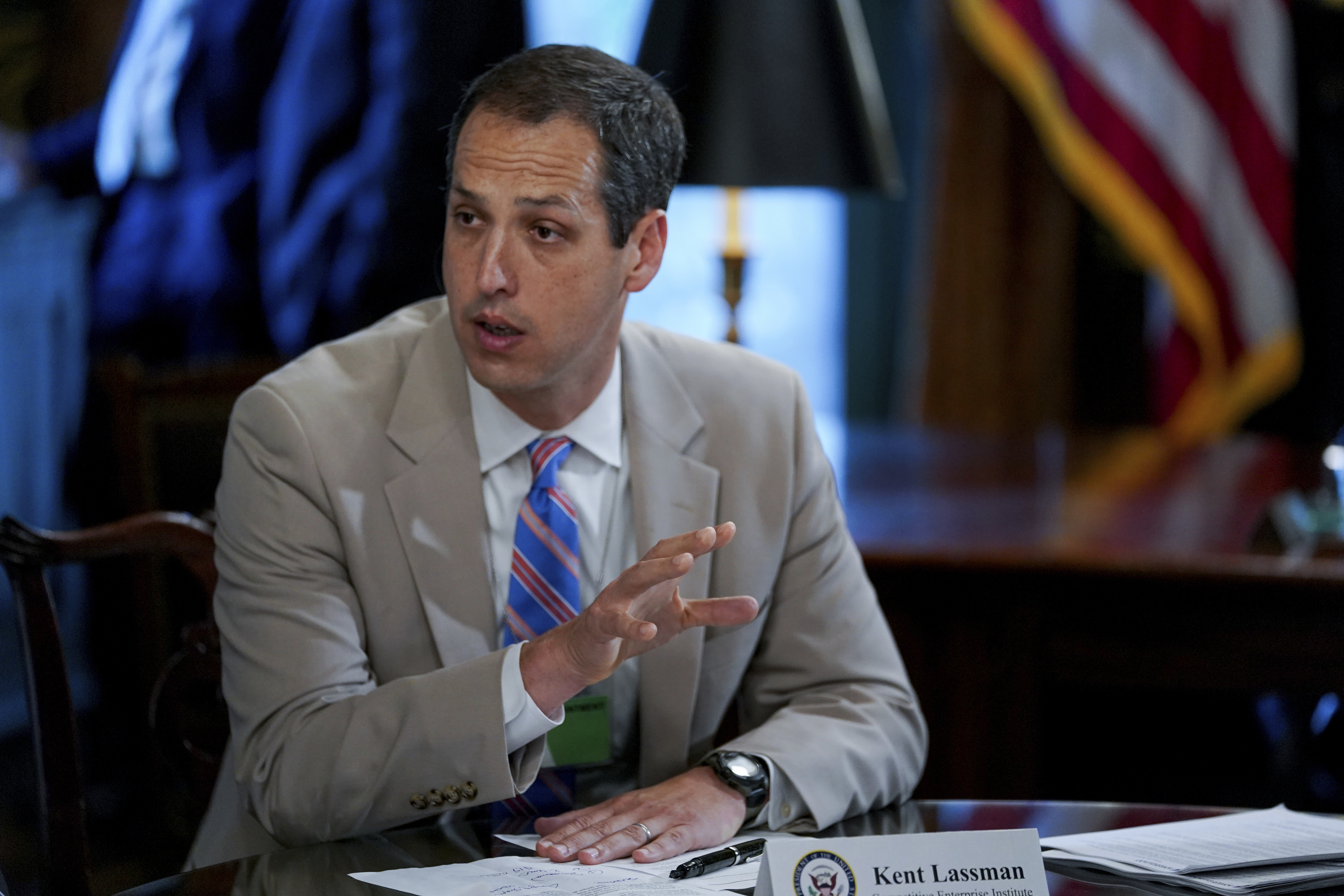
CEI’s Kent Lassman: Meeting Policy With People

InsideSources continues its series of interviews with leading policy professionals in the nation’s capital. We’re speaking with the leaders of think tanks, trade associations, and advocacy organizations, along with government officials, to learn more about their work and their interests outside of politics. Today’s interview is with the Competitive Enterprise Institute’s Kent Lassman. 

Kent Lassman began his career asking how policy affects real people. A question that has led him on a critical journey through the heart of politics.

Lassman serves as the president of Competitive Enterprise Institute, a free-market think tank. His drive to figure out the real-world implications of policy found a home at the organization, which has long focused on the same question. It also led him to become part of an advocacy group that seeks gender equality in sports.

Lassman took on his role as a think tank leader in April 2016. He was just barely into his second day when the organization was subpoenaed by the attorney general of the U.S. Virgin Islands. Lassman recounted the experience and how his life exploring the effect of policy led him to that point.

“I was at a lunch in our conference room, an off-the-record brown bag lunch,” Lassman said. “I excused myself about halfway through, got up to leave. I’m going around the back hallway, around the corner, and our general counsel says, ‘Hey, you need to come in here and look at this.’”

Lassman at the time was speaking with regulators on how to improve federal policy. The meeting was an opportunity to improve regulations so they have a better effect on people. Those ambitions were interrupted when his general counsel informed him that the organization had been subpoenaed.

“We had just been served within the last hour with a subpoena from the U.S. Virgin Islands by the attorney general for 10 years of CEI’s documents, records and materials on one field of study, a large field of study for us,” Lassman said. “And the origin date on that 10-year span was 1997.”

The subpoena was part of a campaign of top law enforcement officials who claimed to be aggressively protecting and advancing policies that combat climate change. CEI contested the whole thing was a blatant attempt to intimidate and silence those who disagreed with the Obama administration on the issue.

“I don’t know if you’ve ever gone through an investigation of any sort, but they’re just grueling,” Lassman said. “I just looked at that document and thought, all those plans I made, everything just went out the window. And that’s where we started from on that second day.”

Lassman and the organization banded together and mounted a defense. His time prior in the research and public relations worlds provided him critical lessons that helped him tackle the legal challenge and pursuit of good policy. Lessons that began like many others in Washington, with an internship.

“My origin story is not unlike many people in Washington in that I grew up in a little town in Illinois, and I decided that what was happening here in Washington was really exciting,” Lassman said. “That’s what I wanted to learn about, that’s what I wanted to be engaged in, and that’s what I wanted to sort out where that foundational excitement translated to a real passion.”

Lassman at the time was a student at Catholic University. His drive from the start was a passion for learning and challenging his own limits of understanding. His first political internship in 1994 was with the Progress and Freedom Foundation.

“When I went in for the final interview, they gave me homework,” Lassman said. “I walked away from that thinking, hands down, that’s the one I want. I want to be at a place where they force me to learn more than I thought I could learn.”

His passion to learn eventually led him to explore the real world effect of policies and abstract political ideas. The very pursuit that has been a defining characteristic of his career since. Lassman knew policies had consequences and thus the effect they had on real people always had to be taken into account.

“I started in think tanks and that’s where I got my first exposure, and things proceeded from there,” Lassman said. “Eventually I was hired to do research, eventually I finished school, eventually life proceeds. The traditional career track where you see people move from job to job and take on increasing responsibilities and whatnot. That was the start.”

Lassman went onto become a researcher at Citizens for a Sound Economy. Billionaire businessmen Charles and David Koch founded the organization with the intent of helping grassroots activists fight for free markets and limited government. It eventually split into FreedomWorks and Americans for Prosperity.

Lassman spent almost a decade and a half in the think tank world before deciding on a temporary career change. He was hired at the public affairs firm DCI Group. There Lassman helped business owners avoid the same type of legal challenges he would one day face upon his return to the think tank world.

“I took a change in career path,” Lassman said. “There’s probably no one reason why anybody does that. But it was, again, it sated that inner desire like, ‘Can I keep learning?’ Is the degree of difficulty going to go up so that I am psychologically rewarded? Work will be hard, and fun, and interesting, and I’ll learn new things.”

Lassman spent eight years in public affairs before being drawn back into his original career path. Like the tribesman of the archetypal hero’s journey, he returned home with new knowledge that helped him become a leader. He was to become the president of CEI.

“It was a great step, and in some ways, it was a coming home,” Lassman said. “Coming home to the policy world, coming home to this libertarian ethos.”

Lassman has spent the last year and a half in his current role exploring ways to exemplify what CEI was already pursuing. His focus on real world policy implications found a home at the organization, which revamped its research into technology, communications, and finance under his leadership.

“There’s a lot you can do to prepare,” Lassman said. “However, I think it would be disingenuous to tell you anything other than I was asking for faith that I was going to step into a steep learning curve and come out on top of that curve. As much as you can prepare to lead an organization, there’s more you can’t prepare for, you just need to do.”

Lassman also stresses the importance of life outside politics. How people across the country have passions, families and communities that don’t revolve around the inner workings of Washington. His passion for competitive racing has helped him achieve that balance when it comes to his own life outside his career.

“Tonight I have a dinner for work on Capitol Hill and afterward I’ll come back here. In that bag over there I have everything I need. I’ll run home. So I’ll do a run commute,” Lassman said. “The activity of a long bike ride, of a long swim, it’s one of the very few places, and the predominant place, where I can clear my mind.”

Lassman has participated in several marathon ocean swims, an ultramarathon, and triathlons. He ran an extreme triathlon in Alaska just last month. He’s also preparing for an Ironman race in a couple of months. He came in third place a year ago in a race in which hundreds of participants swam around Key West in Florida.

His participation in competitive racing and career caught the attention of an advocacy group that fights for equality in triathlons. TriEqual started by raising awareness for the unfair treatment professional women face at major competitions. Lassman was asked to be on the group’s board around when it launched in 2015.

Follow Connor on Twitter

Subscribe for the Latest From InsideSources Every Morning

House Republicans Target Taxpayer Funded Union Work

House Republicans passed a bill Wednesday aimed at providing further oversight into a practice that allows federal workers to do union work instead of their jobs.

Federal employees are allowed to do union tasks instead of their regularly assigned work because of a policy known as official time. The workers retain their title, salary, and benefits while doing the union tasks. Federal reports have found official time usage is often misreported because of oversight problems.

The House bill is aimed at fixing the oversight problem by establishing stricter reporting guidelines. The bill requires the Office of Personnel Management (OPM) to submit an annual report to Congress on the use of official time by federal employees. The bill passed and is now moving onto the Senate for consideration.

The OPM found official time cost taxpayers $162 million in 2014. The Government Accountability Office (GAO) has expressed concerns over how official time hours are calculated. It found in a 2014 report that current methods underestimate how much official time hours are actually being used.

The bill defines official time as any time granted to a federal employee to perform union representational or consultative functions in lieu of their actual responsibilities. The Competitive Enterprise Institute (CEI) has been at the forefront of opposing the practice.

“This policy is well overdue,” CEI labor policy expert Trey Kovacs told InsideSources. “Since 1978, when they first codified official time, essentially a year after that Congress held hearings. They’ve had GAO and IG reports saying how agencies aren’t properly tracking and don’t know how much time federal employees are spending on union business.”

Supporters argue that official time allows federal unions to properly fulfill their legally-mandated duties. Federal agencies and unions negotiate official time provisions in their collective bargaining agreements. Federal officials are only allowed to use official time for certain activities like negotiating or filing grievances.

“These legal provisions have produced an efficient and effective mechanism for the fulfillment of the duty of fair representation,” American Federation of Government Employees President J. David Cox previously said. “Federal employees agree to serve as volunteer employee representatives, and agencies allow them to use a reasonable amount of official time to engage in representational activities while on duty status.”

The CEI has also urged congressional leaders to support a separate bill that would limit official time usage. The Official Time Reform Act prohibits federal employees from conducting political activity on union official time. It also calls for federal employees to lose service credit toward pension and bonuses if they perform union business for 80 percent or more of the hours in a workday.

“Hopefully this passes so they can better evaluate this practice to hopefully eliminate it in the future,” Kovacs said. “At least annually there will be a report that brings attention to this waste in government.”

The Department of Veterans Affairs (VA) has faced backlash in recent years over questionable treatment practices. The agency subjected veterans to incredibly long wait times which left numerous veterans dead. The scandal sparked a national outcry when it first broke in 2014.

The scandal was partially blamed on agency employees using official time. The VA spent an estimated $48 million on official time hours in 2014. The GAO conducted a more recent report Jan. 24 which looked specifically at the VA. It found the agency is still not properly tracking official time hours.

The Senate still has to consider the proposal before it can be sent to President Donald Trump to be signed.

Follow Connor on Twitter

Subscribe for the Latest From InsideSources Every Morning

Free-Market Coalition Urges Lawmakers to Support Overtime Choice Bill

A coalition letter from free-market advocates urged lawmakers Wednesday to support a bill that is designed to provide employees flexibility in how they get compensated for overtime.

The Working Families Flexibility Act would reform federal law governing overtime pay. The bill would allow employees to choose paid time off instead of cash when working overtime. Critics fear it could undermine overtime protections. The Competitive Enterprise Institute (CEI) is leading the coalition letter in support of the bill.

“The legislation is a positive step toward allowing employers to offer flexible work arrangements that make it easier for workers to achieve a better work-life balance,” the letter states. “With this legislation, a worker could choose to receive paid comp time in lieu of overtime wages if the employer agrees.”

The letter was signed by roughly a dozen free-market advocacy groups. Americans for Prosperity, Americans for Tax Reform, the Center for Worker Freedom, FreedomWorks, the National Taxpayers Union, and the R Street Institute were among those that signed the letter.

The Fair Labor Standards Act (FLSA) currently doesn’t allow such an arrangement, even if both the employer and employee prefer it. The Economic Policy Institute (EPI), a progressive research nonprofit, and other critics argue the bill is more beneficial to employers than their workers.

“The legislation does not create employee rights, rather it creates a new employer right – the right to delay paying any wages for overtime work for as long as 13 months,” EPI stated on its website May 2. “The legislation forces workers to compromise their paychecks for the possibility – but not the guarantee – that they will get time off from work when they need it.”

The coalition letter argues the criticism doesn’t reflect what the bill actually does. The bill would first allow employers to offer employees paid time off instead of overtime pay. Employees would then have to choose whether to take the time off or get traditional overtime pay.

“Contrary to some criticisms of the bill, the choice to offer comp time as an alternative to overtime pay is completely up to the employer; and the choice to accept it is completely up to the employee,” the letter states. “In addition, employees would be able to cash in their comp time during the year and employers would be required to pay employees for any unused comp time at the end of the year.”

The bill also subjects employers to penalties if they attempt to intimidate, threaten, or coerce any employee into taking paid time off instead of overtime pay. Both the employer and employee have to be in agreement. Additionally, both the overtime wages and time off would accrue at 1.5 times the overtime hours worked.

“This legislation empowers workers by giving them greater control of their own time and how they are compensated,” the letter states. “Some workers may prefer to receive overtime pay, while others, especially workers juggling hectic family schedules, may want to accrue more paid time off to spend with their families.”

The letter does point to an earlier example of how the policy was deployed. Congress amended the FLSA in 1985 to give government employees the option to receive paid time off instead of overtime pay. The proposed bill would extend that option to the private-sector.

House Republicans successfully passed the bill May 2. It is now being considered by the Senate.

Follow Connor on Twitter

Subscribe for the Latest From InsideSources Every Morning

Report: Ending Taxpayer Funded Union Work

Standing Rock Donations

Lawmakers should end the practice of allowing public-sector workers to do union work instead of their actual jobs, urged a report Wednesday.

Official time allows federal employees to do union tasks instead of their regularly assigned work. The policy costs taxpayers an estimated $162 million annually. The Competitive Enterprise Institute (CEI) released a report arguing that lawmakers should consider reining in the practice.

The report highlights several key areas of concern including costs and mismanaged federal employees. An estimated one thousand federal employees spent every hour at work doing union activities. The report also notes that official time usage is likely underreported.

“Congress should eliminate this federal union subsidy,” the report argues. “At a minimum, it should require detailed annual reporting, and agencies should improve their tracking of union activity. Taxpayers have a right to know how much of their tax dollars are used to finance federal employee unions.”

The report adds official time is problematic because it uses taxpayer dollars for something that doesn’t serve the public interest. Official time instead serves the interest of unions and their members. Supporters counter that official time allows federal unions to properly fulfill their legally mandated duties.

“The goal of this legislation is to eliminate the ability of federal employees to form and join a union,” National Federation of Federal Employees President Randy Erwin previously said. “And to viciously penalize federal employees who serve as union representatives, like stewards, and singling them out and retroactively cutting their pensions.”

The CEI is a research nonprofit that promotes limited government and free-market policies. The group has been highly critical of official time usage. It previously released a letter urging congressional leaders to support a bill that would limit the practice.

The Official Time Reform Act was introduced earlier this month in a move to rein in official time use. It would prohibit federal employees from conducting political activity during official time. Federal employees could also lose service credits toward their pensions and bonuses if too much of their workday is spent doing union activities.

The CEI report also found that it’s often not clear what federal workers are doing during official time hours. Federal officials are only allowed to use official time for certain representational activities like negotiating or filing grievances. The report found 78 percent of reported hours were not clearly defined.

“The official time practice is all cost and no benefit for taxpayers,” CEI labor policy expert Trey Kovacs said in a statement provided to InsideSources. “Congress should stop requiring taxpayers to pay for government union activity that they have no say in and may not agree with.”

The Government Accountability Office (GAO) has expressed some concern over how official time hours are being calculated. It found in a 2014 report that current methods underestimate how much official time hours are actually being used.

The Department of Veterans Affairs (VA) was hit with a national scandals in 2014. The agency subjected veterans to incredibly long wait times which left many dead. The scandal was partially blamed on agency employees using official time. The VA spent an estimated $48 million on official time hours that year.

The GAO conducted a more recent report Jan. 24 which found the agency is still not properly tracking official time hours. Federal employees who utilize official time retain their title, salary, and benefits while doing the union tasks. Federal agencies and unions negotiate official time provisions in their collective bargaining agreements.

Follow Connor on Twitter

Subscribe for the Latest From InsideSources Every Morning