inside sources print logo
Get up-to-date news in your inbox

Dem Report On Lifeline Examines Only 1 of 5 Potential Forms of Fraud
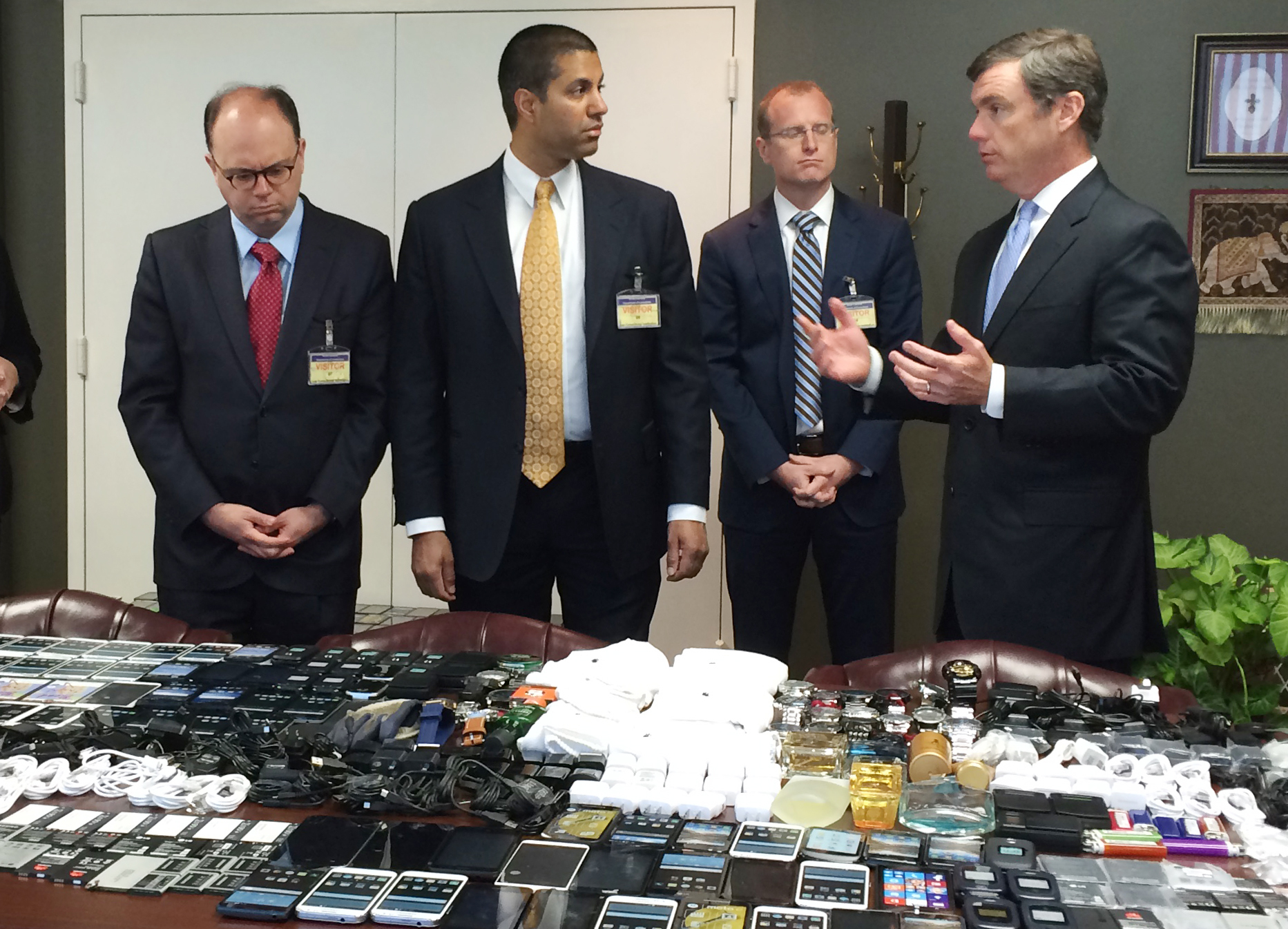
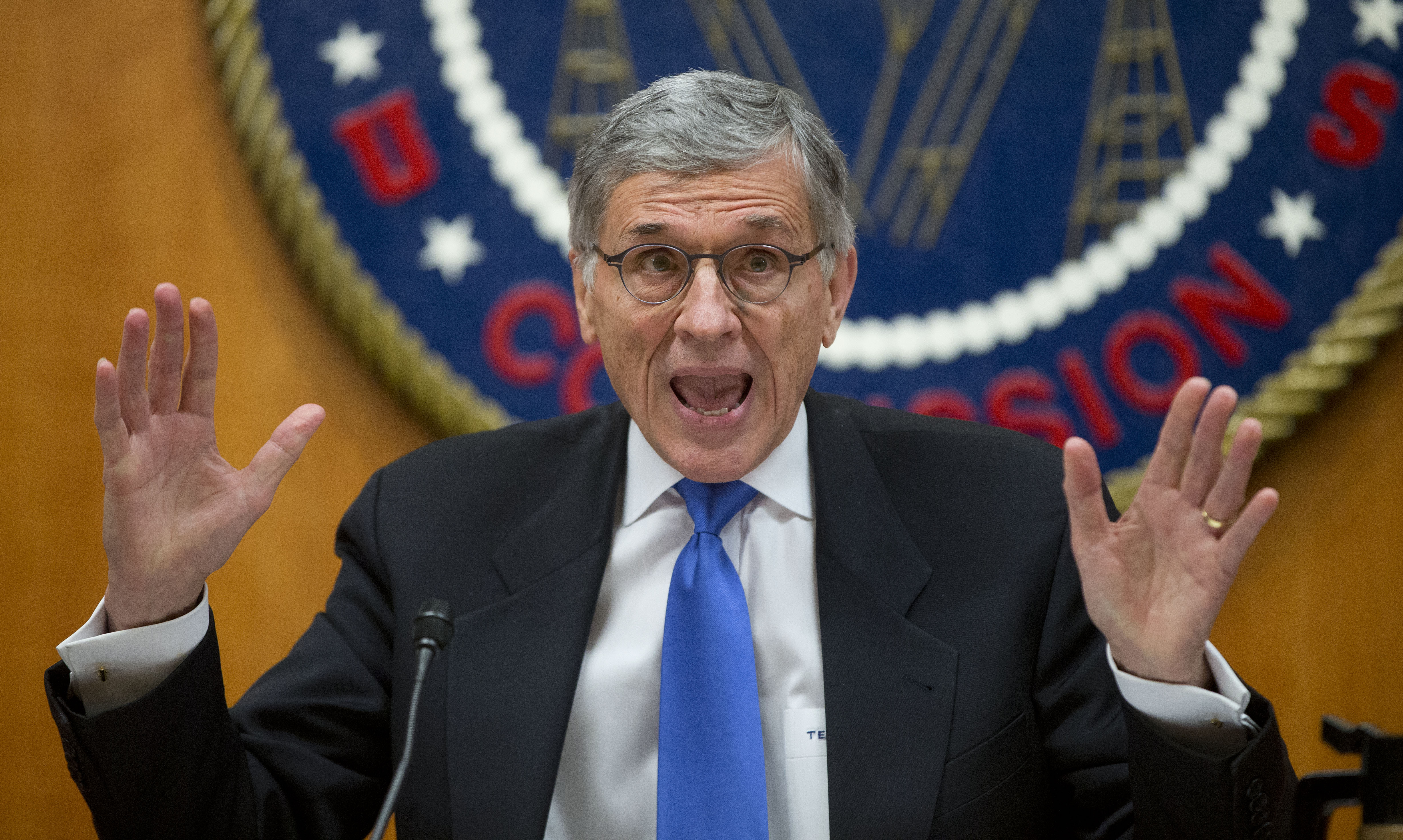
A report by congressional Democrats aimed at discrediting a Republican investigation into potential fraud in the Federal Communications Commission’s low income phone subsidy program overlooked several areas of concern highlighted by an FCC commissioner before drawing its conclusions.

Democrats on the House Energy and Commerce Committee released the report following an FCC oversight hearing in July, when lawmakers put Republican FCC Commissioner Ajit Pai in the hot seat over his ongoing investigation of high duplicate enrollments in Lifeline — the program that distributes a $9.25 monthly subsidy to help low-income Americans pay for phone service.

The program only allows one subsidy per household. Before a telephone service provider can enroll a subscriber, they must submit their application to the the National Lifeline Accountability Database (NLAD). The database flags applicants with the same information as a current subscriber, including address.

In June Pai released the latest results of his investigation finding one-third of all enrollees between October 2014 and April 2016 — 4,291,647 subscribers — were enrolled despite sharing an address with another subscriber. Wireless carriers can approve multiple subscribers with the same address by submitting an Independent Economic Household (IEH) Worksheet to the Universal Service Administrative Company (USAC), the company that administers Lifeline.

USAC will then give carriers permission to override the flag from NLAD. One and a half years of such duplicate enrollments costs $476 million — an amount Pai said is worthy of further scrutiny to ensure carriers aren’t abusing the program for profit, especially after the FCC leveled its largest-ever fine against Lifeline provider Total Call Mobile earlier this year for fraudulently enrolling tens of thousands of subscribers with overrides.

Democrats in their report said Pai’s investigation “relies on incorrect assumptions” by implying every IEH override is fraudulent, discounting the number of subscribers living in multi-household addresses like homeless shelters, veteran group homes, multi-generational residences, and nursing homes. As such, they dismissed Pai’s $476 million in duplicate enrollment costs as “bad data.”

“The recent allegations of fraud in the Lifeline program rely on the broad assumption that every IEH worksheet was fraudulent,” the report reads. “Democratic staff has uncovered no evidence to support this assumption. Indeed, USAC reports that 43 percent of IEH Worksheets filed were submitted in an abundance of caution for subscribers whose information had already been verified.”

During the July hearing, FCC Chairman Tom Wheeler supported Democrats’ findings, saying 2.2 million Lifeline subscribers live in 890,000 multiple resident addresses. He added that U.S. Census Bureau data shows 20 to 50 percent of American households are “doubled-up” households, putting the 16 percent of Lifeline subscribers on the low end.

Pai shot back at those allegations during a press conference following the FCC’s July open meeting, where he pointed out the report only examines one of five loopholes his office is investigating across 16 carriers nationwide.

USAC reported at least 16 other wireless providers have used similar tactics to Total Call Mobile between October 2014 and May 2015, resulting in 213,283 actual duplicates.

NLAD also doesn’t prevent wireless carriers from requesting subsidies for so-called “phantom subscribers,” or subscribers not enrolled in NLAD, which accounted for 460,032 enrollments.

Carriers can also use Third-Party Independent Verification (TPIV) to approve subscribers, despite the fact that USAC does not have to verify the documents used to authorize the enrollment.

The address override process works the same way — though carriers are supposed to collect documentation to verify subscribers with rural or tribal residencies, for example, carriers know overrides are granted without any oversight. Wireless providers have enrolled almost half a million subscribers through the address override process since October 2015.

“That means that unscrupulous wireless resellers can still override that safeguard even for non-qualifying subscribers,” Pai said. “There are no doubt legitimate uses of these override processes. But when nearly half of Lifeline subscribers are enrolled through an override, it’s a sign that something is up.”

Despite finding “specific allegations of waste, fraud, and abuse using the IEH worksheet are not valid,” Democrats in their own report agreed more should be done to combat potential IEH override fraud.

“[S]ome level of abuse of the IEH Worksheets may still be taking place,” the report reads. “Staff encourages the development of any new processes that could assist in monitoring current use of the IEH Worksheet to identify any trends that may need to be addressed and prosecute violators.”

Just days after the report’s release, the FCC fined Texas-based Blue Jay Wireless for falsely claiming thousands of Lifeline subscribers lived on tribal lands in Hawaii — a designation that allows carriers like Blue Jay to enroll subscribers without address verification, in some cases for an even higher monthly subsidy.

After the announcement, Pai confirmed Blue Jay was one of the subjects of his investigation.

“I will continue to work with my colleagues, the Enforcement Bureau, the Inspector General, and the Universal Service Administrative Company to end the abuse of taxpayer money by unscrupulous wireless resellers,” he said.

Follow Giuseppe on Twitter

House Democrats Question Pokemon Go’s Alleged High Data Use

Privacy and public safety aren’t lawmakers only concerns about the wildly popular mobile game Pokemon Go, according to a letter from House Democrats Wednesday, asking the game’s developers about user reports of blowing through monthly data plans in days.

“While Pokemon Go has been highly successful, the game has raised concerns,” Democrats on the House Energy and Commerce Committee wrote to the CEO of Niantic, the games’s developer, in a letter released Wednesday. “We are writing to better understand what measures Niantic has undertaken to ensure consumers are informed of Pokemon Go’s effect on their mobile data usage.”

The augmented reality game requires players to access it outside of the home, often while traveling away from a consistent wifi connection in order to capture Pokemon, check-in at landmarks to find items and engage with other players.

Facilitating those essential functions requires a constant stream of real-time smartphone location data when the app is open.

“In addition to the issues related to the game being played in inappropriate locations, safety, and privacy, recent reports suggest that playing Pokemon Go could exhaust a consumer’s available monthly mobile data,” the letter reads.

According to Android Central the game uses less than 20 megabytes of data per hour of play, meaning an active user putting in three-plus hours daily could use two gigabytes per month — the average entry level data plan offered by most wireless carriers.

Recent survey data shows the average players spends 43 minutes on Pokemon Go daily, compared to 30 minutes on WhatsApp, 25 minutes on Instagram, 22 minutes on Snapchat and 12 minutes on Facebook Messenger. A Guardian report estimates the number of daily Pokemon Go players now likely exceeds Twitter’s 65 million users in the U.S.

“Users have reported maxing out their monthly data usage plans within a week of playing and have complained of eating through an entire family plan within a few days of playing,” lawmakers wrote.

Questions and complaints from users about the impact of the game’s data usage prompted lawmakers to ask Niantic a series of questions related to the app, including practices the company uses to minimize player data use, if the app alerts users to its potential to use data, how it’s working with wireless carriers to ensure users aren’t hit with unexpected overage charges and actions the company is taking if they are.

Committee members including ranking Democrat Rep. Frank Pallone of New Jersey gave the company until Aug. 9 to submit its answers.

Rising data use by the app hasn’t gone unnoticed by carriers, and to the benefit of T-Mobile subscribers. While Verizon says the game makes up less than 1 percent of all its network traffic, CEO of the significantly smaller ‘uncarrier’ John Legere said earlier this month the number of Pokemon Go users on its network doubled in as little as four days, quadrupling their data use.

The carrier has since exempted Pokemon Go data use from users’ monthly data caps in accordance with its Binge On zero-rating program, which also exempts data used by Netflix, Hulu, HBO and other apps boasting heavy data use.

The Federal Communications Commission is conducting an inquiry into zero-rating programs like Binge On over concerns they may violate the agency’s recently upheld net neutrality rules, which forbid internet service providers — a definition that now includes wireless carriers — from favoring certain content over other content.

Follow Giuseppe on Twitter

FCC Democrat Sides with Republican Commissioners on Set-Top Box Proposal

One of the Federal Communications Commission’s three Democratic commissioners broke ranks from the majority Tuesday to side with its two Republican commissioners on possibly the hottest issue pending before the agency — set-top boxes.

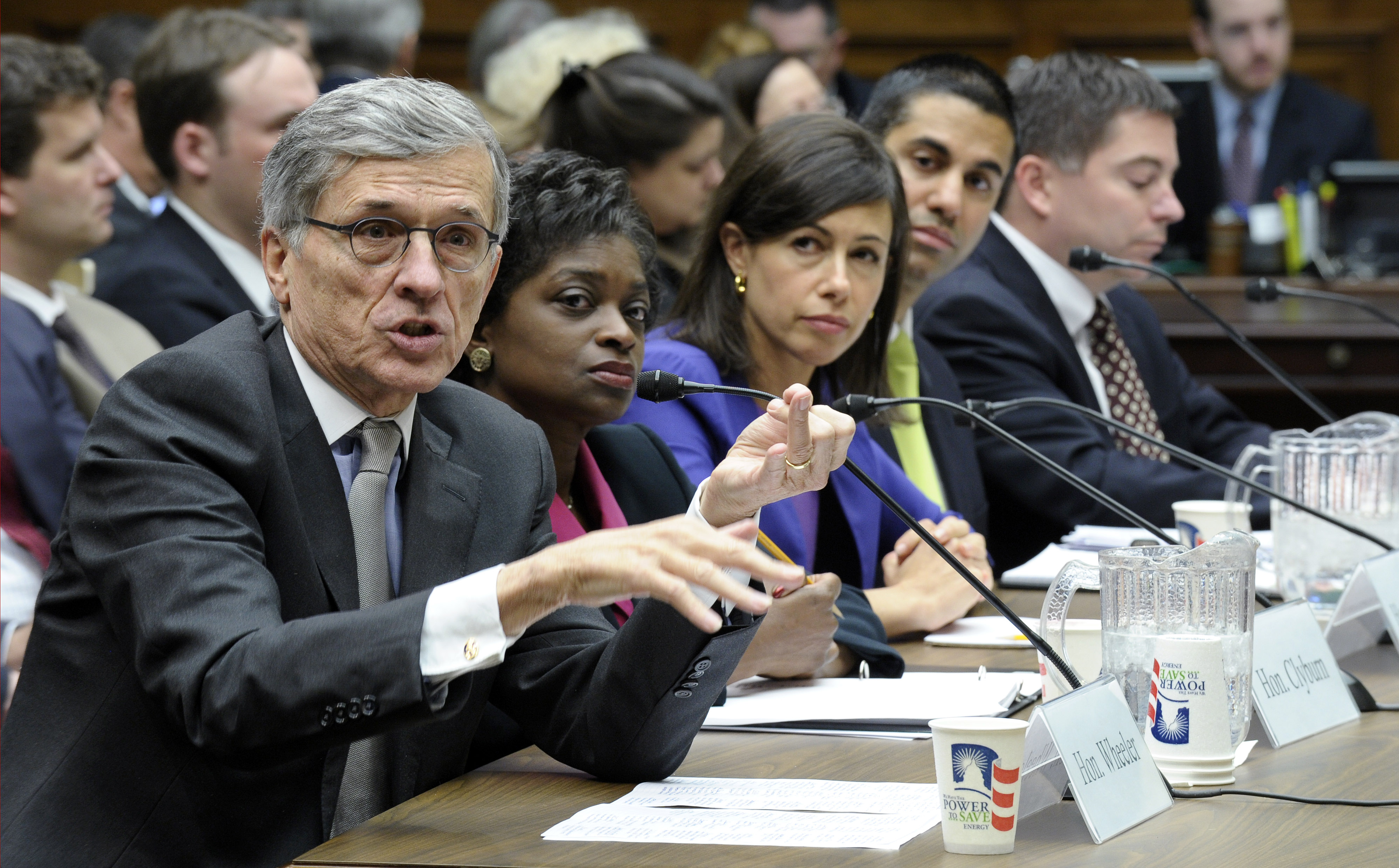
During a congressional oversight hearing Tuesday FCC Commissioner Jessica Rosenworcel agreed there are flaws in Chairman Tom Wheeler’s proposal to mandate pay-TV providers make their content available on third-party set-top boxes.

“I’ll make it easy — yes,” Rosenworcel said in response to a yes or no question from Tennessee Republican Rep. Marsha Blackburn about whether the commissioners thought the initial proposal was flawed.

Though such bipartisan consensus has become increasingly rare at the FCC, Rosenworcel wasn’t the only Democrat to imply there are flaws with the pitch. Commissioner Mignon Clyburn declined to answer the question, while Wheeler said “everything is designed to seek improvement.”

“That’s what we’re trying to do right now,” Wheeler said when asked about taking a different approach from the original Notice of Proposed Rulemaking. “We’re working with the industry.”

All four fellow commissioners agreed on the need for another approach, and that the one recently pitched by Comcast, DirecTV, and the National Cable and Telecommunications Association to offer their content on apps shows promise.

“One page. It’s not a proposal, it’s a press release,” Wheeler said. “The great thing is that it lowered the temperature and we can talk together.”

While Wheeler and Clyburn disagreed the original plan rendered copyright worthless, Rosenworcel again diverged from her colleagues, and said after a meeting with the copyright office she agreed the original plan puts the content that pay-TV providers pay for at risk of manipulation or theft on third-party devices.

“I think that more work is necessary on our part,” Rosenworcel said.

Since the proposal was announced earlier this year content, providers have expressed concern the plan will make their property vulnerable to pirating both nationally and internationally.

“I think that you’ve got a long way to go on set-top boxes,” Blackburn said.

The bipartisan atmosphere didn’t last long. Questions aimed at Pai concerning his ongoing investigation into Lifeline fraud led to bickering between Republicans and Democrats on the Communications and Technology Subcommittee and at the witness table.

While Pai said he believes he’s “uncovered potential fraud,” California Democrat Rep. Anna Eshoo pressed Pai on whether he had any evidence, and warned the commissioner to “be very careful” in making such allegations.

“Just answer me yes or no, have you uncovered any fraud so far?” Eshoo asked.

“To date, I have not reached that conclusion,” Pai conceded.

Pai’s investigation into Lifeline has focused on providers overriding a database meant to flag and prevent multiple enrollments, a practice the agency has fined numerous providers over including the largest in history recently levied against Total Call Mobile.

As was the case with Total Call Mobile, Pai suspects the overrides — which presently account for 48 percent of enrollments — represent the latest trend in provider fraud, while Democrats allege the majority are legitimate overrides for independent subscribers sharing an address like a homeless shelter.

Wheeler said there are 2.2 million Lifeline subscribers today that live in 890,000 multiple resident addresses, and according to the U.S. Census Bureau, 20 to 50 percent of American households are “doubled up” households, putting the 16 percent of Lifeline subscribers on the low end.

“So you’re going to say there is no fraud then? Yes or no?” subcommittee chairman and Oregon Republican Rep. Greg Walden asked, coming to Pai’s defense.

“I’m going to say to you sir that we are vigilantly working, and the reason that we know this is because we have been out making these kinds of investigations,” Wheeler said. “As is the case with most of Commissioner Pai’s so-called statistics, he’s reading from yesterday’s newspaper. These things were shut down in 2015.”

Eshoo said the Lifeline fraud the FCC has taken action on was perpetrated by providers, not subscribers. Pennsylvania Democratic Rep. Michael Doyle said that while the program is assuredly not free of fraud, it’s likely “committed by companies, not the poor.”

Wheeler added his FCC inherited the problem of “the fox guarding the henhouse” from the Bush administration’s FCC, and the National Eligibility Verifier system included in his recent Lifeline expansion adding broadband internet will correct the issue when it goes live in 2019.

Follow Giuseppe on Twitter

House Passes Net Neutrality Carveout for Small Internet Providers

The House of Representatives unanimously passed a bill Wednesday to exempt small Internet service providers from transparency requirements in the Federal Communications Commission’s year-old net neutrality rules.

Wednesday’s passage of the Small Business Broadband Deployment Act guarantees ISPs with no more than 250,000 subscribers five years of immunity from requirements to disclose information including monthly data charges, promotional rates, data caps and network performance mandated under the 2015 Open Internet Order.

“Regulators from the 20th century agencies are trying to manage and control a 21st century world, and it isn’t working,” Republican Majority Leader Kevin McCarthy said in reference to the FCC on the House floor ahead of the vote.

Providers themselves testified before a House panel earlier this year on the difficulty many companies could face if forced to comply with the rules — a requirement they argued would force them to divert personnel and resources away from daily customer service, long-term network growth and investment in place of legal fees.

“These small providers don’t have enough resources to navigate the bureaucratic maze and bring broadband to communities at the same time,” McCarthy said. “And if these small Internet service providers go under, it could leave many people with limited Internet access and no access at all.”

The FCC itself exempted a smaller subsection of providers from the rules for one year after the rules’ passage and renewed the exemption through 2016 in December.

“They still have to, as you know, follow all the laws and all the protections and all that,” House Communications and Technology Subcommittee Chairman Greg Walden said referring to the standard transparency requirements the FCC adopted prior to the net neutrality rulemaking.

Under the enhanced requirements, larger providers like Verizon and Comcast have to publicly report network performance information including reduced service speeds.

Walden authored the bill with Iowa Democratic Rep. Dave Loebsack, championed it through the markup process and a unanimous vote last month in the broader Energy and Commerce Committee charged with overseeing the FCC.

“It is just this reporting requirement that seemed pretty onerous,” Walden said. “And in fact the FCC thought it was when they first came out with their rule.”

Under the bill the FCC will draft a report to explore whether the exemption should be made permanent, and if the definition of small providers covered should be redefined.

A broader companion bill has been introduced in the Senate by Republican Sens. Steve Daines of Montana, Jim Risch of Idaho and Democrat Joe Manchin of West Virginia, but has yet to move.

The Obama administration indicated the president would sign the bill earlier this week, but warned it would not entertain another bill passed out of the same committee yesterday barring the FCC from regulating the rates ISPs charge consumers for service.

“The administration, however, will not support any attempt to undermine the important consumer and economic protections in the Open Internet order that are supported by millions of Americans,” the White House said in a statement. “The administration looks forward to continued conversations with the Congress to help ensure a free and open Internet.”

The legislation was the subject of disagreement between Democrats and Republicans Tuesday, the latter of whom advanced the bill along a partisan line vote out of committee.

Democrats said the bill’s overly broad language threatens to strip regulatory power the FCC needs to protect consumers from fraudulent billing charges, oversee mergers or investigate potential net neutrality violations covered under the order’s general conduct rule.

While speaking before a House Appropriations Committee hearing Tuesday, FCC Chairman Tom Wheeler, who told Congress last year he had “no difficulty” with lawmakers taking rate regulation off the table, said his agency refused to work with the committee on drafting the bill because it wasn’t consistent with his earlier statement.

Wheeler said he supported Congress codifying the FCC’s inability to “deforbear” from rate regulation per the Open Internet Order and remove the option for future commissions.

“But this bill does more than that,” Wheeler wrote in a letter to the Energy and Commerce Committee earlier Tuesday. “It would introduce significant uncertainty into the commission’s ability to enforce the three bright line rules that bar blocking, throttling and paid prioritization rules, as well as our general conduct rule that would be applies to issues such as data caps and zero-rating.”

Wheeler pledged to work with appropriators on separate forbearance legislation, provided it’s consistent with his earlier statement.

Follow Giuseppe on Twitter

House Tees Up Net Neutrality Exemption for Small Providers

The House of Representatives is preparing this week for a vote on a bill to exempt small broadband Internet providers from some net neutrality requirements included in the Federal Communications Commission’s new Internet rules.

Republicans in the House plan to move swiftly on the Small Business Broadband Deployment Act — legislation to relieve providers with no more than 250,000 subscribers from complying with transparency requirements included in the 2015 Open Internet Order.

Providers meeting the bill’s definition won’t have to disclose information including monthly data charges, promotional rates, data caps and network performance.

The House Rules Committee met Monday to discuss the rules under which the bill will be considered before it heads to floor for a vote as early as Wednesday, according to Republican Majority Leader Kevin McCarthy’s office.

Communications and Technology Subcommittee Chairman Greg Walden authored the bill to shield smaller providers from what he, fellow Republicans and providers themselves describe as too “burdensome” and costly for companies lacking the personnel and resources larger providers like Verizon and Comcast can deploy to ensure compliance.

The FCC itself exempted small providers from the requirements for one year after passing the Open Internet Order in 2015, and voted in December to extend the exemption for another year for providers with 100,000 or fewer subscribers.

Walden’s bill would extend that exemption for five years from the date of passage, and compel the FCC to report to Congress within 180 days whether the exemption should be made permanent, and if the definition of a “small business” should be reassessed.

Small providers testified before Congress earlier this year the rules have already forced them to delay plans for expanding their networks to reach more customers over concerns about the cost of hiring lawyers to ensure they’re in compliance with the new regulations.

“Small ISPs do not have in-house lawyers to review and understand the new disclosure rules, administrative staff to maintain the ongoing compliance, or the means to measure packet loss,” Elizabeth Bowles, president of both a trade association representing smaller providers and a smaller provider based in Arkansas told lawmakers in January.

“Moreover, every dollar spent on unnecessary regulatory compliance is one dollar that is not being spent on new hires, network upgrades, and expansion.”

Bowles said companies like hers lack the time, resources or employees to make certain they don’t run afoul of the rules.

“It is one thing for a large broadband provider with its army of lawyers to devote time and resources to the new requirements, and quite another for a [wireless Internet service provider] in West Yellowstone, Montana, to do the same.”

Walden and Energy and Commerce Committee Chairman Fred Upton agreed.

“Two goals central to this committee’s mission were reached,” Walden said following the committee’s advancement of the bill in February, “relieving regulatory burdens for small businesses and protecting consumers.”

“These companies will be able to use their resources to provide service to consumers instead of dealing with Washington red tape,” Upton added.

Larry Spiwak, a former FCC attorney and president of the regulatory and economic think-tank Phoenix Center, described the bill as a “political band-aid” to appease opponents o the rules.

“It’s an informal and political cost-benefit analysis,” Spiwak told InsideSources. “[The FCC] probably should have done a cost-benefit analysis in the [Open Internet] Order, which they never did.”

Democrats and pro-net neutrality interest groups including Public Knowledge questioned the claims of smaller providers, who they speculate could seek to take advantage of the exemption by acting as unregulated monopolies in small rural areas where many consumers lack a choice of competing carriers for service.

Despite some back-and-forth, the subcommittee agreed to the bill by voice vote last month. What Republicans and Democrats on the committee could not agree on is Illinois Republican Rep. Adam Kinzinger’s bill to block the FCC’s authority to regulate the rates broadband Internet service providers charge for service.

The Energy and Commerce Committee passed the bill along a partisan GOP-backed vote Tuesday despite protest from Democrats, who argued the bill’s overly broad language could weaken the FCC’s ability to protect consumers from fraudulent billing charges, or tackle other potential net neutrality violations like zero-rating and interconnection charges.

During Tuesday’s markup Walden singled out T-Mobile’s Binge On zero-rating service as one of the programs he’s seeking to protect with the bill.

The two-page No Rate Regulation of Broadband Internet Access Act simply states the FCC “may not regulate the rates charged for broadband Internet access service.”

“I don’t care if it is one sentence or one page or 100 pages, it says what it says, and it falls short,” California Democratic Rep. Anna Eshoo said during the markup.

Eshoo agreed with the general concept of the proposal during a hearing in January, but sided with Democrats Tuesday in calling for more amendments to protect the FCC’s authority. Republicans rejected those amendments, including one from Eshoo endorsed by FCC Chairman Tom Wheeler, which Wheeler said more accurately reflects the commission’s intention with regard to forbearing from rate regulation.

Republicans instead adopted a single amendment from Walden specifying some of the terms in the bill.

The White House previously indicated President Obama would sign the bill to relieve small providers, but would veto the rate regulation legislation.

Follow Giuseppe on Twitter

In Wake of Paris, FCC Seeks Power to Monitor, Shutter Websites

Citing possible links between terror-related websites and online communications and Friday’s attacks on Paris, FCC Chairman Tom Wheeler suggested Tuesday Congress give the agency more authority to use ‘big data’ to monitor and act on potential threats.

Appearing at a hearing held by the House Energy and Commerce Committee, the Federal Communications Commission chairman told lawmakers that updating a 1994 law could give the agency more power to assist law enforcement and intelligence agencies in the surveillance of terror suspects online.

“We just had this terrible attack in Paris, and hundreds of people were killed,” Texas Republican Rep. Joe Barton said during the hearing. “We need to do something about it. ISIS and the terrorist networks can’t beat us militarily, but they are really trying to use the Internet and all of the social media to try to intimidate and beat us psychologically.”

Barton described the threat of ISIS as “a clear and present danger,” and asked commissioners if there was anything the FCC could do to tamp down the spread of Islamic extremism and radicalization online.

“I would think that even in an open society, when there’s a clear threat — they’ve declared war against us, our way of life, they’ve threatened to attack this very city that our capitol is in — that we could do something about the Internet social media side situation,” Barton said.

“I’m not sure that our authority extends to picking and choosing amongst websites, but I do think there are specific things that we can do,” Wheeler told the House Communications and Technology Subcommittee.

Barton asked if Congress should give the FCC additional authority to allow the agency to “shut those websites down.”

“One of the issues here is the question of, ‘What is a lawful intercept?’ … Something the Congress can define,” Wheeler responded. “You did it in CALEA [Communications Assistance for Law Enforcement Act], things have moved on since then.”

Under CALEA, passed in 1994, Congress mandated telecommunications companies build into their networks the technology necessary to facilitate intelligence and law enforcement agency surveillance, which at the time was limited to telephone wiretapping.

“You read in the press that they were using PlayStation 4 games to communicate on, which is outside the scope of anything ever considered in CALEA,” Wheeler added. “And so there’s probably opportunities to update the lawful intercept concept.”

RELATED: NYT Quietly Pulls Article Blaming Encryption in Paris Attacks

“I think there’s also a question about the security of our networks,” Wheeler said. “There have been 17 fiber cuts in the Bay Area in the last few months mysteriously happening.”

The chairman added there were two additional fiber cuts just yesterday, though not in the San Francisco area. The fiber cables described by Wheeler make up crucial portions of the Internet’s global infrastructure, carrying data underneath oceans to connect major online hubs like the EU and U.S.

“We need to have some kind of a big data capability of determining what’s happening to our network out there, because it’s not just people getting on the network, it’s perhaps people doing things to the network,” he added.

The FCC is currently the only agency capable of reporting network outages via its Network Outage Reporting System (NORS) — a system Wheeler said is vastly underfunded, outdated, and could potentially be used to collect and analyze “big data” to aid law enforcement and intelligence agencies.

“We don’t have the ability to use that to go for big data, to have big data analysis,” Wheeler explained. “It’s barely holding together with baling wire and glue because it’s using ancient technology. We’ve been asking for appropriations to upgrade that.”

Wheeler didn’t elaborate on what forms of data that could entail, or in what facets it could be used to aid in defense beyond protecting physical fiber networks.

“This experience has called out the importance of network security, and if we can’t connect the dots … ” Wheeler continued, “You know after 9/11 we kept hearing, ‘we couldn’t connect the dots.’ We have the ability inside our systems to use big data, connect the dots, but we don’t have the capacity to do it.”

Wheeler pledged to would work with the committee on updating laws that would allow the FCC to aid agencies in defending against potential terrorist threats.

California Democratic Rep. Anna Eshoo pointed out the FBI has already acknowledged it needs to work the House Permanent Select Committee on Intelligence on investigating fiber cuts.

The agency announced in July it was investigating the cuts described by Wheeler, which disrupted Internet service to business and residents in the San Francisco Bay Area.

“I don’t think this is coincidental either,” Eshoo added.

Follow Giuseppe on Twitter

House Pushes Back Obama Plan to Hand Over Internet Domain Authority

The House of Representatives expressed skepticism this week over the Obama administration’s plan to hand over authority of the global Internet domain registry to the global community.

House members heard testimony from a panel of industry experts Wednesday afternoon about whether the Internet Assigned Numbers Authority (IANA) — the department within the non-profit Internet Corporation for Assigned Names and Numbers (ICANN) that assigns Internet protocol addresses and oversees domain names — is ready to transition from falling underneath U.S. Commerce Department oversight to that of an “international multi-stakeholder community” model, without sacrificing the security and integrity of the Internet.

“From the time the administration announced their intent to transition the IANA functions from ICANN to the international multi-stakeholder community, I’ve had very serious concerns about the potential risks associated with the move,” Communications and Technology Subcommittee Chairman Greg Walden said.

“We’ve said time and again that this is far too important to rush, and that we must carefully consider all of the consequences and outcomes before we ring a bell that cannot be unrung.”

Since the birth of the modern incarnation of the Internet in the ’90s, the National Telecommunications and Information Administration within the Commerce Department has overseen ICANN, which, through IANA, essentially maintains the roadmap of the Internet that guides Internet-connected devices to websites.

ICANN has performed this function in a universally recognized unbiased manner that has drawn little scrutiny from the global community, outside of the fact that the U.S., as the country that developed the Internet, has maintained independent oversight, despite the Internet’s extension to every corner of the globe since.

The White House first announced its intention to transfer authority over ICANN last March — a move that solicited criticism from industry experts and former government officials over concerns that certain global actors, such as China and Russia, could use the opportunity to compromise Internet security and website authenticity for profit and control. Some speculated it could even lead to countries establishing their own proprietary Internet, or establishing global Internet taxes for connectivity and access.

House members addressed those concerns last year with the introduction of the Domain Openness Through Continued Oversight Matters (DOTCOM) Act, which prevents NTIA from agreeing to a transition until after the Government Accountability Office (GAO) submits a report to Congress about the risks, advantages, and disadvantages and also proposes safeguards for such a deal.

The bill has yet to get a vote on the House floor, as both Republicans and Democrats have proposed amendments, but the committee has already asked the GAO to begin assembling the report.

ICANN’s current contract with NTIA expires on September 30, but members including Walden urged the government to renew the contract for another two years to ensure a safe transition, arguing that it can be canceled early if need be, rather than rush the transition.

Panel witnesses, including from Intel Corporation, the Heritage Foundation, NetChoice, the Center for Democracy and Technology and the Open Technology Institute, disagreed over a number of issues relevant to the transfer, including the timing of any transition.

Audrey Plonk, Intel’s director of global cybersecurity and Internet governance policy, said the timing should be decided by the multi-stakeholder community developing the transition proposals.

“It is critical Congress provide support for the multi-stakeholder governance process, as the alternatives — equalized control through an intergovernmental body like the [UK’s International Telecommunication Union — are far worse for companies like Intel, individual users of the Internet, and American economic growth,” Plonk said.

“When the U.S. government oversight role ends, ICANN will come under considerable pressure from a number of interested parties to adopt policies that they favor,” Heritage Foundation senior research fellow Brett Schaefer said. “Failure could lead to inefficiencies, instability, partiality, or other problems that could result in substantial financial costs and inhibit a vital medium for speech and political discourse. However, there will only be one opportunity to do this and it must be done right.”

“Looking at the hurdles that must be cleared prior to August, there is very little chance that this will happen.”

Representatives in the House Judiciary Committee during another hearing examining the IANA transfer Wednesday agreed the timeframe should be pushed back.

“In other words, until the end of the fiscal year 2016 this transition would not be allowed to go forward,” Subcommittee on Courts, Intellectual Property and the Internet Chairman Darrel Issa said about language in the Commerce Department’s 2016 budget prohibiting the transfer.

“Possibly the earliest is next spring of 2016,” NetChoice executive director Steve DelBianco said at the Judiciary Committee hearing. “It might well likely leak into much later in 2016.”

Lawmakers based their decision in part on what they described as ICANN’s poor oversight of a recent domain name dispute involving the Canadian registry firm Vox Populi, which is selling the domain suffix “.sucks” for $2,500 each to companies including Apple and Citigroup.

Vox Populi is only selling the suffix to trademark holders through the end of the month, after which it will begin selling it for $249 to anyone, leading many to accuse the company of extorting trademark holders trying to protect their brands from Internet critics or parodies.

ICANN has asked the FTC to investigate the issue, prompting lawmakers including Judiciary Chairman Bob Goodlate to criticize the agency for failing to police the dispute itself, and insisting ICANN demonstrate greater accountability in settling disputes before any transition is allowed to go forward.

In a separate issue involving a dispute between Amazon.com, Brazil and Peru over the ownership of the “.Amazon” suffix, Amazon’s vice president of global public policy Paul Misener said ICANN disregarded Amazon’s claim to the suffix as a result of influence from the foreign governments.

“This blemish is disqualifying, at least until cleared,” Misener said.

Texas Republican Rep. Joe Barton on the Energy subcommittee best summed up the question on many Republicans’ minds since the administration announced the transfer last year.

“I’ve tried to think of international multi-stakeholder institutions, I can’t think of one that works better or as well — and I hate to say this — than the federal government,” Barton said while ticking off examples including the United Nations, the International Olympic Committee and the World Bank.

“Somebody on this panel enlighten me — we’ve got a system that’s not broke, it’s the most open, transparent process out there,” Barton said. “Why try to change something that, for all intents and purposes, is one of the best multi-stakeholder, transparent, international processes out there that has the benefit of having an enforcement mechanism behind it?”

“Seventeen years ago, when ICANN was set up, in their bylaws they explicitly took away the ability for the community to actually police them,” DelBianco answered, adding that ICANN doesn’t have to answer to shareholders, trade association members or voters.

“Instead, the broad community has to run to Congress or NTIA to try to get a little leverage put on ICANN,” DelBianco said. “I think when you look at the testimony of what we’ve drafted so far, we’re giving the community dramatic new powers that are more like those that a shareholder does or that a voter has, and I think that’s how we’ll police the road.”

Former senior White House technology policy advisor Richard Russell agrees that ICANN’s current transitionary objectives are misplaced and at odds with its core mission.

“The U.S. government helped design and set-up ICANN as one of the key stewards of the Internet,” Russell, who served under the George W. Bush administration, told InsideSources.

“Its job was to ensure the stability and security of the [Domain Name Service] system for the benefit of the web’s users. ICANN’s current focus on expanding its own revenues and authority seems misplaced and undermines its mission and reason for existence.”

Follow Giuseppe on Twitter