inside sources print logo
Get up-to-date news in your inbox

Congress Refutes EPA on Puerto Rico Landfill Crisis
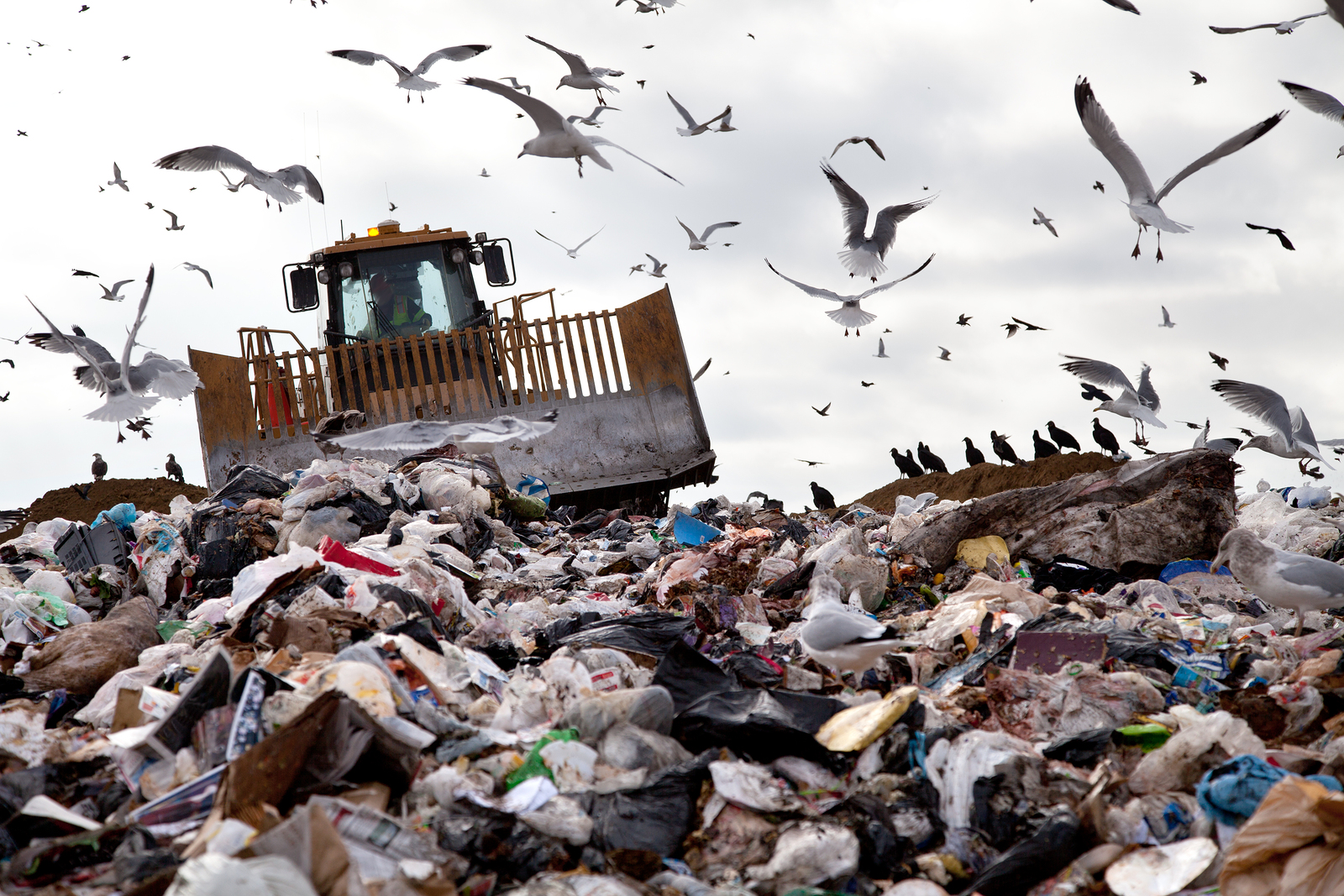
It seems that Congress and the Environmental Protection Agency aren’t on the same page — at least when it comes to the Puerto Rico landfill crisis.

A report from the bipartisan Congressional Task Force on Economic Growth in Puerto Rico released this week found that most of Puerto Rico’s landfills are in violation of EPA’s regulations governing solid waste management.

Yet, the EPA, in a letter to the co-founder of a Puerto Rico landfill advocacy group, was touting successes in closing some of the overrun landfills and ensuring that they care about Puerto Ricans environment and health.

The task force was created after the passage of the Puerto Rico Oversight, Management, and Economic Stability Act (PROMESA), effectively bailing out the island territory temporarily from its financial burdens, while setting up a Congressional oversight board to offer recommendations to improve their economy.

Although the landfill crisis is not directly related to the task force’s mission, they included a brief section about it in their 125-page report to Congress.

“Although this issue falls somewhat outside of the Task Force’s domain, the Task Force would be remiss if it did not discuss it briefly, given the risks to public health and the environment that appear to be posed by the status quo,” the report states. “The Task Force is concerned with the state of Puerto Rico’s municipal solid waste landfills, and the potential impact on public health and the environment. The Task Force recommends that the committees of jurisdiction in Congress examine this issue, which has only recently attracted significant public attention, to determine whether there are additional steps that can and should be taken.”

Puerto Rico’s landfill crisis has been escalating in the past 20 years. The EPA granted local authority of the 29 active landfills on the island to the Environmental Quality Board.

However, a citizen’s action group called Puerto Rico Limpio (or Clean Puerto Rico), alleges that the local EQB has not been enforcing any of the federal rules required of landfills, like placing a liner between the ground and trash or taking care of dirty water lakes from garbage runoff which could potentially impact residents’ drinking water.

The group also claims that 19 of the 29 landfills in Puerto Rico have been non-compliant for years and the EPA has ignored these problems, despite receiving several internal reports suggesting otherwise.

“The Task Force was clear: Congress is concerned with Puerto Rico’s landfills and their impact on public health and the environment,” said Hiram Torres Montalvo, co-founder of Puerto Rico Limpio, in a statement. “We thank the members of the Task Force for their commitment to Puerto Rico.”

Torres Montalvo also called on Congress to investigate EPA Region 2 Administrator Judith Enck and Director of the EPA’s Caribbean Environmental Protection Division Carmen Guerrero for negligence with the landfills, similar to how the United States is handling the fallout from the Flint, Mich. water crisis.

“Congress can play a vital role in doing what Enck and Guerrero have refused to do – close every toxic landfill that is threatening the public.  But just like Flint, they should conduct an investigation into the personal culpability and role of Judith Enck and Carmen Guerrero,” he said. “ They cannot escape from their guilt. They have said to Puerto Ricans: ‘you are second-class citizens.”

“This would never have happened in New Jersey, where two members of the Task Force reside,” he added. “Change has come to San Juan and Washington, and Puerto Rico Limpio looks forward to working with Governor-elect Ricardo Rosselló and the federal administration of President-elect Donald Trump to solve this scourge once and for all.”

The EPA recently announced that they would be closing two landfills, Arroyo and Cayey, and have legal agreements to close 12 landfills.

But the task force said that the EPA provided them with a chart, which claims about 70 percent of Puerto Rico’s landfills are in violation of federal regulations.

This is a different tone the EPA had after Enck sent a letter to Torres Montalvo where she said that 10 landfills operate with fully-lined disposal cells and even 15 sites have implemented a mosquito control plan. The landfills have become a breeding ground for mosquitoes where it poses a risk of spreading the Zika virus, which has already been a major issue for the island.

“The EPA continues to investigate the landfills on the island, and where necessary, will take legal action,” Enck wrote in a November letter. “Thus, the agency has acted and will continue to act to protect public health and the environment from adverse impacts from the municipal solid waste landfills in Puerto Rico.”

Torres Montalvo isn’t convinced.

“It is encouraging to read that the EPA shares our concerns about this crisis, but given the dismissive approach and the continuing widespread contamination you even acknowledged in your letter, the EPA’s concern is not translating into any effective action,” he wrote back in a December letter to Enck. “There is no other way to describe this reality other than a dereliction of federal duty.”

Puerto Rico Limpio put forward a four-point plan with recommendations for handling the landfill crisis. They suggest revoking the permitting authority of the EQB, closing toxic dumps immediately, repurposing closed landfills for conversion for alternative energy uses and adopting a plan for full compliance for remaining landfills. And now they hope Congress will take action and make the landfill crisis a priority for the island territory.
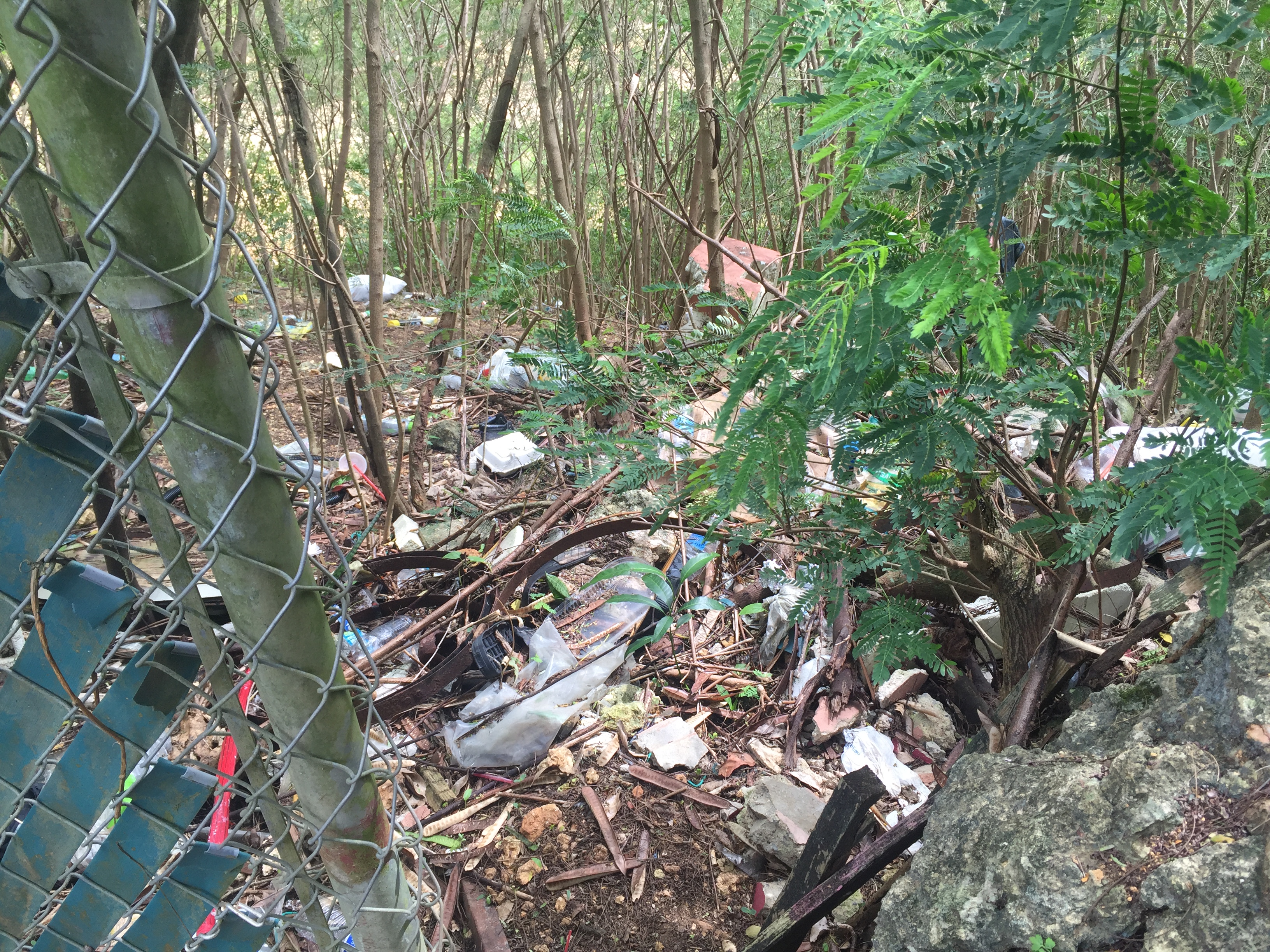

Puerto Rico’s Landfill Governing Authority Says They Do Not Inspect All Landfills on the Island

In an interview with a local Puerto Rican media outlet, the president of the Environmental Quality Board (EQB) made a shocking admission about the landfill crisis in the U.S. territory.

Weldin Ortiz Franco acknowledged that they have eight to 10 inspectors, who are not exclusively dedicated to landfill inspections and sometimes fail to inspect all the landfills on the island.

“We try to see them [in] quarterly fiscal years but there are many that we cannot do it,” he told The Spokesman in Spanish. To have more employees, he said, “we could have more comprehensive work plans and a system of more frequent inspections.”

The EQB in Puerto Rico has local authority over the 27 active landfills on the island. They received that power in 1994 when they submitted a proposal detailing how they would follow federal rules and regulations when in charge of the landfills.

However, a citizen’s action group called Puerto Rico Limpio (or Clean Puerto Rico), alleges that the local EQB has illegally changed some its original rules for landfills and didn’t get approval from the Environmental Protection Agency to do so.

The group also claims that 19 of the 27 landfills in Puerto Rico are non-compliant, and for years, the EPA has ignored these problems, despite several internal reports suggesting they should act.

The relationship of the EPA and EQB is a unique and tricky one. Once the EPA has granted local authority to the EQB, they are technically no longer in charge of the landfills.

“EQB has primary responsibility for regulating solid waste landfills in the Commonwealth, and federal landfill criteria governing solid waste are not directly enforceable by EPA in Puerto Rico. Only EQB has permitting and solid waste enforcement authority over the landfills,” said John Martin, a spokesman for the EPA, in a statement to InsideSources.

However, the statement Martin provided was the same exact language the EPA used in its September 2016 Fact Sheet, titled “EPA’s Work To Address Puerto Rico’s Landfills.”

But the EPA will step in and enforce federal laws if there are serious environmental and health risks under the Resource Conservation and Recovery Act (RCRA) Section 7003 Imminent and Substantial Endangerment Authority. They used that to send consent orders to nine open dumps — multi-family dumpsite of any size or content, which is illegal under RCRA — in Puerto Rico, according to a June letter from the EPA Region 2 Administrator Judith Enck on behalf of EPA Administrator Gina McCarthy to Rep. Dennis Ross, R-Fla.

Puerto Rico Limpio says the EPA is not doing enough to deal with the environmental and health problems in the territory.

“Weldin Ortiz confirmed what Puerto Rico Limpio has been saying from the start: the non-compliant landfills are toxic and should be shut down immediately,” said Hiram Torres Montalvo, cofounder of Puerto Rico Limpio, in a statement. “The failure to shut down these landfills rests solely with [EPA Region 2 Administrator] Judith Enck and the EQB, and attempts to abdicate responsibility by claiming there’s no money is a politically expedient attempt to shift attention away from their massive failure to protect the public’s health.”

Torres Montalvo also points out that Ortiz Franco says there is not enough staff in his office to carry out closures and perform inspections, but the EQB has essentially cut their entire staff.

According to EPA documents obtained by the citizen’s action group, in a 2014 assessment, the EPA found that the “EQB has eliminated or left open all central solid waste compliance and permitting staff positions.”

In 2000, they employed 14 central solid waste compliance and permitting staff, and by 2005, it had been reduced to five employees. In 2010, staffing was reduced to one, and by 2012, there were no central solid waste compliance and permitting staff.

In the June letter, the EPA recognized that the current financial crisis in Puerto Rico could have an impact on EQB staffing.

“This problem is compounded by the dwindling resources made available to the Puerto Rico Environmental Quality Board by the central government to carry out their solid waste compliance and enforcement program, a situation that we understand predated the current fiscal crisis facing the Commonwealth,” Enck wrote. “This has resulted in, among other things, reduced staffing and reported delays in permitting of new and existing landfills.”

While, the EQB sends staff to inspect the landfills, the EPA will occasionally send its own inspectors to file “fact sheets” about the current state of the landfills for internal use.

Martin, the EPA spokesman, did not expand on how many times the EPA sends its own inspectors to Puerto Rico’s landfills and did not answer a question about whether the EPA receives any of the reports from EQB inspectors, who according to EQB president Ortiz Franco, are not able to inspect all of the landfills.

“The document you cite was an internal EPA briefing document,” he said. “The EPA conducts inspections of landfills in Puerto Rico, but does not conduct annual ‘general assessment’ reports.”

Also in The Spokesman article, Ortiz Franco calls upon Rep. Luis Gutierrez, D-Ill., to advocate for more federal funding to help close some non-federally compliant landfills.

“We have the staff, we have the expertise, the obligation to do so and regulatory law. That [Gutierrez] helps us to have a Congressional funding level to fund landfill projects that approach the Board so that we can put up with the needs of the Board and collaboration with federal funds to hire more people and have a more agile process control at the facilities,” Ortiz Franco said.

Congress just passed in June the Puerto Rico Oversight, Management and Economic Stability Act, known as PROMESA, which aims to tackle the island’s billions of dollars of debt.

Gutierrez, who is of Puerto Rican heritage, isn’t Puerto Rico’s Congressman. Although he has an affinity for the island since he used to live there, there’s only so much he can do. He went to Puerto Rico recently to see the landfill crisis up close and how it is impacting residents who live in the neighborhoods around landfills.