inside sources print logo
Get up-to-date news in your inbox

Union Faces Lawsuit Over Strict Opt-Out Demands

A Michigan union is being challenged in court by two grocery workers for restricting how they can become nonmembers in a case that highlights an even greater national debate.

The United Food and Commercial Workers Union (UFCW) is one of many unions that restrict how and when members can leave. Critics have denounced those types of policies as unreasonable. UFCW Local 876 was hit with a class-action lawsuit by two grocery workers who tried but failed to become nonmembers.

Robbie Ohlendorf and Sara Adams filed the lawsuit to challenge two policies which prevented them from becoming nonmembers in 2016. Glenn Taubman, an attorney for the workers, argues that the case points to a bigger national issue – that most unions deploy some kind of restriction that makes it more difficult for workers to leave.

“These grocery store workers in Michigan are challenging two restrictions that the union put on them,” Taubman told InsideSources. “One is that they can only communicate by certified mail. The second is they can only send their revocation during this narrow 15-day window period. And if they miss they’re stuck paying for a full additional year.”

Ohlendorf and Adams sought help after they were unable to become nonmembers. The National Right to Work Legal Defense Foundation (NRTW) stepped in by providing them with free legal assistance. The nonprofit advocates for workers having a choice on whether to be unionized.

The two grocery store employees have since worked their way through the court system. A Western Michigan District Court judge sided with the union by ruling that dues deduction authorization restrictions were binding. The workers then appealed their case to the U.S. Sixth Circuit Court of Appeals where it was heard Feb. 1.

“Workers are being trapped into paying forced dues against their will because union bosses have created hurdles solely to block them from exercising their rights,” NRTW President Mark Mix said after the case was heard. “A favorable ruling from the Sixth Circuit Court of Appeals would send the message that union bosses cannot limit employees’ rights through these arbitrary requirements.”

Taubman notes that the workers tried to go through the union process but were rejected simply because it wasn’t the right time of year. Labor unions have been known to deploy these types of methods elsewhere with annual opt-out windows being one of the more popular.

“They found us because they sent in letters to the union saying we’re resigning and we want to revoke our dues and the union refuses to allow them to revoke,” Taubman said. “The union said they can resign if they want, but they’re going to take their money anyway.”

Taubman adds that such restrictions violate provisions related to the National Labor Relations Act. He also notes that they have previous cases to point to which have upheld their position. The U.S. Supreme Court, for instance, ruled against similar restrictions in the 1959 case Felter v. Southern Pacific Co.

“We cite a ton of cases going back to the 1950s,” Taubman said. “There are court cases that say that unions are not privileged to ignore otherwise authentic letters from people. We have a ton of case law to support us. The union is not allowed to put these types of impediments in the way of people who are trying to exercise their right to leave.”

Nowhere can a worker be forced to be a union member, but in states without right-to-work laws, unions can require a nonpolitical fee. Taubman notes that unions have imposed opt-out restrictions in both states with and without the law – but adds that he has seen those tactics to a greater degree as more states turn right-to-work.

“It’s the same kind of restrictions, whether it’s a time restriction, whether it’s a certified mail restriction, or something like that,” Taubman said. “They’re just trying to make it more difficult.”

Labor unions have faced increasing scrutiny for policies that make it more difficult to leave. The National Employee Freedom Week was established six years ago as a national campaign to educate workers on their rights to become nonmembers – arguing that such information is often not provided to workers.

Local 876 did not respond to a request for comment by InsideSources.
Follow Connor on Twitter

Supreme Court Accepts Case to End Forced Union Dues

The U.S. Supreme Court has decided to take up a case Thursday which aims at ending mandatory union dues for all public-sector workers.

The case seeks to reverse a decades-old ruling by the court which affirmed the right of labor groups to collect fees from workers who did not want to belong to their workplace union. Lead plaintiff Mark Janus filed the lawsuit alongside two other Illinois state workers.

The lawsuit argues that mandatory union fees in the public sector are a violation of the first amendment. The American Federation of State, County and Municipal Employees (AFSCME) is the primary union named in the lawsuit, but the ultimate goal is to end mandatory union dues for all public-sector workers.

Employees who do not wish to belong to their workplace union can be required to pay a fee in many states. That fee can only cover collective bargaining costs and not political activities. The lawsuit argues public-sector collective bargaining and political lobbying are indistinguishable.

The Seventh Circuit Court of Appeals ruled against the lawsuit March 21 by affirming an earlier district court decision. The decision opened the door for an appeal to the Supreme Court. The National Right to Work Legal Defense Foundation (NRTW) has been assisting the state workers alongside the Liberty Justice Center (LJC).

“With the Supreme Court agreeing to hear the Janus case, we are now one step closer to freeing over 5 million public sector teachers, police officers, firefighters, and other employees from the injustice of being forced to subsidize a union as a condition of working for their own government,” NRTW President Mark Mix said in a statement provided by InsideSources. “We are hopeful that by the end of this Supreme Court term, the High Court will finally end this anomaly and fully protect the First Amendment rights of public sector workers against an injustice that has existed for over half a century.”

Labor unions and their supporters argue that optional dues encourage workers to free-ride. Unions are obligated to represent everyone in a workplace once they get voted in as the exclusive representative regardless of whether they pay. States that have right-to-work protections have outlawed the practice of mandatory dues or fees.

“Every union-represented teacher, police officer, caregiver or other public service worker may choose whether or not to join the union — but the union is required to negotiate on behalf of all workers whether they join or not,” AFSCME noted July 7. “Since all the workers benefit from the union’s gains, it’s only fair that everyone chip in toward the cost.”

The U.S. Supreme Court affirmed the union position in the 1977 case Abood v. Detroit Board of Education. The decision also established the exception for political spending. The free-ride argument is used against both lawsuits challenging mandatory union payments and right-to-work laws.

Labor unions often neglect to mention that being an exclusive representative isn’t the only way unions can organize. Member only unions aren’t obligated to represent nonmembers or anyone not paying dues or fees. The downside is they lose monopoly rights which block other labor groups from trying to organize established bargaining units.

California teacher Rebecca Friedrichs challenged her union in a similar case that went to the Supreme Court last year. The court became split after the death of Justice Antonin Scalia. A tied decision defaults to the lower courts, which ruled against the lawsuit.

Justice Neil Gorsuch has since filled the vacant seat and is expected to rule on the side of the state workers. Friedrichs expressed her support for the new case in a legal brief she submitted to the court July 19. She added in the brief that parents and educators no longer have a say in her public schools because of the teachers’ unions.

The Competitive Enterprise Institute (CEI) also submitted a legal brief to the court July 10 arguing that unions often use forced union dues to pay for conferences and conventions, where many activities are political in nature. Those conferences have allegedly involved discussions on gun control laws and election protests.

“It’s encouraging that the Supreme Court accepted this landmark case addressing the First Amendment rights of all public workers,” Trey Kovacs, labor policy expert at CEI, said in a statement provided to InsideSources. “No hardworking man or woman should be compelled to fund a labor union that does not represent their values or interests. For far too long, workers nationwide have been forced to finance unions they didn’t vote to join and pay to support inherently political organizations. It is time to stop this state-backed union funding scheme.”

Illinois Republican Gov. Bruce Rauner first launched the current challenge by issuing an executive order in 2015 directing the state to stop taking union fees from state workers who were not union members. The governor also filed a lawsuit in federal court, asking it to affirm his decision was legal.

Illinois Attorney General Lisa Madigan, a Democrat, and some state unions moved in to counter the lawsuit. They argued the governor didn’t have standing to bring the lawsuit because he didn’t have to pay union dues or fees. A person with legal standing has a right to bring a lawsuit because they were harmed by a law or action.

NRTW and LJC decided to intervene when they saw the case was in trouble. They joined the case by offering legal assistance to the three state workers. A federal judge ruled a short time later that the governor did not have standing to proceed with the case, but the three state workers did.

Labor unions have a lot to lose if the lawsuit ends mandatory union dues in the public sector. The Bureau of Labor Statistics (BLS) reported that the union membership rate stands at 34.4 percent for public-sector workers, but only 6.4 percent for private. At the same time, federal workers aren’t required to fund unions but often do anyway.

Congressional Republicans have also introduced a bill aimed at making union dues and fees optional for all workers. Republicans hold a congressional majority, making its passage a possibility. President Donald Trump has already expressed his support for right-to-work laws and is likely to sign such a bill.

Janus v. AFSCME could become one of the most impactful lawsuits when it comes to national labor law if the justices decide to reverse course on current case precedents.

Follow Connor on Twitter

Former Union President Embraces Right-to-Work

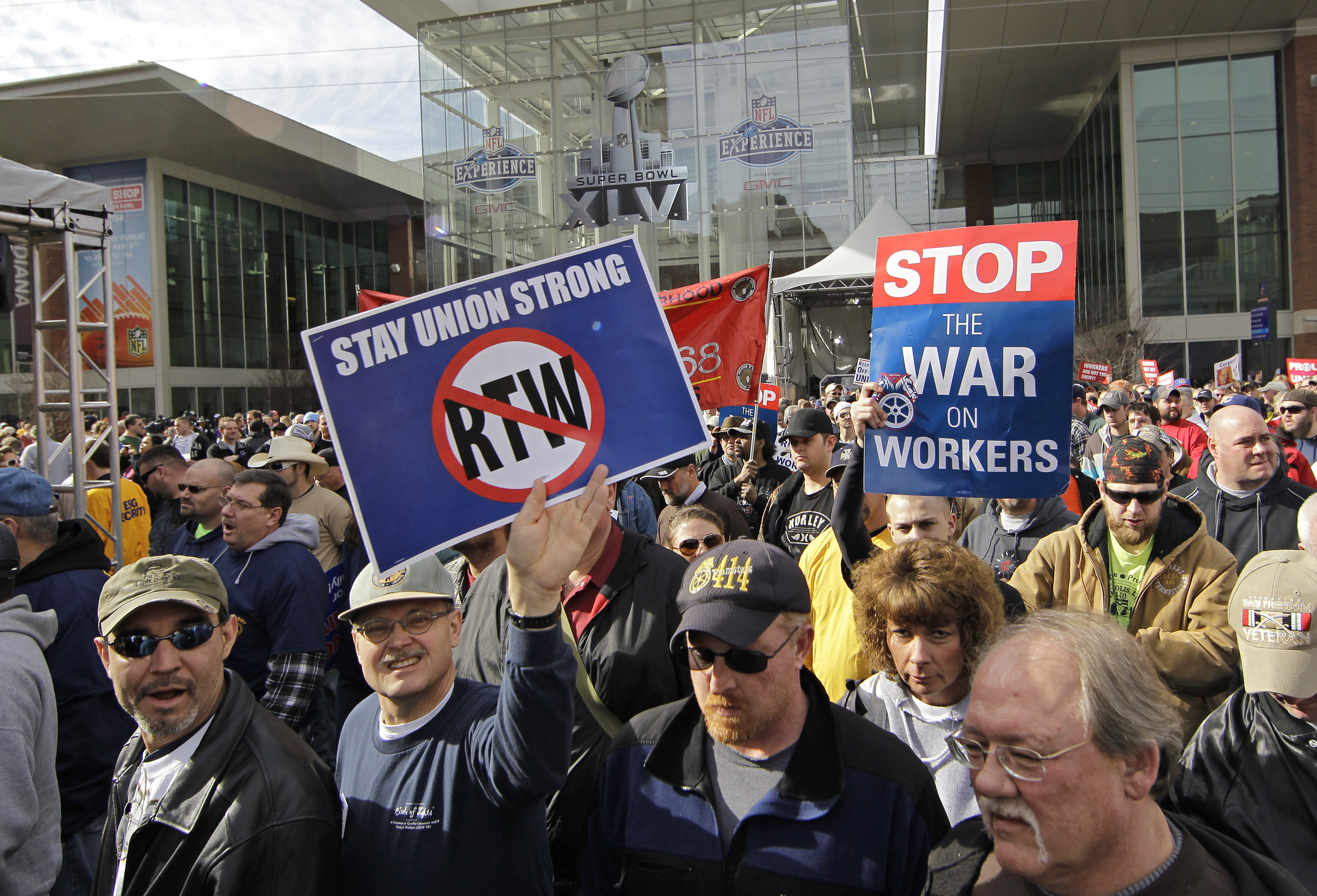
Union workers protest right-to-work

Labor unions oppose few policies more than they do right-to-work laws. But one former state union president Friday endorsed the policy as a critical workplace right.

Ben Johnson has served as a union president for both the Vermont AFL-CIO and the state chapter of the American Federation of Teachers (AFT). But upon leaving the unions, he began to reconsider his views on labor matters. His chance to reflect brought him to favor a policy that is paramount to sin in union circles.

Labor unions have long denounced right-to-work as an underhanded attack on unions and worker rights. The policy outlaws mandatory union dues or fees as a condition of employment. Johnson argues it is time to eliminate forced dues so that all workers have the right to choose whether to join a union.

“I support right-to-work nationwide in the private sector, in the public sector, in any other sectors that unions create, full stop,” Johnson said in an online video. “I think it’s time to eliminate unions’ right to collect mandatory agency fees from non-members.”

House Republicans introduced a bill Feb. 1 aimed at making union dues and fees optional for all workers. The U.S. Supreme Court may soon consider a case that would end forced dues for all public-sector workers. Johnson argues both would be a huge win for worker freedom.

The National Right To Work Committee (NRTW) published the video to give the former union president a chance to express his views. He took the opportunity to detail how he came around to support a policy he was taught to hate. The NRTW has been at the forefront of advocating for right-to-work laws.

Labor unions and their supporters argue that optional dues encourage workers to free-ride. They are obligated to represent all workers regardless of whether they pay dues once they get voted in as the exclusive representative. The U.S. Supreme Court affirmed the union position in the 1977 case Abood v. Detroit Board of Education.

“The union is obligated to give them the same representation it gives to all the members who actually pay dues, so why give people a way to get something for free,” Johnson said. “Except wait. Unions choose to bargain contracts that cover the entire bargaining unit, members or not. They could bargain contracts that cover only members.”

Labor unions often overlook that being an exclusive representative isn’t the only way they can organize. Member only unions aren’t obligated to represent nonmembers or anyone not paying dues or fees. The downside is they lose monopoly rights which block other labor groups from trying to organize established bargaining units.

Johnson recalls working on an ambitious campaign to organize childcare providers throughout his state. The campaign was modeled after what unions in other states did like the Service Employees International Union (SEIU). Many of the providers were just individuals providing a service through state subsidies.

“This was the leading edge of public sector union organizing,” Johnson said. “Bring quasi-public employees into the union. There were thousands of individuals and centers providing childcare in Vermont and participating in a program where they would be paid a subsidy by the state to provide childcare for low-income families.”

Johnson describes how they created a bargaining unit where one really didn’t exist. The childcare providers were independent contractors and small business owners. The plan was to organize in the field while pushing legislation that classified the providers as state employees for the purpose of organizing.

“If you think that scheme doesn’t have much in common with the normal agency fee case I laid out earlier, you’re exactly right,” Johnson said. “Of course it doesn’t. It uses agency fees as a strategy to build a union that we never even dreamt would be supported by a majority of the providers. In fact, it is more likely true that even if we had succeeded at any given time a majority of the providers would not even have known there was a union.”

Johnson notes that they didn’t even expect to get much in the way of additional funds. It was unlikely they would get enough dues paying members after the cost it took to organize them. Rather the idea was to become the voice of a sympathetic group that talks to many people which could be leveraged for political reasons.

The U.S. Supreme Court dashed their plan with a decision that halted similar union campaigns in states across the country. Harris v. Quinn determined in 2013 that states cannot make laws that allow unions to collect dues from people who weren’t workers in a bargaining unit.

“I don’t expect to bring around to my way of thinking any union officers or staff still in the wilderness,” Johnson said. “To them the words and arguments I utter are only tools the forces of capitalism use to bust the union. In the union view, the only analysis that counts is the one that says without bargaining unit contracts and agency fees unions will be weaker.”

Johnson recalls that his motivation was primarily to seek power for the union. The labor culture was combative as a means of survival, but that often put the union at odds with everyone else including their members. He was finally able to see things from a different perspective when he left just a few years ago.

The Vermont AFL-CIO and AFT Vermont did not respond to a request for comment by InsideSources.
Follow Connor on Twitter

Rebecca Friedrichs Addresses New Case to End Forced Dues

As another case on forced union dues looks to move to the Supreme Court, California teacher Rebecca Friedrichs expressed her views on the case this week over a year after she also tried to end the practice.

Friedrichs led a group of teachers who filed a lawsuit against the California Teachers Association (CTA). The lawsuit could have ended mandatory union dues for all public-sector workers but failed due to a split at the U.S. Supreme Court. Illinois state worker Mark Janus is now trying to accomplish the same objective.

Janus filed the lawsuit alongside two other state workers. They have already petitioned the Supreme Court in the hopes it will take up the case. The Freedom Foundation and Friedrichs filed an amicus brief in support of Janus.

“The sad fact is that parents and educators no longer have a say in our public schools because teachers unions and the policymakers they help to elect have too much control over our education system,” Friedrichs said in a statement. “Wins for these cases could restore the voices of parents and teachers and aid us in doing what’s right for the children we love and serve.”

The Freedom Foundation’s legal brief focused on two main points. It argued the prior case that has allowed mandatory union dues should be readdressed. The legal brief also detailed why union dues payments should not be automatically deducted from paychecks.

“Teachers have paid significant dues to the unions,” Friedrichs said. “Public employees shouldn’t be forced to pay dues that support unions and politicians who don’t share our values.”

The Supreme Court case Abood v. Detroit Board of Education affirmed mandatory union dues when it was ruled in 1977. It did add that workers had the right to opt-out of political spending from unions. The Friedrichs case argued all union payments for public-sector unions are inherently political and thus should always be optional.

The Supreme Court issued a split decision in June 2016 due to the death of Justice Antonin Scalia. A tied decision defaults to the lower courts, which ruled against the lawsuit. Justice Neil Gorsuch has since filled the vacant seat. The Janus case is hoping to bring the arguments back now that the court is full.

The National Right to Work Legal Defense Foundation (NRTW) and the Liberty Justice Center (LJC) have both been assisting Janus and the other state workers. The American Federation of State, County and Municipal Employees (AFSCME) is the primary union named in the lawsuit.

The lawsuit argues public-sector collective bargaining and political lobbying are indistinguishable. Essentially, by virtue of being an entity that represents government workers, everything it does is political. The Seventh Circuit Court of Appeals ruled against the lawsuit March 21 by affirming an earlier district court decision.

Labor unions can require payments once they get voted in as an exclusive representative for a workplace. States that have right-to-work protections have outlawed that practice. A worker can petition to leave their workplace union in which case they are only required to pay a nonpolitical fee that can only cover the cost of representation.

Labor unions and their supporters argue that optional dues encourage workers to free-ride. Once a union gets voted in as an exclusive representative, it must represent all workers whether they pay dues or not. The free-ride argument is used against both lawsuits challenging mandatory union payments and right-to-work laws.

The case poses a huge threat to labor unions since they rely heavily on the public-sector. The Bureau of Labor Statistics (BLS) reported that the union membership rate stands at 34.4 percent for public-sector workers, but only 6.4 percent for private. It’s unclear how many public-sector workers would leave their unions.

Illinois Republican Gov. Bruce Rauner prompted the lawsuit early in his term. He issued an executive order in 2015 directing the state to stop taking union fees from state workers who were not union members. The governor also filed a lawsuit in federal court, asking it to affirm his decision was legal.

Illinois Attorney General Lisa Madigan and some state unions argued the governor didn’t have standing to bring the lawsuit because he didn’t have to pay union dues or fees. A person with legal standing has a right to bring a lawsuit because they were harmed by a law or action.

The NRTW and LJC decided to intervene when they saw the case was in trouble. They started by offering legal assistance to the three state workers. A federal judge ruled a short time later that the governor did not have standing to proceed with the case, but the three state workers did.

House Republicans introduced a bill last week aimed at making union dues and fees optional for all workers. Republicans hold a congressional majority, making its passage a possibility. President Donald Trump has already expressed his support for right-to-work laws and is likely to sign such a bill.

AFSCME and its local affiliate did not respond to requests for comment by InsideSources.

Follow Connor on Twitter

Subscribe for the Latest From InsideSources Every Morning

Supreme Court Petitioned in Forced Union Dues Case

Attorneys in a lawsuit to end mandatory union dues for public-sector workers filed a petition Tuesday in the hopes the U.S. Supreme Court will hear their case.

Lead plaintiff Mark Janus filed the lawsuit with two other Illinois state workers. The National Right to Work Legal Defense Foundation (NRTW) has been assisting the state workers alongside the Liberty Justice Center (LJC). Attorneys for the legal nonprofits filed the petition the lawsuit failed in lower courts.

“We filed the petition for certiorari,” Patrick Semmens, vice president for public information at NRTW, told InsideSources. He says he hopes the case will go before the court next year, but first, four justices must say that they wish to hear the case in order to move forward.

The lawsuit argues that mandatory union fees in the public sector are a violation of the first amendment. The American Federation of State, County and Municipal Employees (AFSCME) is the primary union named in the lawsuit, but the ultimate goal is to end mandatory union dues for all public-sector workers.

“Mark Janus was forced to give money to AFSCME,” Semmens said. “AFSCME talks to the state of Illinois using that money to do so. We say that’s a violation of the first amendment. He shouldn’t be forced to pay. The people who want to pay can, of course, do that, but those who don’t want to, it should never be required.”

The lawsuit argues public-sector collective bargaining and political lobbying are indistinguishable. Essentially, by virtue of being an entity that represents government workers, everything it does is political. The Seventh Circuit Court of Appeals ruled against the lawsuit March 21 by affirming an earlier district court decision.

Labor unions can require payments once they get voted in as an exclusive representative for a workplace. States that have right-to-work protections have outlawed that practice. A worker can petition to leave their workplace union in which case they are only required to pay a representation fee. That fee can only cover the cost of representing the workers and not other union activities like political campaigning.

The lawsuit seeks to overturn the Supreme Court case of Abood v. Detroit Board of Education, which affirmed mandatory dues when it was ruled in 1977. It also established the exception for political spending.

Labor unions and their supporters argue that optional dues encourage workers to free-ride. Once a union gets voted in as an exclusive representative, it must represent all workers whether they pay dues or not. The free-ride argument is used against both lawsuits challenging mandatory union payments and right-to-work laws.

“These mandatory fees prevent the problem of free-riders, employees who enjoy raises and other benefits provided by the union without paying for them, leaving their co-workers to pick up the tab,” AFSCME Council 5 wrote last year. “These are known as ‘fair-share’ fees.”

Labor unions have a lot to lose if the lawsuit ends mandatory union dues in the public sector. The Bureau of Labor Statistics (BLS) reported that the union membership rate stands at 34.4 percent for public-sector workers, but only 6.4 percent for private.

The case started after Illinois Gov. Bruce Rauner issued an executive order in 2015 directing the state to stop taking union fees from state workers who were not union members. The governor also filed a lawsuit in federal court, asking it to affirm his decision was legal.

Illinois Attorney General Lisa Madigan and some state unions moved in to counter the lawsuit. They argued the governor didn’t have standing to bring the lawsuit because he didn’t have to pay union dues or fees. A person with legal standing has a right to bring a lawsuit because they were harmed by a law or action.

NRTW and LJC decided to intervene when they saw the case was in trouble. They joined the case by offering legal assistance to the three state workers. A federal judge ruled a short time later that the governor did not have standing to proceed with the case, but the three state workers did.

Friedrichs v. California Teachers Association managed to get to the Supreme Court with a similar challenge last year. The Supreme Court was split after the death of Justice Antonin Scalia. A tied decision defaults to the lower courts, which ruled against the lawsuit. Judge Neil Gorsuch has since filled the vacant seat.

House Republicans introduced a bill last week aimed at making union dues and fees optional for all workers. Republicans hold a congressional majority, making its passage a possibility. President Donald Trump has already expressed his support for right-to-work laws and is likely to sign such a bill.

AFSCME and its local affiliate did not respond to requests for comment by InsideSources.

Follow Connor on Twitter

Subscribe for the Latest From InsideSources Every Morning

Supreme Court May Soon Hear Union Dues Challenge

A lawsuit challenging mandatory union dues lost in court Tuesday opening the door to a potential move to the U.S. Supreme Court.

Lead plaintiff Mark Janus filed the lawsuit alongside two other Illinois state workers. The lawsuit argues that mandatory union fees in the public-sector are a violation of the first amendment. The Seventh Circuit Court of Appeals ruled against the lawsuit by affirming an earlier district court decision.

The lawsuit ultimately hopes to overturn a prior Supreme Court case known as Abood v. Detroit Board of Education. The case affirmed mandatory dues when it was ruled in 1977. The appeals court rejected the lawsuit, noting it cannot overrule a decision from the Supreme Court.

“Janus’s claim was also properly dismissed,” the decision stated. “He failed to state a valid claim because, as we said earlier, neither the district court nor this court can overrule Abood, and it is Abood that stands in the way of his claim. The judgment of the district court dismissing the complaint is therefore affirmed.”

The lawsuit is directed at the American Federation of State, County and Municipal Employees (AFSCME). The plaintiffs can now petition the Supreme Court to take the case. The National Right to Work Legal Defense Foundation (NRTW) has been assisting the state workers in partnership with the Liberty Justice Center (LJC).

“The court’s ruling is no surprise but simply allows the next step forward in the journey to end forced unionism for public employees across the country,” NRTW President Mark Mix said in a statement provided to InsideSources. “No one should be forced to pay union dues or fees just for the privilege of working for their own government, and this decision means the case can now move up to the United States Supreme Court.”

Labor unions and their supporters argue that optional dues encourage workers to free-ride. Once a union gets voted in as an exclusive representative, it must represent all workers whether they pay dues or not. The free-ride argument is used against both lawsuits challenging mandatory union payments and right-to-work laws.

Labor unions have a lot to lose if the lawsuit ends mandatory union dues in the public-sector. The Bureau of Labor Statistics (BLS) reported that the union membership rate stands at 34.4 percent for public-sector workers, but only 6.4 percent for private.

Friedrichs v. California Teachers Association dealt with an identical challenge but failed last year. The Supreme Court became split after the death of Justice Antonin Scalia. A tied decision defaults to the lower courts. Judge Neil Gorsuch is currently going through the confirmation process to fill the empty seat.

The appeals court heard oral arguments for the case March 1. The justices might pick up the case as early as this year depending on whether they want to litigate it. The Supreme Court tends to be hesitant to overturn past cases but this time could be different since they never had a chance to decide Friedrichs.

AFSCME and its local affiliate did not respond to requests for comment by InsideSources.

Follow Connor on Twitter

Subscribe for the Latest From InsideSources Every Morning

Lawsuit Against Mandatory Union Dues Eyes Supreme Court

Marbury v. Madison

The U.S. Supreme Court could soon hear a case aimed at ending mandatory union dues for all public-sector workers across the country.

The lawsuit argues that mandatory union fees in the public sector are a violation of the First Amendment. Lead plaintiff Mark Janus filed the lawsuit alongside two other Illinois state workers. The nation’s highest court could be next to hear the case currently pending before the Seventh Circuit Court of Appeals.

“Basically this is nothing more than forced political speech,” lead attorney Bill Messenger told InsideSources. “If the First Amendment should prohibit anything, it should prohibit the government from forcing someone to support the speech of another about matters of public policy.”

The lawsuit is directed at the American Federation of State, County and Municipal Employees (AFSCME) Council 31 and the Teamsters Local 916 with the ultimate goal of ending mandatory union fees for all public sector workers. Once a union organizes a workplace they can require payments from workers in states that don’t have right-to-work protections.

A worker can petition to leave their workplace union, in which case they are only required to pay a representation fee. That fee can only cover the cost of representing the workers and not other union activities like politics. The lawsuit argues public sector collective bargaining and political lobbying are indistinguishable.

“What you see in the public sector is that states are forcing their employees to support an organization that lobbies the state over certain matters of public policy,” Messenger said. “We see it as one of the largest regimes of compulsory speech in the country, and that it should be something prohibited under the First Amendment.”

The National Right to Work Legal Defense Foundation (NRTW) has been assisting the state workers in partnership with the Liberty Justice Center (LJC). Messenger is a staff attorney with NRTW. They involved themselves early on when the case hit a few roadblocks that threatened its success.

“This case started after Illinois Gov. Bruce Rauner issued an executive order directing the state to stop taking union fees from state workers who were not union members,” LJC attorney Jacob Huebert told InsideSources. “At the same time, he filed a lawsuit in federal court asking the courts to declare that was correct.”

Illinois Attorney General Lisa Madigan and some state unions moved in to counter the lawsuit. They argued the governor didn’t have standing to bring the lawsuit because he didn’t have to pay union dues or fees. A person with legal standing has a right to bring a lawsuit because they were harmed by a law or action.

“When we saw that situation arise, we wanted to make sure the case went forward so we intervened on behalf of some Illinois state employees who had been forced to pay union fees against their will,” Huebert said. “Shortly afterward the federal judge in that case ruled the governor did not have standing to proceed with the case, but our clients did.”

Labor unions have several arguments for why mandatory union dues are fair. The most widely used is that optional dues encourage workers to free-ride. Once a union gets voted in as an exclusive representative, it must represent all workers in that workplace.

“These mandatory fees prevent the problem of free-riders, employees who enjoy raises and other benefits provided by the union without paying for them, leaving their co-workers to pick up the tab,” AFSCME Council 5 wrote last year. “These are known as ‘fair-share’ fees.”

The free-ride argument is used against both lawsuits challenging mandatory union payments and right-to-work laws. Messenger notes the argument isn’t sound because exclusive representation in its own right is a huge benefit to unions. He also argues the unions are essentially forcing their services on workers whether they want it or not.

“These individuals aren’t free-riders, they’re forced riders,” Messenger said. “It’s the unions that impose their representation on these individuals, whether they like it or not, and then lobby the government for certain things whether these individuals want it or not. And generally speaking you can’t force a service on someone, and then make them pay for it if they don’t want it. And that’s what you see here.”

The Seventh Circuit Court of Appeals is scheduled to hear the case March 1. Either side can petition the Supreme Court to pick up the case once the decision is made. Both sides at the moment are hoping the appeals court affirms an earlier district court decision by dismissing the lawsuit, but for vastly different reasons.

“Technically at this point, all parties agree that the district court’s dismissal of the complaint should be affirmed,” Messenger said. “It’s just afterward we plan on petitioning the Supreme Court to take the case.  I imagine the state and unions will oppose that.”

The lawsuit seeks to overturn a previous Supreme Court case, Abood v. Detroit Board of Education. The case affirmed mandatory dues when it was ruled in 1977, and established the exception for political spending.

“Abood drew this line, a dichotomy, between collective bargaining with the government on the one hand and political and lobbying activities on the other hand,” Messenger said. “That doesn’t make a whole lot of sense because there’s no difference. At the end of the day, collective bargaining with government is indistinguishable from lobbying the government.”

The Supreme Court might pick up the case as early as this year if the case is appealed and judges choose to intervene. Nevertheless, it faces obstacles. The court is hesitant to overturn past cases.

“If the court takes it up that would be a sign they’re open to overturning Abood,” Huebert said. “There wouldn’t be much need for a case saying, yes, Abood is still good law and nothing else. And the four conservative justices already there now have indicated pretty clearly that they think Abood doesn’t make any sense, that it hasn’t worked well.”

The Supreme Court is also missing a ninth justice, which could result in a tied decision. A split vote would default to the lower court ruling. Friedrichs v. California Teachers Association dealt with an identical challenge but failed when the court split after the death of Justice Antonin Scalia.

“Given the four-four split in Friedrichs, right now the odds are the court would split four-four if they took Janus,” Messenger said. “So the ninth justice will most likely be the tie breaker.”

Judge Neil Gorsuch was nominated by President Trump to fill the empty seat, but partisan gridlock has held up his nomination in the U.S. Senate. Messenger is optimistic the gridlock will be resolved before it becomes a problem for the case.

“The timing should be okay unless there is a very long filibuster or something to that effect,” Messenger said. “But otherwise it shouldn’t be problematic, unless, of course, there isn’t a justice by this time next year.”

Huebert notes the case still has to be heard and ruled on before they can even petition the Supreme Court. But he’s optimistic the court would be interested in hearing the case, given it never resolved Friedrichs. The previous case hint their intent.

“It seems likely that this is a case the court will want to pick up,” Huebert said. “You’d think this is an issue they’d want to take up because, presumably, at least those four conservative justices already thought the court should resolve this issue, and I would think they still do.”

Labor unions have a lot to lose if the lawsuit is successful and becomes national policy. Public sector workers account for most of their membership. The Bureau of Labor Statistics (BLS) reported that the union membership rate stands at 34.4 percent for public sector workers but only 6.4 percent for private.

House Republicans introduced a bill last week aimed at making union dues and fees optional for all workers. Republicans hold a congressional majority, making its passage a possibility. Trump has already noted his support for righttowork laws and is likely to sign such a bill.

Council 31 and Local 916 did not respond to requests for comment by InsideSources.

Follow Connor on Twitter

Subscribe for the Latest From InsideSources Every Morning

Republicans Introduce National Right-to-Work Bill

Union workers protest right-to-work

Congressional Republicans introduced a measure Wednesday aimed at making union dues voluntary for everyone across the country.

Federal law currently allows states to decide on their own whether they want to be right-to-work. The policy outlaws mandatory union dues or fees as a condition of employment. Republican representatives Joe Wilson and Steve King introduced the measure in the hopes of making the law national.

“Our bill would protect workers by eliminating the forced-dues clauses in federal statute,” Rep. Wilson said in a statement provided to InsideSources. “Right-to-work states, like South Carolina, have seen first-hand that job creation and economic growth comes from expanded freedoms.”

Kentucky became the most recent state to pass right-to-work following 26 others. Those in support argue the policy merely gives workers a choice while creating a more business friendly environment. The National Right to Work Committee (NRTW) has been at the forefront of supporting the policy.

“Voluntary association is a quintessential American ideal, and the case for Right to Work has always rested on the principles of employee freedom,” NRTW President Mark Mix said in a statement provided to InsideSources. “But passage of a National Right to Work law will also pay economic dividends.”

Democrats, labor unions and other critics, however, warn it could undermine worker rights. They argue it hampers how effective unions are at negotiating with employers, which allows them to lower wages, benefits and workplace standards.

“By many measures, quality of life is worse in states with right to work laws,” the AFL-CIO claims on its website. “Wages are lower, people are less likely to have health insurance and the necessary resources for a quality education, poverty levels are higher as are workplace fatality rates.”

Research has been fairly mixed when it comes to what impact right-to-work actually has on workers. The Economic Policy Institute found the policy results in decreased wages and benefits. The Heritage Foundation, however, found wages and benefits in right-to-work states aren’t actually less when you adjust for the cost of living.

Unions have often attacked right-to-work as a means of destroying the labor movement. The policy, however, usually only causes a decline in membership within the first year before it bounces back to a consistent level. Union behavior and changes to the local economy are likely the primary reasons unions membership bounces back.

The passage of the 1947 Taft-Hartley Act first allowed states to decide whether they want to be right-to-work or not. Americans overwhelming support the policy despite its very adamant opponents. Gallup found in a 2014 poll the policy has 71 percent support. The same poll showed unions were generally supported as well but at only 53 percent.

A national right-to-work law would have a huge impact and is likely to face fierce opposition. Nevertheless, Republicans hold a congressional majority, making its passage a possibility. President Donald Trump has already noted his support for right-to-work laws.

Follow Connor on Twitter

Subscribe for the Latest From InsideSources Every Morning

Kentucky Becomes the 27th Right-to-Work State

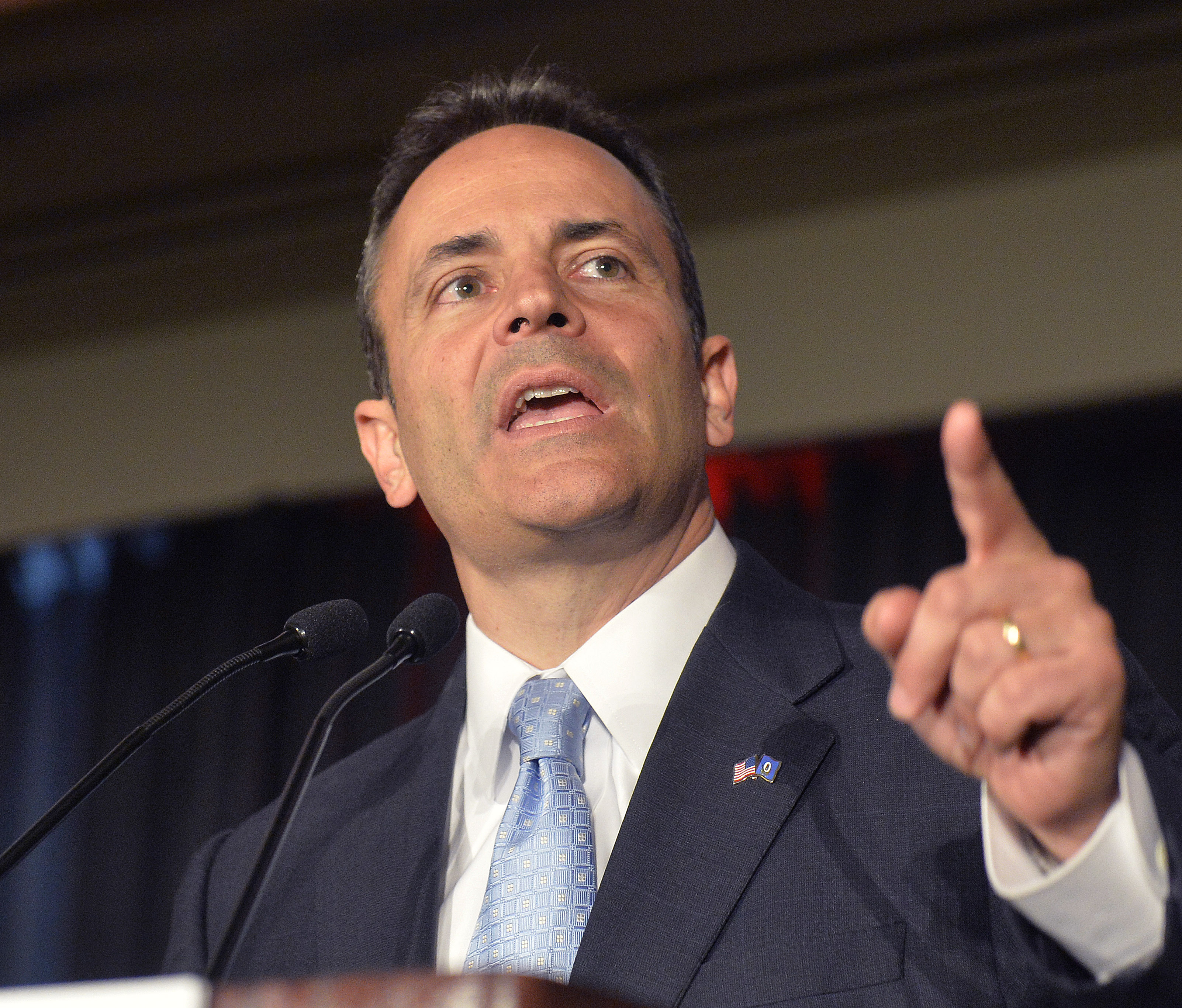
Kentucky Gov. Matt Bevin signed a right-to-work measure into law Saturday making his state the latest to pass the policy.

Kentucky Republicans have tried numerous times in recent years to pass right-to-work. The policy outlaws mandatory union dues or fees as a condition of employment. Democrats have been able to prevent its passage but the recent election gave supporters enough votes in the legislature to finally get it through. Bevin announced Sunday that the measure has been signed into law.

“We have a lot of neighbors and competition for recruiting jobs,” Kentucky Republican Party spokesman Tres Watson told InsideSources prior to its passage. “This is about staying competitive with our neighboring states and arming Kentucky with a full toolbox to help create jobs.”

Republicans introduced the measure Tuesday at the start of the legislative session. They were able to quickly get it through both legislative chambers before eventually sending it off to the governor’s desk. Kentucky Democrats, labor unions, and other opponents are warning the measure is just an underhanded way to hurt unions and workers.

“Kentucky’s working families are suffering,” the Kentucky State AFL-CIO posted online. “They are facing employment, health care access, and education challenges. The Kentucky GOP not only ignored their plight, they made them worse.”

Kentucky labor unions also held a protest hours before the bill was signed into law. Those opposed have argued that strong unions are needed to properly protect workers against abusive employers. The National Right to Work Committee (NRTW) and other supporters contest is actually about giving workers the freedom to choose.

“A Kentucky Right to Work law would free thousands of Kentucky workers who have been forced to pay tribute to a union boss just for the privilege of getting and keeping a job,” NRTW President Mark Mix said in a statement provided to InsideSources. “The law would also provide a much-needed economic boost for Kentucky.”

Kentucky Democratic Party spokesman Daniel Lowry argues the economic benefit is grossly overstated. He notes the policy actually doesn’t do much to attract businesses. Additionally, he questions those businesses that do consider the policy a top priority.

“That is a company that wants to pay their workers as low a wage as they can and who likely wants to cut corners on safety,” Lowry told InsideSources prior to the bill’s passage. “So the question is, are those the kind of companies we really want here in Kentucky. We want high paying jobs here.”

Watson argues that much of what has been said about the policy is just to scare workers. He adds it doesn’t undermine worker rights and isn’t even about destroying unions. Watson is hopeful the law will result in more jobs for both union and nonunion workers.

“The unions are still going to collectively bargain; they’re still going to be active in workplaces,” Watson said. “It’s not about taking away rights that any worker has. We want union jobs, nonunion jobs. We want all the jobs. It’s simply about opening up the playing field for everybody.”

Republicans passing the measure puts an end to a fight that is years in the making. Opponents have little chance to overturn it with supporters controlling the state government. Lowry is hopeful voters will see how destructive the law is and give them the chance to repeal it after the next election.

“I think the only way we are going to be able to fight this is to win back control of the legislature,” Lowry said. “That’s going to have to happen when working-class folks, here in Kentucky, see the damages that result from these laws, and once they see that I think a lot of folks are going to be upset.”

Lowry adds the problem is the law will still have the chance to do damage before it can be stopped. Nevertheless, Kentucky residents will have the chance to see firsthand whether the law will promote freedom and job growth or undermine their rights as workers.

Follow Connor on Twitter