inside sources print logo
Get up-to-date news in your inbox

12 Critical Takeaways From Paul Ryan’s Tax Speech

House Speaker Paul Ryan renewed his push Tuesday for comprehensive tax reform. His speech highlighted why overhauling the tax code is critical but lacked much in the way of details.

Ryan has been at the forefront of the tax reform debate over the past year. Republicans gained a rare opportunity to do something big since securing the presidency in the last election. But infighting over critical elements has left the party divided on what the final plan should look like.

Ryan gave his speech during an annual summit hosted by the National Association of Manufacturers (NAM). His speech may serve to restart the fight for tax reform, which appeared to have stalled after an earlier push this year.

“Once in a generation or so, there is an opportunity to do something transformational,” Ryan said during his speech. “Something that will have a truly lasting impact long after we are gone. That moment is here, and we are going to meet it. Ladies and gentlemen, we are going to fix this nation’s tax code once and for all.”

Republicans generally agree that the tax system needs to be overhauled. It hasn’t been changed in any significant way since 1986. The tax system, however, is incredibly difficult to reform because of how complex and politically divisive it is. Ryan used his speech to highlight why comprehensive reform is so important.

“I think it was a good and important speech to reset the debate, and let people know this is still an important policy priority for Congress, and certainly for the administration as well,” Carnegie Mellon University Prof. Jeff Kupfer told InsideSources. “It’s something that they are committed to getting done. That was important to get that out there.”

Republicans have highlighted several key goals that they generally agree on. They are hoping to reduce corporate and individual tax rates while simplifying the code. Ryan went into more detail about his goals in a policy blueprint he introduced last year alongside Rep. Kevin Brady. But his recent speech lacked much in the way of depth.

“The biggest thing I took away from it is how little new there was,” Howard Gleckman, a senior fellow at The Urban Institute, said. “It was actually quite surprising to me how they promoted the speech as aggressively as they did, and they said so little. Essentially, we know today what we knew two days ago.”

The Republican fight for tax reform looks to have a long road ahead. But the prospect of doing something major, and economically beneficial, is a very real possibility. Here is everything you need to know about the speech, and how it relates to the bigger tax reform debate.

1. Jump Starting the Tax Debate

Speaker Ryan’s speech served to bring the tax reform debate back to the forefront more than anything else. Republicans were unable to get tax reform done earlier this year with the party being split over some critical details. They are also dealing with other ambitious policy goals like reforming the healthcare system.

“I think it was the nudge people in Washington need because it’s so easy to say healthcare has been such a tremendously difficult process, tax reform could possibly be even more difficult,” Brandon Arnold, the executive vice president of the National Taxpayers Union, said. “I think this was more trying to give Congress and all stakeholders a shot in the arm.”

2. Tax Reform Has to Be Big and Comprehensive

Republicans are generally still in agreement over the bigger picture. They want their tax reform plan to be big and ambitious in a way that hasn’t been done since the last major reform in 1986. Leadership, especially, knows that making minor reforms would be a huge missed opportunity.

Kupfer, who also served as a tax policy expert for former President George W. Bush, says one takeaway is that Ryan and the GOP are looking for holistic reform. “This isn’t just about cutting a couple rates and claiming a victory. It’s about doing something that lasts long-term, he talked about permanence and changing behavior.”

3. The Speech Lacked Details

Speaker Ryan mostly spent his time highlighting the main goals, and why tax reform is so critical. But the speech itself lacked much in the way of specifics or anything new. Gleckman notes at this point they need to start figuring out the details in a way that gains party consensus.

“Ryan wants a big tax bill. He wants to cut rates, both for individuals and corporations, that we would make those tax cuts by making some changes to tax preferences,” Gleckman said. “Beyond that we don’t know much. We don’t know, for example, which tax preferences we eliminate, which ones we protect. He wasn’t specific about rates, he was not specific on how he’d handle cross border transactions by U.S. multinationals. So just, in general, he left unanswered an awful lot of questions that they’re going to have to answer before they can do a tax bill.”

Kupfer counters that the details are best left for the ongoing debate among policymakers. Ryan instead focused on the bigger picture, and why tax reform is so critical. He could have very well undermined that focus by reminding the right about what they disagree about.

“I don’t think that is the place to get into what it has to have, and what are the components, because that’s an ongoing discussion that’s going to get worked out among members,” Carnegie Mellon University Prof. Jeff Kupfer said. “They want to have something that everyone can agree with. In laying out a specific set of principals, and it has to follow this or that, I don’t think that is particularly necessary at this point.”

Kupfer adds that it’s no secret what Ryan ideally wants out of tax reform. His blueprint is very detailed, and he has previously discussed the matter publicly in more detail.

4. Don’t Lose Focus of the Main Goal

Speaker Ryan also stressed the need to not lose track of the bigger picture. Republicans risk upending their efforts to overhaul the tax code by focusing too much on the details. Comprehensive tax reform could potentially be a major victory for Republicans, even if no one gets exactly what they want.

“People need to take a step back and look at the ultimate prize here, which is tax reform,” Arnold said. “Nobody is going to get everything they want. But if they want tax reform, they are going to have to be willing to make some concessions and changes to their ideal plan.”

5. Party Unification Is Critical

Republican leadership is going to have to unite the party eventually if they hope to get tax reform done. Some Democrats might join in support, but it’s unlikely that enough of them will join in with how toxic things have become between the two parties.

“I think the recognition here was that there needs to be unification,” Arnold said. “There has been so much infighting among members, among conservative and libertarian groups.”

Arnold adds that even business associations have seen divisions among their members. The border adjustment tax, cost recovery provisions, and business expensing are just some of the issues that have caused fierce debate. Gleckman notes the lack of details in the speech may show just how deep-seated those disagreements are.

“I think it’s pretty clear that if they had the details worked out, they would have talked about them,” Urban Institute senior fellow Howard Gleckman said. “I think the problem here is there is no consensus, even among House Republicans about what to do with the border adjustment tax.”

6. Room for Compromise

Speaker Ryan may also be hinting that there is room for compromise by not getting into the detail. The end goal is to overhaul the tax code in a very significant way. The contentious details are important policies to discuss, but compromise is likely necessary in order to actually get something that big done.

“I think the fact he stepped away from some of the policy specifics suggests he is willing to make the necessary deals in order to get something passed,” Brandon Arnold, the executive vice president of the National Taxpayers Union, said. “I think that is a very encouraging thing.”

Arnold adds that it’s important for lawmakers on the right to not lose track of the bigger picture. They can agree on rate reductions, simplification, and doing something comprehensive. Details outside of that, like the border adjustment tax, could potentially distract from that end goal.

“You’re not going to be able to get everything you want,” Arnold said. “You’re going to have to come to the negotiating table with all parties involved, and make some changes in order to get something, even if it’s less ideal.

7. But What About the Border Tax

Speaker Ryan didn’t get into much detail in regards to the border adjustment tax, and for good reason. It has become possibly the most contentious issue currently in the tax reform debate. It is a value added tax levied on imported goods. It is essentially applied when a product is produced in a foreign country, but sold domestically.

“At some point, he’s going to have to fish on border adjustment, he’s just not ready to cut bait yet,” Arnold said. “They are still trying to include that. They are trying every possibly way to include a border adjustment in the plan. Until they exhaust all options, and until it looks like there is absolutely no way it will be included, it’s still going to be part of their talking points.”

Supporters argue the border adjustment tax will help domestic businesses who are often undercut by foreign competition that have less labor and other operational costs. Those opposed, however, warn it could actually hurt domestic businesses and consumers by increasing the costs of goods coming across the border.

“He didn’t mention it by name, but people knew what he was talking about when he said we have our own ideas on the House side, and people know where he stands on it,” Kupfer said. “Border adjustability is something that is an important component of the House plan for a bunch of different reasons, but it’s not the only way comprehensive tax reform gets done.”

Arnold notes there might be compromises that ease concerns among critics. Kevin Brady recently proposed phasing in the border tax to give the economy time to adjust. Nevertheless, even that idea has raised concern among some like the National Retail Federation.

8. The End Goal Is a Permanent Plan

Speaker Ryan has a long checklist of what his ideal plan would look like. But more so than most other goals is the need to have a plan that is designed to last. The final plan could be close to perfect, but if it’s not designed around permanence, all its benefits could very well be short lived.

“I think from a policy front, one of the biggest takeaways was the the desire of the speaker to have a permanent tax plan,” Arnold said. “I think a lot of people have been interested in throwing that concept under the bus because it’s not an easy goal to attain.”

9. Corporate and Individual Tax Rates

Speaker Ryan also highlighted the need to tackle tax reform for both corporate and individual taxpayers. Businesses face many tax burdens that may be stifling economic growth. At the same time, individual taxpayers face many burdens as well between their own high rates and how difficult it is to navigate the tax code.

“There has been the concept floated by a lot of people, maybe we just do corporate, maybe we just nibble around the edges, we do something less ambitious and comprehensive,” Brandon Arnold, the executive vice president of the National Taxpayers Union, said. “I think this was a shot across the bow for that argument. The speaker is saying, let’s do individual, let’s do corporate. This is our chance to do the whole enchilada, we can’t let that go.”

Arnold adds that many taxpayers across the country are frustrated by the current system. Their support could prove critical in actually getting something passed. Kupfer notes that it’s also important to stress that it isn’t just some corporate giveaway either, as the rate reductions could increase job opportunities and help small businesses.

“He also made it clear that he is looking at both individual and business tax reform,” Carnegie Mellon University Prof. Jeff Kupfer said. “He left off talking about individuals and the frustration that people feel about filling out their taxes, and dealing with the code, and the current system, and how that will be better for everybody.”

10. Heated Debates Are Part of the Process

Republicans are in a fierce debate which may raise skepticism over whether they will actually be able to do something big and comprehensive. Kupfer counters that for issues as monolithic as overhauling tax reform, the process is naturally going to be heated and contentious.

“He tried to pull back from that and make the point that the process is moving ahead,” Kupfer said. “This is all necessary and typical of what happens in these sorts of situations, and I think the process is moving along in combination with public hearings and discussions about it.”

11. Tax Cuts and Government Revenue

The federal government requires tax revenue in order to serve its many functions. When government spending surpasses revenue it makes the deficit larger, which adds to the debt. It’s a major problem the country is already facing. A tax reform plan that doesn’t address inadequate revenue could make the problem much worse.

“Cutting tax rates is a perfectly good idea, but if you cut tax rates you have to pay for them somehow, and that’s always been the problem with every tax reform plan since 1986,” Gleckman said. “The one exception is Dave Camp who actually put out a plan that includes rate reductions and very specifics provisions to eliminate tax preferences, and the proposal went nowhere.”

Republicans hope that increased economic growth through tax reform could increase revenue. But whether it will, and whether it will be enough to bridge the deficit gap, is still up for debate. Gleckman notes that it’s simply not enough to just promise enormous economic growth to makeup the difference.

12. The Unanswered Questions

Gleckman notes that the speech did little to address the unanswered questions that have persisted throughout the debate. He points to whether the plan should be aimed at giving domestic companies an advantage, how to treat pass-through businesses, and what exactly the corporate rate structure will entail.

“They have to decide which approach they want to take,” Gleckman said. “Do they just want to do a big tax rate cut and forget about tax reform, they can go ahead and do that. Do they want to do reform instead? If they do reform they are going to have to recognize that there’s going to be winners and loses, and they’re going to have to take political heat for doing that.”

Follow Connor on Twitter

Subscribe for the Latest From InsideSources Every Morning

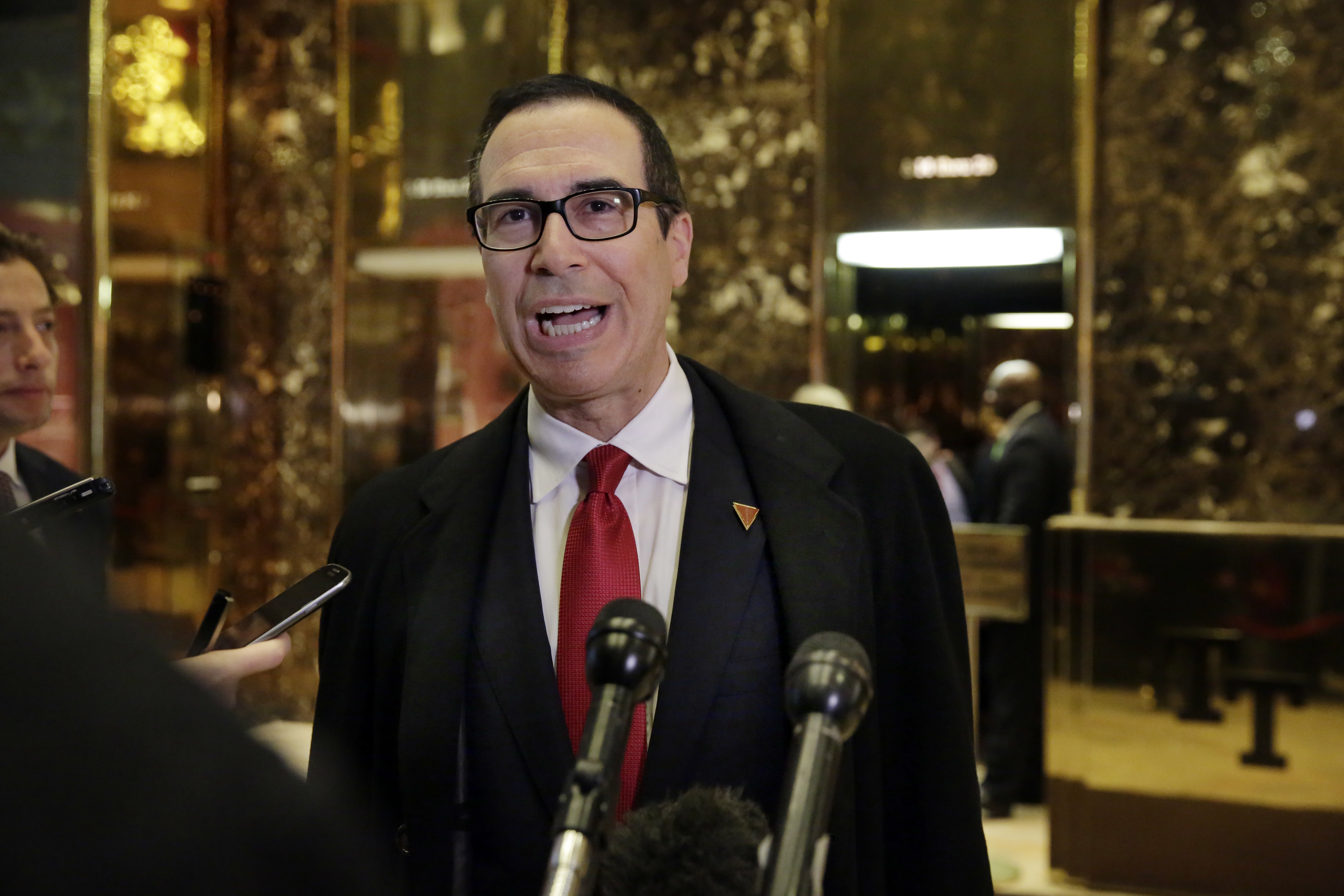
What to Expect During Steve Mnuchin’s Confirmation Hearing

“Will Steve Mnuchin Bomb His Confirmation Hearing?,” asked one of the latest headlines in Vanity Fair.  Clearly, many Democrats are eager to see the spectacle of Mnuchin’s confirmation hearing for Treasury secretary.

On Thursday, the former Goldman Sachs partner will testify before the Senate Finance Committee, and although, Republicans are expected to confirm President-elect Trump’s nominee, Democrats aren’t going down without a fight. They will most likely bring up sore points in Mnuchin’s career, especially the numerous reports of misconduct when he was in charge of OneWest.

This makes sense though, especially since the Democratic Party needs to win over working-class voters, who were attracted to Trump’s populist appeal, and rebuild their economic message before the 2018 midterm elections. And, of course, these confirmation hearings are always interesting to see if there are any early 2020 presidential possibilities.

It will be intriguing to learn whether any more information will come out about Mnuchin’s policy ideas for the Treasury Department, or whether it will largely resemble a carnival sideshow?

“They [confirmation hearings] too often become…game shows,” said Pete Sepp, president of the National Taxpayers Union, in a Wednesday press call.

“They don’t always get to the very important issues that could be amplified in the hearing process, to better understand how members of Congress and the executive branch will cooperate,” he said.

For him and David Williams, president of the Taxpayers Protection Alliance, one of those important issues is tax policy.

“The good news is Mnuchin is on record saying tax reform is one of his top priorities,” Williams said. “If people aren’t going to read all of War and Peace [by Leo Tolstoy], they aren’t going to read the whole tax code. This is a breath of fresh air for frustrated taxpayers.”

Republicans are also eager for tax reform, and while Mnuchin has said he would like to see it done, Congress will ultimately have to make it happen. Mnuchin was involved in writing Trump’s tax plan during the campaign, so it’s likely he will be involved in drafting legislation.

If confirmed for the position, he would have power over some regulations within the tax code. For example, he could roll back inversions, a controversial regulation enacted under President Barack Obama’s administration that sought to stop companies from avoiding U.S. taxes by moving their legal domicile to a low-tax country. Even that would be difficult to do because it was a rule issued by the Treasury and Internal Revenue Services (IRS), and the IRS is pretty independent even though it is technically housed within the department.

Trump and Mnuchin could seek more influence over the IRS since the president-elect will choose the next head of the federal agency. And they could end the limited oversight of regulations issued by the IRS that makes it so independent.  

Although Mnuchin can’t exercise power over specific parts of the tax code, he has indicated he supports several measures in the House GOP’s plan for tax reform. The Trump administration, House Speaker Paul Ryan, and House Ways and Means Committee Chairman Kevin Brady want to cut the corporate tax rate, but they disagree by how much. The House GOP plan has it at a 20 percent tax rate, while Trump and Mnuchin want a 15 percent rate.

Will Senate Democrats ask about Mnuchin’s tax reform plans? It remains to be seen.


DODD-FRANK

Another possible policy area that could come up during the hearing is Mnuchin’s plan to roll back parts of Dodd-Frank, the financial regulatory law passed after the financial crisis.

It’s unknown what specific parts he wants to do away with, so it can be expected that a senator might ask him.

Although he can’t repeal Dodd-Frank (only Congress can), the law does give the Treasury secretary some authority over the financial system, as head of the Financial Stability Oversight Council (FSOC). This council contains all the heads of the top financial regulators and is meant to deal with systemic financial risks. So Mnuchin could have a lot of influence over the agenda of the FSOC.

For example, the council is responsible for identifying and designating systemically important financial institutions — the ones who could trigger a financial crisis, or the ones that are “too big to fail.” Mnuchin could have the FSOC staff look at non-bank threats that would upend the system. The Obama administration has been aggressive in naming such threats and has faced significant criticism for pointing to companies like MetLife as systemically important. But he can’t really tell the other FSOC members what to do in their own respective agencies. The Federal Reserve, U.S. Securities and Exchange Commission, among the other members, are independent, and he can’t dictate their policy. But he sure can tell Trump who to put in charge of those agencies and influence them that way.


FREDDIE AND FANNIE

Soon after Mnuchin was announced as Trump’s Treasury pick, he said Fannie Mae and Freddie Mac should leave government control and the president-elect’s administration “will get it done reasonably fast.”

“We will make sure that when they are restructured, they are absolutely safe and don’t get taken over again,” he told Fox Business. “But we’ve got to get them out of government control.”

This idea isn’t anything new. The battle over the future of mortgage companies has been discussed in Congress since they were bailed out in 2008 for $187.5 billion. Since then, Fannie and Freddie have been in conservatorship, controlled by the federal government. Fannie and Freddie have fully paid back all money owed to taxpayers, but the Treasury has continued to seize all profits, not allowing the mortgage giants to accumulate capital. 

Mnuchin appears set on a path to end the seizure of profits. More will likely be learned during the hearings.


STRONG-DOLLAR POLICY

Expect to also hear Mnuchin’s comments about the strong-dollar policy. It’s been a mantra of Treasury secretaries since the mid-1990s. Usually, Republican and Democratic administrations have maintained a policy of backing a strong U.S. currency, speaking neutrally about it, for fear of upsetting the financial markets. But Trump went and changed that.

“Our dollar is too strong,” Trump told The Wall Street Journal last week. “And our companies can’t compete with [China] now because our currency is too strong. And it’s killing us.”

Will Mnuchin echo Trump’s sentiments or will he maintain a strong-dollar policy tradition? The markets await his answer.

These are some of the policy issues conservative and liberal researchers are waiting to hear about to see how it could impact the economy.

“It’s incredibly troubling that someone who ran on draining the swamp and fighting for everyday Americans is putting someone, who has not demonstrated any interest or ability to fight for Americans, in charge of the U.S. economy,” said Sarah Edelman, director of housing policy at the Center for American Progress, a liberal policy institute.

Mnuchin’s confirmation hearing begins at 10 a.m.

Follow Kyle on Twitter.

Why the First Presidential Debate Lacked Tax Specifics

Both presidential candidates battled it out during their first debate Monday but didn’t detail their tax plans as much as some hoped.

Democratic presidential nominee Hillary Clinton focused primarily on taxing the wealthy to support public services. Republican presidential hopeful Donald Trump wants to lower taxes to keep companies in the country. The National Taxpayers Union hoped the two would focus on specific plans to reform the current tax system.

“We probably would be setting the bar too high to ask for incredibly specific details from the presidential candidates tonight on how they would reform the tax system,” NTU President Pete Sepp told reporters on a call prior to the debate. “Unfortunately the details really are what counts.”

Sepp was hoping the candidates would discuss in detail their tax plans and what their priorities would be on day one. He also hoped they would address the costly burden of recently proposed rules, unreported errors within the tax code, oversight and protecting domestic companies against discriminate foreign tax practices.

“This is also about the president himself, or herself, exercising leadership directly within the executive branch to move tax reform forward,” explains Sepp. “There are several issues immediately confronting the next occupant of the White House”

Trump believes decreasing the tax burden from 35 percent to 15  percent for companies will help boost job growth. He argues lowering taxes and regulations will incentive companies to create jobs domestically. Clinton, in contrast, believes raising taxes on the rich will help counter wealth inequality.

“We also, though, need to have a tax system that rewards work and not just financial transactions,” Clinton stated. “And the kind of plan that Donald has put forth would be trickle down economics. It would be the most extreme version, the biggest tax cuts for the top percents of the people in this country that we’ve ever had.”

Another group, the Taxpayers Protection Alliance, also hoped the candidates would take the time to detail their tax plans. It warned that new regulations and taxes are crippling economic growth. TPA President David Williams noted the candidates have a responsibility to address the tax system.

“For far too long under the Obama administration there has been a record number of crippling new regulatory measures and attempts to raise punitive taxes on select industries,” Williams detailed in a statement provided to InsideSources. “This troubling trend has denigrated economically robust sectors of America’s economy.”

NTU’s Sepp noted that discriminative foreign tax policies are negatively impacting businesses now. He notes the next president has the tools to combat it but that he or she must not be too timid to do so. Sepp notes the president has the authority to double tax any foreign entity engaging in discriminative tax practices.

“[It] has been regarded as nuclear option of sorts with tax policy and has been dismissed in the past as crazy talk,” said Sepp. “Yet, members of the Senate Finance Committee have urged the Treasury to explore potentially using this tool in very isolated incidences.”

Taxpayer advocates also hope the next president will fix those portions of the tax code that aren’t being properly administered by the Internal Revenue Service.

“The next chief executive needs to take a look at portions of the tax laws that are currently not being properly administered within the executive branch,” says Sepp. “One of these has to do with the IRS Restructuring and Reform Act which passed way back in 1998.”

The IRS Restructuring and Reform Act provides the president a powerful tool for fixing tax code issues. The IRS is required to produce an annual report to detect errors and unnecessary complexities within the tax code. Sepp states the agency hasn’t produced such a report since 2002.

“The IRS has failed to produce an analysis, required by law, to be issued annually of sources of complexities in the tax code and potential remedies,” he explains. “A chief executive could simply instruct the Internal Revenue Service to resume those reports and we would already have a head start on tax simplification.”

Sepp adds the report actually provided lawmakers useful raw materials for addressing the issues. He hopes the next president will tackle issues with the oversight board too. The IRS Oversight Board has been unable to function for the past few years because the Congress cannot agree with the president on a new nominee to the board.

“This was a body of individuals who, until a couple of years ago, was providing good solid guidance on the IRS business and management practices,” says Sepp. “Unfortunately because of a spat between Congress and the White House there have been no new nominees to the IRS oversight board.”

Sepp also warned there is a costly proposed tax rule that the candidates should be paying attention to. The new rule changes the tax code so that the IRS can use corporate debt as stock.

“Democrats, as well as Republicans, on the tax-writing committees, have expressed concern that the rule is too broadly drafted,” he cautions. “[It] will dramatically impact the cash management practices of firms across the economic spectrum and will lead to a great deal of additional compliance burdens.”

The U.S. Treasury estimates the rule will cost businesses somewhere around $13 million. Sepp expects the rule to be much more costly than the government estimates.

Poll: Majority Support Permanent Ban on Internet Access Tax

A new poll released Wednesday finds the overwhelming majority of Americans support a permanent ban on taxing Internet access.

According to a Harris Poll commissioned by the conservative lobbying group National Taxpayers Union (NTU), four out of five Americans, or 83 percent, agree that Congress should uphold and make permanent the ban on taxing Internet access in place since 1998.

“According to the federal Internet Tax Freedom Act (ITFA), governments across the country are banned from taxing Internet access, but the ban expires later this year,” the poll told respondents. “Given this information, how much do you agree or disagree that Congress should continue [i.e., make permanent] the ban on taxing Internet access?”

Harris and NTU found broad bipartisan support for permanently enacting the ban in Republican and Democratic states across all four major regions in the U.S., where 80 percent and above support the Internet Tax Freedom Act.

The bill prohibits state and local governments from taxing access to bundled Internet services like cable broadband and DSL. It would also close a loophole in the 1998 law that allows states including Texas, Wisconsin, Ohio, New Mexico, Hawaii, North Dakota and South Dakota, already taxing Internet access at the time of passage to continue doing so.

The same support crosses the age divide, with 87 percent of Americans 55 and over expressing support for the ban, and 79 percent of Americans ages 18-34 agreeing.

Harris conducted the poll over three days in January with participation from 2,057 American adults ages 18 and over.

“The poll numbers line up with what NTU has been hearing from members of all ages across the country: taxing Internet access is unfair, unnecessary, and counterproductive,” the president of NTU Pete Sepp said in a press release Wednesday. “Piling an additional tax on top of all the other taxes and regulations for which hard-working Americans are already paying is never a good idea.”

More than 40 conservative, minority, women’s and tech groups similarly came together last month to petition Senate leaders on both sides of the aisle to adopt the bill, currently rolled into the Trade Facilitation and Trade Enforcement Act customs bill awaiting a vote in the upper chamber.

Signees of the letter to Republican Majority Leader Mitch McConnell and Democratic Minority Leader Harry Reid urged lawmakers not to lump the bill with legislation granting states the power to charge sales tax on online purchases from retailers without a physical location inside state borders.

The tied proposal, supported by Reid, Tennessee Republican Sen. Lamar Alexander, Illinois Democratic Sen. Dick Durbin and others stalled the permanent ban during multiple legislative sessions in the past, resulting in seven short-term extensions including in the latest omnibus package passed in December, set to expire later this year.

A separate bipartisan coalition insists on passing the largely uncontroversial ITFA on its own as opposed to using it as a vehicle to pass the more controversial sales tax legislation. The House has already passed its version of ITFA.

“While we are encouraged to see that people across the country are against taxing Internet access, we know that their voices need to be heard by those in the Senate who were elected to represent them,” Sepp said. “Taxpayers deserve protection from another burdensome tax that would stall innovation and crush creativity.”

American Consumer Institute CEO Steve Pociask predicted last month if the temporary ban were to expire, as Congress has come precariously close to allowing on several occasions, consumers could see taxes on Internet access rise to a rate on par with wireless services.

Wireless service taxes rose to a record 18 percent of the average wireless customer’s bill last year — almost three times the general sales tax rate — according to the Tax Foundation.

Follow Giuseppe on Twitter