inside sources print logo
Get up-to-date news in your inbox

Corey Lewandowski to NHGOP Senate Candidates: You Can’t Beat Shaheen

Corey Lewandowski says he’s made his decision about a possible 2020 U.S. Senate race and, while he won’t say what it is, he does have a message for the New Hampshire Republicans already in the field:

Don’t bother. You can’t win.

“If I decide to get into this race, it’s going to send shock waves not just across New Hampshire, but through the country,” Lewandowski said on the John Fredericks radio show Thursday. “I wouldn’t do it if I didn’t think I would be successful.”

He doesn’t have the same confidence in the rest of the GOP field: Retired Gen. Donald Bolduc, attorney Corky Messner and former NH House Speaker Bill O’Brien.

“I hear the other [NHGOP] candidates can’t raise money for a litany of reasons. If I said today ‘I’m out of the US Senate race’… it’s not like they’re going to raise $10 or $20 million tomorrow. Let’s not kid ourselves.

“The only person who potentially can get in this race who has a national profile is Corey Lewandowski. And the only person who’s going to send Jeanne Shaheen home permanently, if I do get in the race, is going to be me.”

“People can argue it,” Lewandowski added, “but that’s just the truth.”

Lewandowski, who says he’s currently advising the Trump/Pence 2020 campaign, told Fredericks he’s discussed his possible candidacy with President Trump, Vice President Pence and Trump campaign manager Brad Parscale.

Lewandowski also predicted that impeachment would make Democratic incumbent Shaheen easier to beat in November. “I’ve weighed my calculation based on what impeachment will mean for a U.S. Senate race and I think Jeanne Shaheen is very vulnerable because I believe she will vote in lockstep with AOC and Speaker Pelosi to remove a duly-elected president.”

When Fredericks said it sounds like Lewandowski’s decided to run, the former Trump campaign manager didn’t disagree.

“Well, I’ve been brushing up on foreign policy,” Lewandowski said. “I’ve spent an enormous amount of time understanding some issues that I wasn’t as well briefed in as an incumbent U.S. Senator would be. If that gives you an indication of what my decision is, I’ll leave it at that.”

Senate Republicans Rally Small Business Support Ahead of Tax Vote

Senate Republicans, along with business leaders, gathered for an event Tuesday to highlight why they think their tax reform plan will help small businesses.

Congressional Republicans in recent months have made tax reform a top priority. Their goal is to reduce business and individual rates while also simplifying the tax code to spur economic growth. House Republicans have already passed their version of the legislation with their Senate counterparts hoping to do the same later in the week.

Senate Small Business and Entrepreneurship Committee Chairman Jim Risch hosted the event alongside Small Business Administration Administrator Linda McMahon. Senate Majority Leader Mitch McConnell, other leading lawmakers, and heads of several national business associations also attended the event to make their case for why tax reform will help small businesses.

“I’m pleased to be joined today by a diverse group of senators, and most importantly representatives from multiple small business industry and trade groups, who between them, have many millions of members with small enterprises,” Risch said during the event. “I’m encouraged with the plan the Senate moved out of committee. The aim of this entire exercise is to reduce the burden on taxpayers, and create an environment that enables families and business, particularly small businesses, to thrive.”

The Senate version of the legislation reduces rates in most of the seven income tax brackets, while also reducing the corporate tax rate down to 20 percent from the current 35 percent. The bill also reduces or eliminates certain deductions and exemptions in order to simplify the tax code. The plan promises to help small businesses by including a 17.4 percent deduction for what are known as pass-through entities – a business structure that allows the owners to be directly taxed on their income instead of having a corporate rate applied.

“What you see behind you is representatives from the majority of American businesses, what we call pass-throughs, by and large,” McConnell said. “Not the big companies, these are the job generators that produce most of the jobs in America. And every small business group that I can think of is on board with this comprehensive tax reform that we hope to clear the Senate this week.”

Pass-through businesses are often small and family owned, but critics have expressed concern that the change could be abused by wealthy individuals who want to avoid paying the top personal income tax rate. Additionally, not every small business is a pass-through entity. The bill does include provisions designed to prevent abuse, but not everyone is convinced they are enough.

Congressional Democrats have argued that the plan would do little to help middle-class taxpayers while primarily benefiting the wealthy and large corporations. Critics have also expressed concern that some deductions being reduced will hurt the middle-class. The nonpartisan Congressional Budget Office found in an analysis Nov. 26 that the Senate version of the legislation could add $1,414 billion to the deficit over the next decade, which could slow economic growth down the line.

The Senate and House versions of the legislation also have key differences that will have to be resolved during the conference committee process. The Senate will first have to pass its version of the bill before that process can begin. President Donald Trump would then have the opportunity to sign the legislation into law once both congressional chambers have passed identical bills.

Follow Connor on Twitter

IBM Joins Oracle, HP, Fox, Disney Support for Online Sex-Trafficking Bill

International Business Machines Corp. (IBM) this week joined  a growing list of large media and technology corporations throwing support behind a U.S. Senate online sex-trafficking bill that would penalize companies for enabling the practice, but opponents warn the bill will undermine the internet ecosystem.

Christopher Padilla, IBM’s vice president of government and regulatory affairs, told Senate sponsors of the bill Tuesday that they have IBM’s full support in passing the Stop Enabling Sex Traffickers Act (SESTA). The bill would amend Section 230 of the Communications Decency Act (CDA), a law granting broad immunity to websites from being held liable for content generated or posted by users.

“At IBM, we are technology optimists and believe in the power of innovation to move humanity forward, and to give people the ability to communicate and interact as never before. But we also support appropriate, balanced measures to prevent new technologies and online services from being abused by criminals,” Padilla wrote to Ohio Republican Sen. Rob Portman, the bill’s author, and Connecticut Sen. Richard Blumenthal, one of its Democratic sponsors.

Section 230 was the basis of classified ads website Backpage’s legal defense after CEO Carl Ferrer and executives were arrested and charged with accepting money in the prostitution of minors.

The charges resulted from an 18-month Senate investigation led by Portman and Missouri Democratic Sen. Claire McCaskill that found Backpage knowingly facilitated pimping and child sex trafficking by editing ads to appear less suspicious. Despite overwhelming evidence, both federal and state courts upheld Backpage’s defense, adding Congress would have to amend Section 230 before the websites like Backpage could be held accountable.

Portman’s bill, co-sponsored by more than a quarter of the Senate from both sides of the aisle — would “eliminate federal liability protections for websites that assist, support, or facilitate a violation of federal sex trafficking laws.” The legislation further empowers state law enforcement “to take action against individuals or businesses that violate federal sex trafficking laws,” even absent Justice Department participation.

IBM said the bill “would allow law enforcement officials and victims to take legal action against those who have taken insufficient measures to limit the promulgation and advertising of such exploitative material on the internet.”

“As the National Center for Missing and Exploited Children has noted, there has been a recent surge in suspected child sex trafficking online,” the company said. “IBM believes your bill is an important, necessary and carefully targeted step to address a serious and growing societal problem, and we support its passage into law.”

While large technology corporations without popular, public-facing online platforms such as Hewlett-Packard Enterprise (HP) and Oracle support the bill, some of the biggest tech companies in the U.S. — including Google and Facebook, which boast some of the largest public user groups online — have taken the opposite stance. Those companies along with a large group of digital rights advocates and even Silicon Valley-friendly media outlets say the bill could erode internet freedom by subjecting public online platforms to legal penalties for content posted by users.

The result, they say, will lead to widespread online censorship and an end to free services, like email, which are supported by ad dollars.

Portman challenges that rhetoric, and argues the legislation “only removes protections for rogue online actors that knowingly facilitate and participate in sex trafficking.”

He said in September more companies were silently supporting the bill, and that he hoped more would come forward publicly. Since then, Google-rival Oracle, Hewlett-Packard Enterprise, 21st Century Fox, and the Walt Disney Company have all come out in favor of the legislation.

“There is significant and growing bipartisan support for the Stop Enabling Sex Traffickers Act, and we are pleased that IBM has added its important voice to this effort,” Portman and Blumenthal said in a joint statement. “We have a responsibility to hold online sex traffickers accountable and ensure that trafficking survivors can get the justice they deserve. This narrowly-crafted bill would accomplish that goal. It’s time for the Senate to act.”

There’s already a companion bill in the House of Representatives from Missouri Republican Rep. Ann Wagner. Wagner’s bill, the Allow States and Victims to Fight Online Sex Trafficking Act of 2017, would take away Section 230 protection for online entities engaged in “knowing or reckless conduct . . . that furthers or in any way aids or abets” child sex trafficking, gives states the power to enforce federal laws, and lets victims sue violators for civil restitution.

Follow Giuseppe on Twitter

Net Neutrality Fight Spreads to Congress

Senate Republicans have introduced a bill to permanently repeal net neutrality rules enacted during the Obama administration, one week after the Federal Communications Commission unveiled a plan to do the same.

The legislation, dubbed the Restoring Internet Freedom Act and introduced by Utah Republican Sen. Mike Lee, repeals the 2015 Open Internet Order in its entirety and bars the FCC from passing similar rules in the future.

Lee said the order, which prohibits internet service providers from blocking, throttling, or prioritizing web content for higher fees “would put federal bureaucrats in charge of engineering the internet’s infrastructure.”

“Few areas of our economy have been as dynamic and innovative as the internet,” Lee said Monday. “This is largely because the federal government has taken a hands-off approach that has allowed permissionless innovation to deliver unthinkable technological advances in such a short amount of time.”

Republican senators lined up to co-sponsor the bill, including Texas Sen. Ted Cruz, who famously dubbed net neutrality “Obamacare for the internet,” a claim he doubled down on Monday.

“Two and a half years ago, I said that net neutrality was ‘Obamacare for the internet,’” Cruz said. “At the time, the Obama administration, in its typically deceptive manner, had conflated net neutrality — a worthy idea, as originally defined, to protect an open internet — with reclassifying the internet as a public utility under Title II of the Communications Act of 1934, a burdensome, behemoth of a law that gives all sorts of authority to the government to regulate pricing and terms of service and stifle innovation online.”

Other sponsors include Sens. Rand Paul of Kentucky, Tom Cotton of Arkansas, and Senate Majority Whip John Cornyn.

The blunt repeal is less nuanced than the new Republican head of the FCC’s own proposal. Chairman Ajit Pai laid out a plan last week to repeal broadband’s Title II status, a classification that subjected ISPs to potential regulations like price setting and was used to dismantle the Bell telephone monopoly. Pai’s notice of proposed rulemaking (NPRM) would return ISP oversight to the Federal Trade Commission, where it resided since the Clinton administration, and seeks comment from the public on what to do with the rules against content blocking, throttling and paid prioritization.

The FCC engaged in a bit of PR for Pai’s plan Tuesday, blasting out a press release with quotes backing the plan from lawmakers including Senate Majority Leader Mitch McConnell, House Speaker Paul Ryan, and several sponsors of Lee’s bill, including Lee himself.

“President Obama’s net neutrality scheme is a threat to internet innovation and I commend Chairman Pai for taking this first step to removing the regulatory threat,” Lee is quoted in the release. McConnell commended Pai “for taking bold action…to turn back this portion of the Obama administration’s eight-year regulatory assault on all aspects of our economy,” while Ryan described it as “welcome news.”

“Congress is committed to working with the Trump administration to enact policies that protect consumers and ensure Americans have access to a free and open internet,” the speaker said.

Pro-net neutrality group Public Knowledge took aim at Lee’s bill Tuesday, pointing out the timing comes just after the D.C. Circuit Court of Appeals refused to rehear ISPs’ lawsuit against the rules, upholding last year’s ruling in favor of former President Obama’s FCC.

“Once again, the extreme actions of some Republicans in Congress speak louder than their words,” Public Knowledge policy counsel Kate Forscey said. “This bill is just the latest in the ongoing assault on consumer protections we have seen in just a few short months.”

Forscey said the “polarizing” bill makes it impossible for Republicans to convince Democrats to work on a legislative compromise for net neutrality, a sentiment Democrats shared last week.

“The well is already poisoned,” New Jersey Rep. Frank Pallone, ranking Democrat on the House committee that oversees the FCC, said last week.

Pallone and other Democrats say they intend to mobilize the public outcry that followed congressional Republicans’ repeal of strong FCC privacy rules for internet providers to defend net neutrality.

“I don’t want it to be an election issue. I want to kill this effort to kill net neutrality — I want to put an end to this,” Pallone said. “But, I mean, if the Republicans proceed with this and actually adopt a rule to kill net neutrality, of course it’s going to be an election issue.”

Follow Giuseppe on Twitter

Subscribe for the Latest From InsideSources Every Morning

Striking a Balance Between Small Businesses and Regulations

Senate lawmakers hosted a hearing Wednesday to discuss how government can better balance regulations with small business needs.

Small business owners are subject to numerous regulations that dictate their business operations. The regulations are designed to protect workers while creating a level playing field among businesses. The question is when the regulations become overly burdensome.

The Senate Small Business and Entrepreneurship Committee held the hearing to discuss how best to implement fair regulations. The American Sustainable Business Council (ASBC) found 86 percent of small business owners believe regulations are necessary. Many business owners, however, are concerned with how aggressive they’ve become.

“Small businesses do not resent good, well thought out regulations,” ASBC Chairman Frank Knapp testified during the hearing. “As I mentioned, regulations can benefit small businesses. But we want them to be the least burdensome as necessary to achieve their intended goal and use common sense.”

Small businesses play a critical role in the economy. The Small Business Administration Office of Advocacy found small firms account for 99.9 percent of all businesses in the country. Small businesses are also responsible for 63 percent of new jobs.

The Regulatory Flexibility Act (RFA) was designed to counter excessive regulations when it was enacted in 1980. The law requires federal agencies to prepare an economic analysis on proposed regulations. National Association of Home Builders vice chairman Randy Noel argues the analyses are often inaccurate.

“The rulemaking process often goes off the rails with poorly informed and woefully inaccurate cost-benefit analyses,” Noel said during the hearing. “It is imperative that proposed rules consider the true cost, including indirect costs, of compliance for small businesses.”

Federal agencies under the law are also required to seek outside input from impacted industries. Knapp warns that process is also flawed since agencies usually consider comments from big businesses. He adds federal agencies should host frequent meetings locally to ensure better comments.

“Congress must provide some direction to address the problem of poor or non-existent economic impact analyses,” Noel said. “Economic analysis should be reviewed by a non-partisan, third party. Implementing these changes will undoubtedly improve the analysis and provide a more accurate accounting of the burdens small businesses face in complying with regulations.”

Knapp adds that federal agencies should also be better funded so they can actually fulfill their duties. Committee Chairman Jim Risch pushed back on whether more government is the solution. Noel politely disagreed that funding is an issue.

President Donald Trump has promised to help businesses struggling with burdensome regulations. He has built his presidency on creating opportunities for both business owners and employees. Former President Barack Obama, in contrast, believed the regulations were critical to protecting workers.

Obama instituted several significant changes during his time in office. The National Labor Relations Board changed how union elections are held, how companies can contract together and how workers are classified. The Department of Labor (DOL) tackled policy areas like overtime and federal contracting.

The Competitive Enterprise Institute noted in a coalition letter the labor department alone imposed $55.7 billion in regulatory costs on employers during the last administration. It adds that during that time the gross domestic product only averaged less than two percent while an increased number of people dropped out of the labor market.

Noel points to a recent regulation that governs crystalline silica as an example. Crystalline silica is a commonly used industrial material that could expose workers to fatal lung diseases. The Occupational Safety and Health Administration (OSHA) issued rules to protect those that work with the substance. Noel argues the agency overlooked that silica-related deaths decreased by 93 percent from 1968 to 2010.

The Environmental Protection Agency (EPA) has faced similar criticism for its regulatory proposals. The Clean Water Rule rule implemented new federal powers over small waterways such as wetlands, headwaters, and ponds. Critics contested the rule was a severe regulatory overreach. Trump has already begun dismantling the rule.

Follow Connor on Twitter

Subscribe for the Latest From InsideSources Every Morning

House to Take Up Senate Repeal of Broadband Privacy Rules

The House of Representatives is prepping for a vote Tuesday to repeal the toughest broadband privacy rules ever put in place by the federal government. The move could block the Federal Communications Commission’s ability to police sensitive data gathered by internet service providers on their subscribers, but supporters argue the current rules hold ISPs to a much higher standard than edge providers, like Google and Facebook.

Lawmakers on the House Rules Committee met Monday afternoon to discuss a vote scheduled Tuesday to repeal the rules via the Congressional Review Act (CRA). The act allows Congress to repeal regulations and block agencies from enacting similar rules in the future. The CRA has seen much use since the start of the new Republican-controlled Congress under President Trump.

Tuesday’s vote is the next step in the Republican-led effort to repeal the broadband privacy rules. On Friday, the Senate passed a resolution sponsored by Arizona Sen. Jeff Flake. Passage by the House with a simple majority virtually guarantees the end of the rules, put in place by the then-Democratically led FCC to bar ISPs like Comcast and Verizon from collecting data, including browsing history and app usage, from subscribers without first obtaining their consent.

Republicans in the upper chamber passed the resolution along a 50-48 party-line vote, drawing criticism from Democrats and supporters of FCC net neutrality rules, of which the broadband privacy rules were an outgrowth.

“President Trump may be outraged by fake violations of his own privacy, but every American should be alarmed by the very real violation of privacy that will result of the Republican roll-back of broadband privacy protections,” Massachusetts Sen. Ed Markey said after Friday’s vote. “With today’s vote, Senate Republicans have just made it easier for Americans’ sensitive information about their health, finances and families to be used, shared, and sold to the highest bidder without their permission.”

Pro-net neutrality group Public Knowledge, whose former president worked under then-FCC Chairman Tom Wheeler to pass the rules, said the vote “is a clear sign that American interests come second to those of broadband providers.”

“In a world where everything is increasingly digital, now there will be no rules preventing ISPs from selling your web browsing history without your permission — covering everything from the apps you use to your smarthome devices,” policy fellow Dallas Harris said.

Conservative think tanks and trade groups on the industry side celebrated the vote they say brings ISPs one step closer back to parity with edge providers like Facebook and Google. The other half of the online ecosystem faces no such restrictions under less stringent Federal Trade Commission privacy rules. Both sides fell under FTC jurisdiction before net neutrality brought ISPs under FCC oversight in 2015.

“The Senate’s action represents a critical step towards reestablishing a balanced framework that is grounded in the long-standing and successful FTC privacy framework that applies equally to all parties operating online,” reads a statement from NCTA, the internet and cable association representing Comcast, Charter and other ISPs. Additional groups representing AT&T, CenturyLink, T-Mobile, Verizon, and others previously lobbied Congress against the rules.

Berin Szoka, president of the conservative technology policy group TechFreedom, said the CRA “will simply mean that the FCC will police broadband privacy case-by-case — just as it had done under Democratic leadership after the FCC’s 2015 Open Internet Order deprived the FTC of its consumer protection power over broadband by reclassifying broadband as a common carrier service.”

“The FCC will soon return broadband privacy policing to the Federal Trade Commission, where it belongs, like all online privacy,” he added.

Other groups in support of the rules started a campaign targeting Republican representatives who support repeal on social media Monday. Joshua Stager, a policy fellow for New America Foundation’s liberal-leaning tech policy think tank Open Technology Institute, tweeted the names of members intending to vote for the CRA alongside a list of donations from major ISPs like AT&T, Verizon, and Comcast.

Many were among the top donors to Reps. Adam Kinzinger, Leonard Lance, Mimi Walters, House Majority Leader Kevin McCarthy, and Communications and Technology Subcommittee Chair Marsha Blackburn, who sponsored the CRA repeal on the House side.

It’s worth noting OTI is funded in part by Google, the dominant force in the online targeted advertising space. As such the company stands to gain if the broadband privacy rules stay in place, limiting the ability of ISPs to compete. Google has been New America’s largest contributor, with at least $1 million last year coming from both the company and the company’s chairman, Eric Schmidt, who simultaneously serves as chairman emeritus at New America.

Other advocacy groups opposing the CRA have been also received substantial funding from Google. The Center for Democracy and Technology and Electronic Freedom Foundation are closely tied to the company.

Follow Giuseppe on Twitter

Subscribe for the Latest From InsideSources Every Morning
Labor Secretary Nominee Finally Gets Confirmation Hearing

President Donald Trump’s pick for labor secretary faced tough questions Wednesday during his nomination hearing.

Alexander Acosta was nominated Feb. 16 to lead the Department of Labor (DOL). The labor secretary position is one of the last major nominations to be filled with the process facing several delays and setbacks. Senate Democrats asked the nominee a range of questions regarding his past and plans for the department.

“Helping Americans find good jobs, safe jobs, shouldn’t be a partisan issue,” Acosta said during the hearing. “We may not agree on how, but at least we can agree on the need.”

The Senate Health, Education, Labor, and Pensions committee held the confirmation hearing. Democrats on the committee asked about a proposed federal budget that would cut the department by 21 percent.

“How are you going to approach this,” Democratic Sen. Tammy Baldwin asked during the hearing. “Are you going to do 21 percent across the board or do it by bureau.”

The Republican proposed budget would make significant cuts across the federal government. It would slash the labor department by $9.6 billion. The department cuts would amount to a 21 percent decrease from the last budget.

“My personal perspective is it shouldn’t be across the board,” Acosta answered. “I think this requires a thorough review.”

Acosta added the review should determine whether a program is effective and if funds can be better utilized elsewhere. Committee Ranking Member Patty Murray asked about a recent update to overtime rules which is pending before the courts.

“The rule helped restore the 40 hour work week,” Murray said. “Do you believe workers should be paid overtime for the hours they work.”

Managers and executives currently cannot qualify for overtime if they have a salary of at least $23,660. The new rule is designed to increase the overtime salary exemption to $47,476. It also included provisions that would require employers to prove their workers are in an exempt position. Critics contested the increase is too big and rapid.

“Something that needs to be considered is the impact it has on the economy,” Acosta answered. “It’s something I will look at if my nomination is approved.”

The rule was last updated in 2004. Acosta believes the rule probably should have been updated, but warns it was done in a way that may have hurt businesses.

Acosta is an attorney who currently serves as dean of the Florida International University College of Law. Former President George W. Bush previously appointed him to serve on the National Labor Relations Board (NLRB). He has also been an assistant attorney general and federal prosecutor.

The DOL plays a critical role in issuing and enforcing workplace regulations. Former President Barack Obama instituted much of his economic agenda through the department. He hoped to strengthen worker rights, but critics contest he did little to help workers while putting unnecessary stress on employers.

Acosta noted during his opening statement that his views regarding labor stem from his parents. His parents were poor immigrants but worked hard to give him a college education. They were always able to find work. Acosta is concerned work isn’t as available now as it was then.

Those opposed to the last administration also hope the new labor secretary will help bring balance back to the department. The Competitive Enterprise Institute noted in a coalition letter the department imposed $55.7 billion in regulatory costs on employers during the last administration.

Acosta has been seen by some opponents as a more moderate choice for labor secretary. CKE Restaurants President Andy Puzder was originally nominated for the position by eventually dropped out. Democrats and labor unions relentlessly attacked him for his lack of government experience and alleged conduct as an employer.

Acosta has even been able to earn praise from some union leaders. AFL-CIO President Richard Trumka stated his nomination deserves serious consideration. Trumka and many other union leaders were highly opposed to Puzder, and even touted his leaving as a success for the labor movement.

Follow Connor on Twitter

Subscribe for the Latest From InsideSources Every Morning
Top Republican Focuses on Obama-Era Regs Ahead of Labor Sec. Hearing

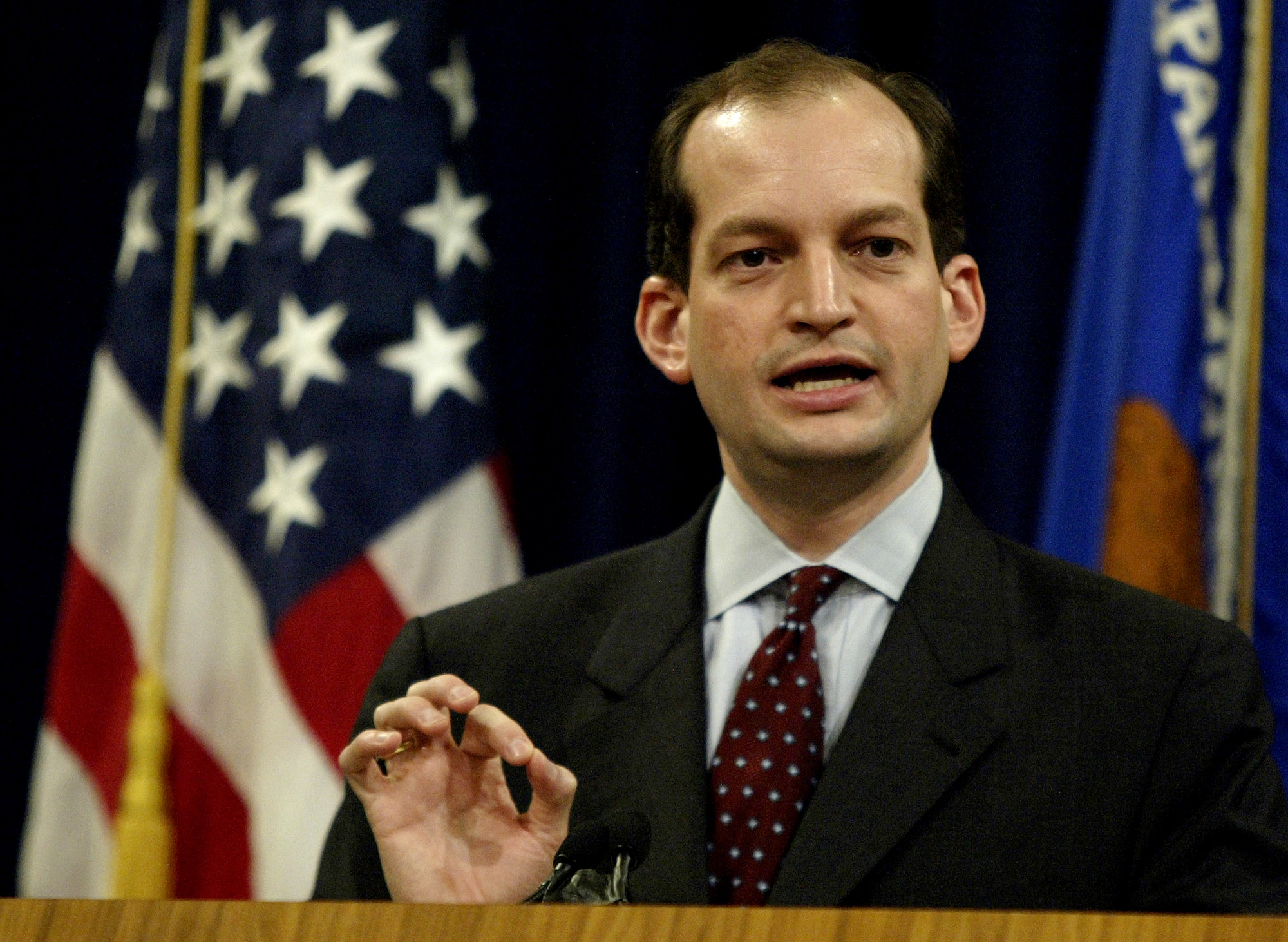
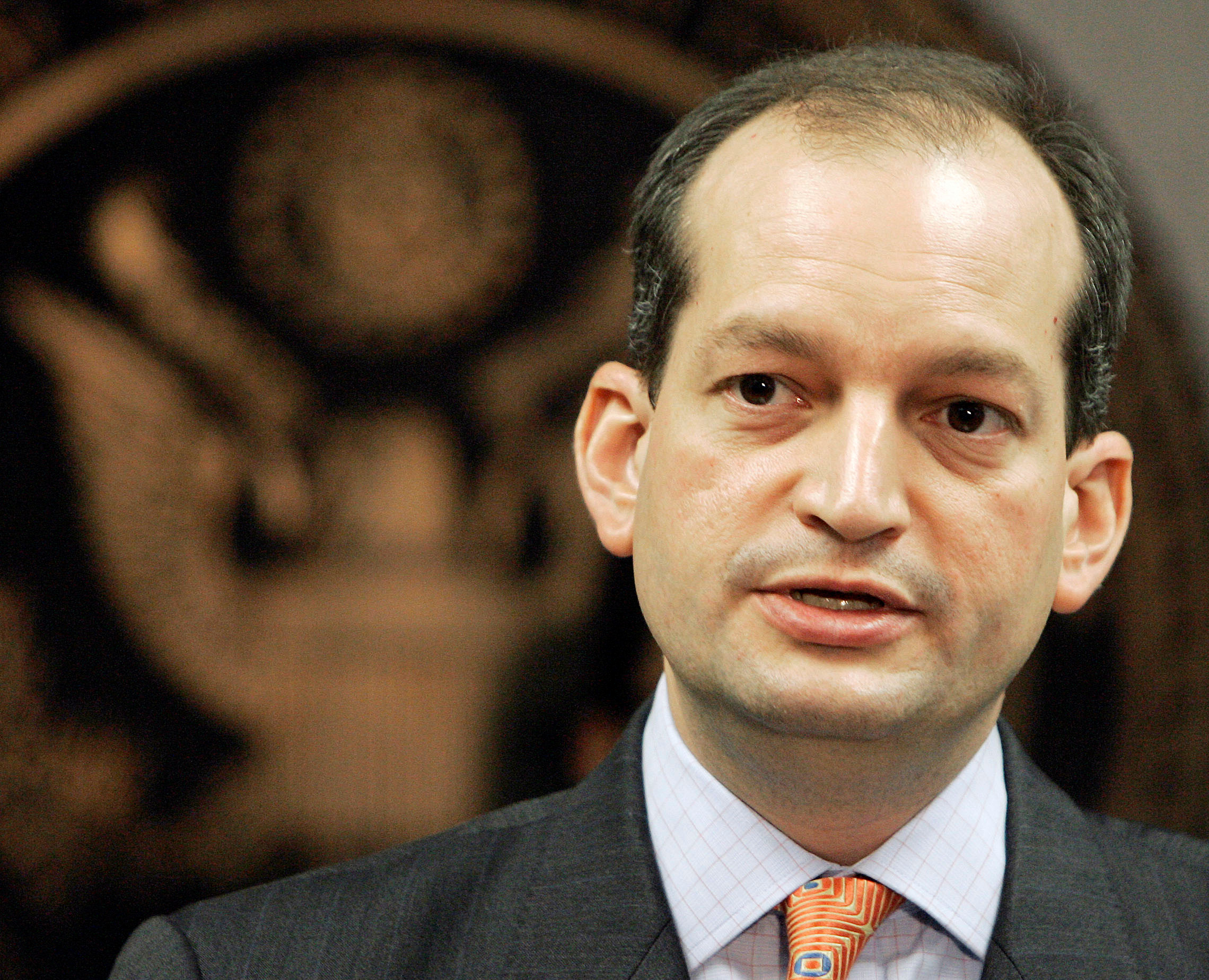
Alexander Acosta

Republican Sen. Lamar Alexander plans to focus on reducing workplace regulations Wednesday during the labor secretary nomination hearing.

Former President Barack Obama oversaw a massive expansion of labor regulations during his time in office. His administration hoped to strengthen worker rights, but critics counter it actually hurt those workers. Alexander Acosta could be in a position to reverse those regulations if his nomination is approved.

President Donald Trump has made workers a cornerstone of his presidency. He has also been highly critical of the last administration for impeding economic growth. His labor secretary will be critical to reversing the actions of the Obama administration since many of those regulations went through the Department of Labor (DOL).

“Senator Alexander looks forward to discussing Mr. Acosta’s views on creating an environment for American workers to succeed in a rapidly changing workplace, and the importance of rolling back the Obama-era labor regulations which have made it harder for Americans to create, find, or keep good-paying jobs,” Margaret Atkinson, Alexander’s communications director, told InsideSources.

Alexander currently serves as the chairman for the Senate Health, Education, Labor, and Pensions (HELP) committee. The committee is holding the nomination hearing. The labor secretary position is one of the last cabinet positions yet to be filled, as the process has hit some setbacks.

Obama has argued his goal was to strengthen worker rights and protections. Critics contest he did little to help workers while putting unnecessary stress on employers. A coalition of free-market organizations stated in a letter to HELP earlier this year that the department imposed $55.7 billion in regulatory costs on employers during the last administration.

Acosta is an attorney who currently serves as dean of the Florida International University College of Law. He has also been an assistant attorney general and a member of the National Labor Relations Board (NLRB). The president nominated him Feb. 16.

Acosta is seen by some opponents as a more moderate choice for labor secretary. CKE Restaurants President Andy Puzder was originally nominated for the position but eventually dropped out amid fierce opposition and several controversies. Acosta has been praised by some union leaders who relentlessly attacked the last nominee.

Obama received mixed reviews on economic performance during his time in office. He oversaw an economic recovery throughout his entire term following the 2007 financial crisis. He ended his presidency with steady labor market growth, in addition to other favorable economic trends.

His supporters have credited him for the turnaround. His critics, however, have pointed to the unusually prolonged recovery as a sign he actually hindered economic growth. They believe the positive trends are a natural bounce back that happened despite his agenda, particularly many actions in the labor department.

The HELP committee has scheduled the nomination hearing for Wednesday at 9:00am EST.

Follow Connor on Twitter

Subscribe for the Latest From InsideSources Every Morning

Senators Intro Law to Measure Broadband Economic Impact

A Republican and Democrat in the Senate want the federal government to measure the economic impact and deployment of broadband in the U.S. the same way it tracks other industries.

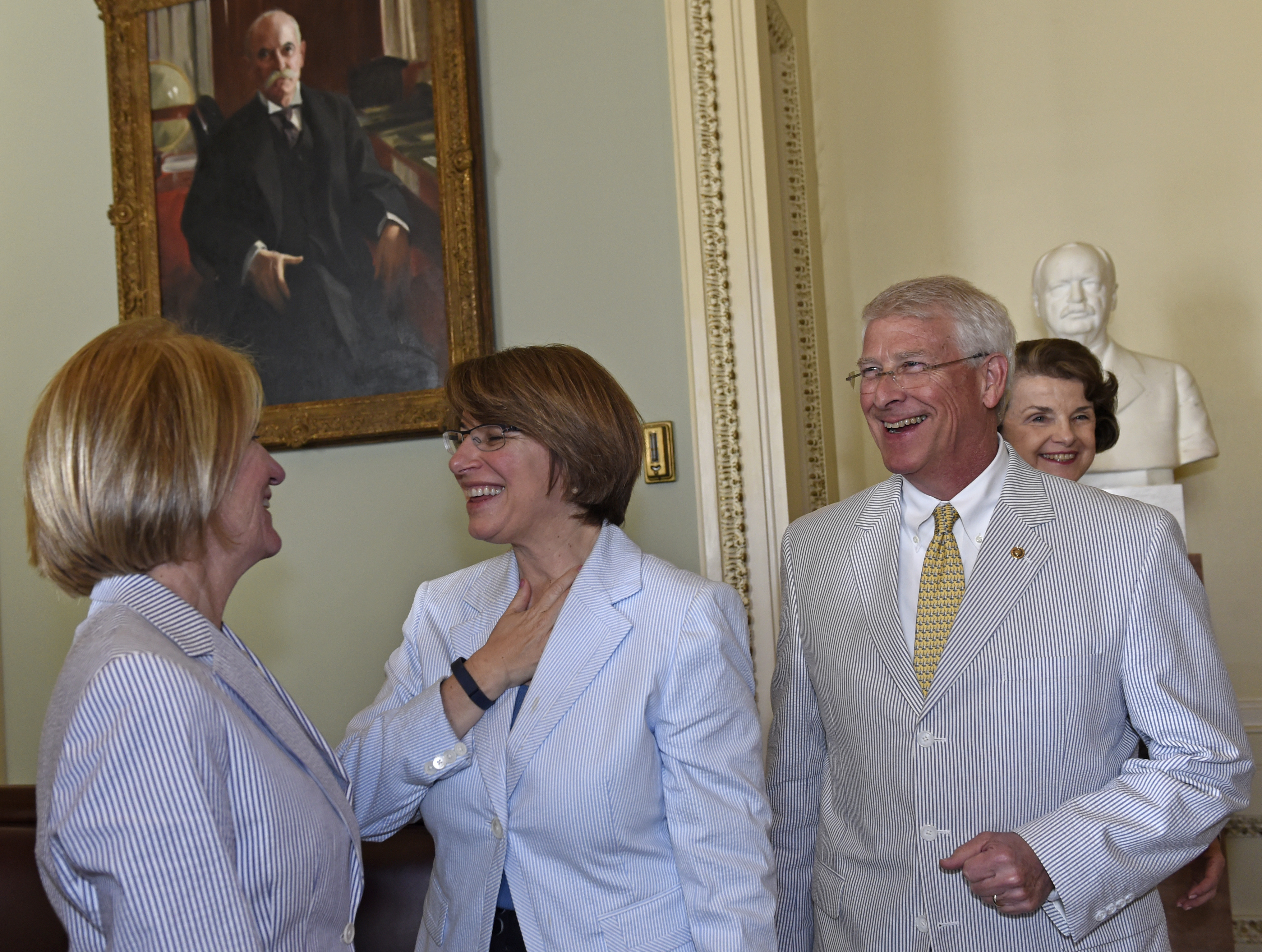
West Virginia Republican Shelley Moore Capito and Minnesota Democrat Amy Klobuchar’s Measuring the Economic Impact of Broadband Act would direct the Commerce Department’s Bureau of Economic Analysis to study the effects of broadband deployment and adoption.

Under the bill the secretary of commerce “will consider job creation, business headcount, online commerce, income, education and distance learning, telehealth, telework, agriculture, population growth, population density, broadband speed, and geography” in its study.

“Broadband connectivity has the power to unleash jobs and fuel economic growth throughout the country, especially in rural areas like West Virginia,” Capito said Wednesday. “This legislation will provide the data needed to measure the benefits of broadband accessibility and the importance of investing in critical broadband infrastructure.”

Klobuchar added the bipartisan bill “will help provide us with the reliable, publicly available economic data we need to make informed decisions about expanding broadband, connecting our communities, and keeping us competitive in an increasingly digital world.”

Both are members of the Senate Broadband Caucus, formed last summer to advance policies aimed at expanding broadband deployment. Its members hail from states with large swaths of rural communities where high-speed internet is a limited commodity compared to metropolitan areas. Most of the U.S. population has only one choice for a broadband providers according to the FCC. Rural areas often have no choice or less efficient technology like wireless broadband.

Capito’s state in particular has been highlighted as a focus area by the Federal Communications Commission, which promotes rural broadband deployment via its Universal Service Fund (USF). The USF provides funding to small broadband providers to help expand their networks to rural, under and unserved areas of the U.S.

Commissioner Ajit Pai, the new chairman of the FCC designated by President Donald Trump, visited West Virginia and other rural communities last year to hear the difficulties they face trying to keep pace with the digital economy.

Closing that digital divide is the focus of Pai’s chairmanship, and he wants help from Congress. In his first major policy speech Wednesday Pai asked Congress to include broadband in the $1 trillion infrastructure package Trump is asking for. He wants the FCC to take charge of where the funds go through USF, and asked Congress to include in the measure his plan for bringing gigabit internet speeds to the most economically depressed communities across the country.

The plan to create such “gigabit opportunity zones” grants tax subsidies to broadband providers who build high-speed networks in low-income neighborhoods, clears the local government red tape providers have to wade through to start construction and offers tax credits to tech startups opening their doors in those areas.

“Just last week, a study of broadband deployment in Cleveland suggested that fiber was much less likely to be deployed in the low-income neighborhoods,” Pai said Wednesday. “This highlights the need to establish gigabit opportunity zones, which would give the private sector the incentives to expand next-generation networks into high-poverty areas and help revitalize them.”

“Smarter regulations, modernized subsidies, updating the law—those are some of the ways we’ll work to close the digital divide,” he added.

Other sponsors of the economic impact bill include fellow Senate Broadband Caucus Democrat Sens. Al Franken of Minnesota, Heidi Heitkamp of North Dakota, Republican Sens. John Boozman of Arkansas, Dan Sullivan of Alaska and independent Sen. Angus King of Maine.

The bill also has the support of industry trade groups Connected Nation, NTCA – The Rural Broadband Association, CTIA, and WIA – The Wireless Infrastructure Association.

Follow Giuseppe on Twitter

Subscribe for the Latest From InsideSources Every Morning