inside sources print logo
Get up-to-date news in your inbox

Regulating Vaping While Understanding Policy Comparisons

Vaping is a valid means for harm reduction and eventual cessation. This is a truthful claim backed by governments and academic researchers from all over the world. Sadly, this claim seems to elude the U.S. government.

Declaring a public health epidemic among the country’s youth, FDA Commissioner Scott Gottlieb has fallen to a successful hysteria campaign, propped up by anti-smoking activists, by threatening market-damaging regulation.

Now, an industry fears for its life. “It’s possible the e-cigarette category all but disappears” in 2019, financial analyst Stefanie Miller of Height Capital Markets wrote last year. Miller did author an analysis that was quite critical of the industry, but it bears some truth leaving vaping advocates wondering for their futures.

Juul Labs, the “Walmart of vaping,” has turned to self-regulation initiatives and powerful lobbying representation through Altria via a multi-billion dollar investment, for example. However, the remainder of the industry — a segment that includes thousands of early phase startups and small businesses — is looking down the barrel of a regulatory shotgun backed by the full force of the so-called “pro-business” Trump administration.

But, a lot remains to be seen when it comes to the potential for further regulations. Already, Gottlieb intends to issue rules that curtail e-commerce sales, levy retail restrictions and control marketing of vape products. All of this is a culmination of a policy built around reducing youth vaping after the federal government released numbers suggesting a remarkable rise in underage use.

The federal data, however, is profoundly flawed because it lacks tabulation on everyday vapor use, among other underreported metrics. Citing this data and one-sided scientific analysis as Gottlieb did, Surgeon General Jerome Adams has additionally called on the states and localities to levy price floors, taxes and bans on flavors under the same “think of the children”-mantra. There are several dozen state legislatures considering taxes on e-cigarettes with the majority of these bodies returning for new sessions.

Nevertheless, we need to analyze the global framework of e-cigarette regulation across three separate countries. Sticking to the principles of comparative political theory, these model countries include the United Kingdom, Australia and the United States.

The vaping regulatory framework currently being formulated and simultaneously expanded in the United States will become exponentially worse. I believe that the regulatory system in the United States could emulate the current Australian system in a matter of years.

“Australia has a much more restrictive regulatory environment for vaping than the U.S.,” says Colin Mendelsohn, the chairman of the Australian Tobacco Harm Reduction Association, in an email. “It is illegal to possess liquid nicotine without a medical prescription with potential fines up to AUD $45,000  and two years jail. Because of the current government attitude and misinformation about vaping, most doctors will not write scripts, so the great majority of vapers are committing an offense.”

Mendelsohn ultimately characterized the Australian system as the extreme, short of outright banning recreational vaping. For retailers and manufacturers, the restrictions are evolved iterations of current U.S. policy trends. Advertising vaping products in Australia is illegal. The Therapeutic Goods Administration (the Aussie equivalent of the FDA) regulates e-cigarettes as a medical “therapy” over being a “sin” consumer good. And, local governments have banned in-store tasting and outlawed e-commerce sales. In comparison, the U.S. government is considering further marketing and sales regulations at all levels of governance.

“The U.S. and Australia are moving in (the) opposite direction to the world trend. Vaping is expanding, the evidence is building,” Mendelsohn added. He further argues that the United Kingdom is the “leading light” for tobacco harm reduction and vaping. I believe Mendelsohn’s observation, to an extent.

The U.K. has a very particular place in the world of vaping and harm reduction policy. Parliament has officially endorsed vaping as a valid means of harm reduction while the government’s own public health researchers conclude that vaping is far safer than combustible cigarettes. Regulations, though not to the point of criminalization, are strict for American standards.

“The U.K. has some of the strictest e-cigarette regulations in the world,” Martin Dockrell, the tobacco control lead for Public Health England, said in an email. “Unlike the U.S., we have a ban on print and broadcast advertising and tight product regulation including a maximum nicotine level.”

Other regulations in U.K. also place a heavy focus on individual discretion. The government hasn’t yet codified a vaping ban in public spaces. Instead, like a lot of “legal sin” discretion policies in the United States, the property owner has the final word on where individuals can and cannot vape. This is a crucial point.

Between the United States, Australia and the United Kingdom, policies are unique. There are three commonalities between the systems, though. First, the regulatory framework growing in the United States is still in its infancy; however, this country’s code is very similar to the “seeds” of the U.K.’s framework, and eventually the more extreme Australian framework. Second, each wishes to or currently does regulate nicotine content volume, flavors, manufacturing and other aspects of retail. Though the systems are varied in the degree of enforcement and encroachment, the basis of similar approaches is present. Third, all three systems seem to favor taxation.

The significant contrast, though, comes from the societal, academic and political forces influencing regulation. Unlike a message of fear and hysteria built up around youth use and the “gateway” phenomenon in the United States and Australia, the U.K. has a different approach.

“We monitor e-cigarette use extremely carefully and are alert to the risks, but to date, evidence shows that vaping is not leading to an increase in the number of young people smoking,” U.K.’s Dockrell wrote.

Though he cites data among the United Kingdom’s youth, the claim would hold true in the United States if evidence wasn’t flawed, conflated and hijacked for fear campaigns. Dockrell’s claim reveals that regulation in the U.K. is built around a more level-head, prudent message. This is further evidenced by the now-viral cotton ball Public Health England study that reaffirmed that vaping is 95 percent safer than combustible tobacco.

Now, consider our current state in the United States. The federal government will either evolve its regulatory trends to an Australia-style system of criminalization or, somehow, adopt a regulatory regime that is at least based on lightly disputed data, scientific inquiry and medical application. Nonetheless, the end result in the United States does need to be unique, pro-market and pro-harm reduction.

Most Americans believe in free markets and the evolution of an innovative industry. Two separate market reports project that the vaping industry will balloon to a hefty $43 billion net worth in the next five years. Given the current trends of regulation and hysteria, that goal could be reduced or entirely diminished.

Due to the aggressive growth of this industry, the U.S. government must weigh the real-world consequences from regulating so heavily.

I don’t dismiss the need to educate and reduce underage nicotine use. It’s imperative. But, the current regulatory trend doesn’t properly balance the rights of the business, the smoker, nor the actual implications to public health if full bans are implemented.

Any regulatory framework needs to recognize vaping as a valid means of smoking cessation. Regulating and taxing an industry into oblivion is not a viable public policy. There needs to be balance in the law at all levels of American governance. We can’t go down the Australian road, in this regard.

Why I Care About Harm Reduction

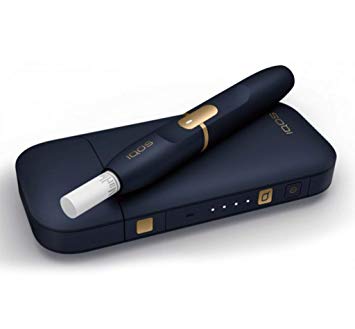
As president of the Taxpayers Protection Alliance, I don’t usually write about policy from a personal perspective (even though I am a taxpayer). Over the past two years, TPA has written extensively about the Food and Drug Administration and its unique position to approve harm reduction products that help people switch from traditional cigarettes to reduced-risk products, such as vaping and heat-not-burn products like IQOS.

This issue piqued my curiosity on a professional level, because the FDA has not followed the lead of other federal agencies that have cut back on red tape over the past couple of years. But the issue has also brought out plenty of emotions, since a heavy smoking addiction (3-and-a-half packs of cigarettes a day for more than 20 years) led to my father’s untimely demise at the age of 63.

Unfortunately, tragic stories of smokers succumbing to entirely preventable diseases will continue, as long as the FDA continually delays approving smoking cessation products. Despite a statutory requirement to respond within 180 days, and despite IQOS being proven to be effective for harm-reduction, the FDA continues to drag its feet and, two years after receiving the product’s application, and has not given any indication of moving forward with evaluation. Bogging down life-saving products in a thick fog of regulatory uncertainty is illegal, illogical and destructive for American consumers.

To add insult to injury, the surgeon general just suggested that, in order to crack down on youth vaping, localities should raise taxes on vaping products and increase vaping restrictions indoors.

Increasing taxes will not deter youth vaping.  In fact, increased taxes will drive vaping underground, funneling money to the black market. Countless states and countries raised tobacco taxes, and the result was a vibrant and expanding black market for the products, with the proceeds going to criminal organizations. The evidence is clear: higher taxation makes legitimate access more difficult, and makes the Al Capones of the world far richer.

But the issue means far more to me than data and empirical evidence. I grew up in a household where both parents smoked. This was certainly not uncommon in the 1970s. My father practically woke up with a cigarette in his mouth and fell asleep with one in his mouth. I visited him at work one day and he was smoking two cigarettes at one time! I rode to school with him as he chain-smoked. The windows were always up so I was the recipient of a constant, swirling alphabet soup of carcinogens. It was awful. He was addicted, and here I was sucking in the products of his addiction. I wish my father had access to harm reduction products like vaping or IQOS.

Even researchers skeptical about the benefits of reduced-risk tobacco products can’t escape the same conclusion: IQOS is simply far safer than conventional products. In 2017, a research team led by heat-not-burn skeptic Dr. Reto Auer of the University of Bern in Switzerland examined the level of carcinogens emitted from an IQOS puff, compared to the traditional cigarette brand Lucky Strike. The team found that amounts of polycyclic aromatic hydrocarbons found in IQOS smoke were far lower than for cigarette smoke.

Meanwhile, IQOS’s acceptance in Japan has led to widespread usage, as smokers find their cravings satisfied with a much less harmful product. IQOS share in the market has reached around 10 percent, and a large independent survey confirms that smokers are subbing out conventional products for IQOS in interesting ways.

According to the results, “respondents primarily reported using IQOS when socializing with groups of non-smokers where the use of combustible cigarettes could infringe on smoke-free social situations.” Whereas non-smokers would normally have to encounter secondhand smoke in these situations, IQOS created a safe environment with minimal carcinogens in the air.

This past February, the Philadelphia Eagles won their first Super Bowl.  Growing up outside of Philadelphia, my father and I would bond over watching the Eagles win or lose (most often lose). My father wasn’t alive to watch the Eagles win the Super Bowl so it was a bittersweet moment for me.

I wish there were products like IQOS in the 1970s to help my father, but the technology was still far away. But, the FDA has an opportunity now to approve IQOS and help people quit

Unfounded E-Cigarette Panic Puts Public Health at Risk

E-cigarettes pose a tiny percent of the risk of cigarette smoking, just 1 percent to 5 percent according to authorities like the United Kingdom government. That could mean the difference between life and death for the half million Americans and 7 million people worldwide who die of smoking-related illness every year.

Even if it turns out that e-cigarettes convey small long-term risks, those products should remain an option for smokers who haven’t been able to kick their more deadly habit and haven’t had luck with prescription drugs, patches, gums or lozenges.

Why, then, do government agencies and certain health activists focus more on scaring people about the unknown risks of e-cigarettes than helping them understand the relative risks of vaping compared to smoking? The unfortunate truth is that many of these groups may be letting their need for headlines and fundraising interfere with their genuine goal of improving public health.

To the general public, there seems to be a consensus on the dangers of e-cigarettes. Government agencies like the Food and Drug Administration and the Centers for Disease Control and activist groups like American Cancer Society and the Campaign for Tobacco-Free Kids have all reached the same conclusion: e-cigarette use is “epidemic” among teenagers and this is terrible for public health.

But, what most people don’t know is that these groups did not independently come to the same conclusion based on analysis of evidence. Rather, they have worked together to hype unfounded fears, promote shared policy goals, boost each other’s clout, and pad their coffers.

The facts on are not on the side of anti-vaping activists.

There is no epidemic in teen vaping. The latest survey data from the Centers for Disease Control only reveals any e-cigarette use in the last month, but previous data showed that fewer than 6 percent of teens (including 18 year olds, who can legally purchase e-cigarettes) vaped habitually (20-30 days a month). That means over 94 percent of teens are not regularly vaping. Furthermore CDC data does not tell us how many of these teenage vapers are using nicotine, but previous research found most of them were not. It also doesn’t say what percentage of teen e-cigarette users had never smoked, a number previous research puts at less than 1 percent.

More important, the latest CDC data reveal nothing about underage smoking, which is the single most important data point in evaluating the harms or benefits of teenage vaping. Since the introduction of e-cigarettes to the U.S. market, adolescent use of cigarettes has more than halved, from 15.8 percent in 2011 to 7.6 percent in 2017. Rather than e-cigarettes acting as a gateway to smoking, as is assumed by government and advocacy groups, this indicates that teenage e-cigarette use is more likely diverting would-be smokers toward a less harmful means of nicotine consumption and potentially away from nicotine consumption altogether.

Meanwhile, smoking is the leading cause of preventable death in America, according to the CDC, responsible for more than 480,000 deaths per year in the United States. By the government’s own estimates, more than 16 million Americans live with a disease caused by smoking, like cancer, heart disease, stroke, lung diseases, diabetes and chronic obstructive pulmonary disease (which includes emphysema and chronic bronchitis).

If e-cigarettes can help smokers make the switch and save them from disease and death, as research increasingly proves, isn’t that something we ought to celebrate? Instead, activists are ever-more insistent in demanding restrictions or bans on the availability of e-cigarettes, even though they know making e-cigarettes harder to buy or less palatable (by eliminating flavors) will result in fewer smokers switching.

While one can understand the concern over adolescent nicotine use, the relatively minor risk it poses to the small percentage of teens vaping does not warrant sacrificing the many adult smokers at risk of serious illness and death. The math simply doesn’t add up if the goal is to improve public health.

Anyone concerned about public health should be looking for effective, innovative ways to encourage smoking cessation or at least lower-risk products. Substituting e-cigarettes for smoking could prevent up to 7 million premature deaths in the United States, according to research-driven estimates. That’s why the hyped headlines and rhetoric about e-cigarettes and the recent FDA ban on e-cigarettes sales in convenience stores are so problematic.

Government bans and restrictions on e-cigarettes may help government agencies and advocacy groups get millions of dollars in tax money, but they don’t help save lives.

Vaping Regulations Are an Overreaction to Misguided Concerns

It is a common sentiment among any rational person that no one under the age of 18 should be smoking cigarettes. Excluding the bad breath and the rising financial costs of tobacco products alone, the carcinogenic properties and the thousands of harmful chemicals are reason enough for many minors to back away from smoking.

The same goes for vaping products. Though 80 percent of youth don’t see any significant harm in the use of e-cigarette products, the likelihood of a minor smoking an e-cigarette is still slim. In general, the smoking rates among minors remain at historical lows.

The federally funded Monitoring the Future study released data at the end of 2017 that indicated that cigarette use among high school seniors has declined by more than 70 percent since 1991. One of the reasons for the decline in cigarette smoking among youth can be attributed to the evolution of e-cigarette and vaping technology in recent years. But, once you break down the numbers, the vast majority of minors still don’t use vaping products.

“Fifty-eight percent of 12th-graders who reported vaping in the previous month said their e-liquid contained ‘just flavoring.’ Even those who vape nicotine rarely do it often enough to develop a habit,” Reason.com’s Jacob Sullum wrote. The vast majority of youth responding to this survey also don’t smoke vaping products in a capacity that’s noteworthy.

There is sound reasoning for industry critics and advocates to be concerned about underage nicotine use. The calls for anti-industry regulations are misguided, nonetheless. Adult consumers of vaping products have switched over from traditional cigarettes due to the obvious benefits of not inhaling thousands of chemicals behind the burn of the actual tobacco. In most cases, e-cigarettes and vaporizers are merely water vapor laced with nicotine, flavoring and very few harmful chemicals. Unlike traditional cigarettes that have long been known to be threatening to an individual’s health, e-cigarettes are indeed less dangerous.

There is research revealing that e-cigarettes do have health risks. As with any nicotine product, the consumers will take the risk to partake and enjoy themselves. That’s consumer interest, a phenomenon that drives other “sin” industries like the legal alcohol and cannabis industries.

There are more than 9 million consumers in the United States who vape. Granted, many of these consumers report that they use vaping products while using other tobacco products. But, the difference between these consumers from that of the youth class is that these people are consenting adults above the legal age to purchase tobacco and nicotine products. These people also have the economic right to smoke because the United States remains a market economy where private enterprise and consumerism trumps the will of the government. Regulating the vaping industry as the FDA plans will threaten a massive consumer class and can drive legitimate, tax-paying American companies out of business.

These regulations include the restriction of vaping systems like Juul and Blu to vaping shops only, new e-commerce regulations for retailers that sell vaping products over the internet, and an all-out ban on menthol-flavored e-cigarettes.

“No youth should vape, and there is room for more rigorous enforcement to ensure youth are not accessing these products. However, this move by (FDA) Commissioner (Scott) Gottlieb will only serve to make it harder for adult smokers to switch to a far less harmful alternative,” Gregory Conley, president of the nonprofit American Vaping Association, said in a statement regarding the announcement of regulations.

Conley continued: “Not every town has a vape shop, meaning that for many adults, it will be much easier to pick up a pack of Marlboros or Camels — or even an unrestricted cherry-flavored cigar — at a local convenience store than it will be to make the switch to a vaping product that can truly help smokers break their desire for cigarettes.”

As the Las Cruces (N.M.) Sun-News pointed out, any new regulations and laws must have the “right balance.”

“Government should move to educate and protect youth from vaping, while still respecting the rights of adults who may benefit from this new technology,” the newspaper said. Anything less is simplemindedness.